Why Stable Cat-Back Exhaust System Suppliers Help Tuners Scale
Jan 01, 2026
For a modification shop or performance brand, a cat-back exhaust system is not just tubing and mufflers. It is a repeatable customer experience that must install smoothly, sound consistent, and surviv...
Why Stable Cat-Back Exhaust System Suppliers Help Tuners Scale
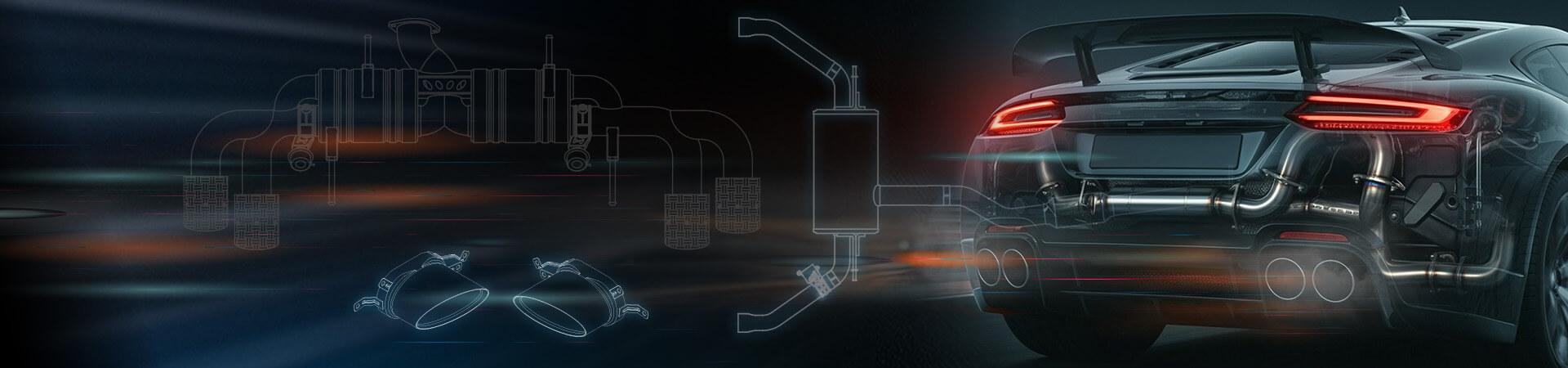
For a modification shop or performance brand, a cat-back exhaust system is not just tubing and mufflers. It is a repeatable customer experience that must install smoothly, sound consistent, and survive real-world use. When a supplier is unstable, costs appear everywhere: extra install time, rework, returns, expedited freight, and warranty claims. Inconsistent parts also consume engineering time with firefighting instead of launching new SKUs.
A stable supplier changes the economics. You get predictable fitment, controlled revisions, reliable delivery, and documentation that speeds troubleshooting. This article explains how procurement managers, project engineers, and technical directors can use supplier stability to lower total cost and scale with fewer surprises.
Aftermarket tailwinds meet supply volatility
Aging vehicles extend demand cycles
Vehicles staying on the road longer supports steady aftermarket demand. S&P Global Mobility reported the average age of U.S. light vehicles reached 12.8 years in 2025.
For exhaust programs, a larger pool of older vehicles means more owners maintaining, refreshing, or upgrading for sound and drivability.
Growth expectations are strong, but execution risk increases
The specialty-equipment market remains significant. SEMA reported $52.3 billion in 2023 specialty-equipment sales in the U.S.
On the broader aftermarket side, Auto Care Association projected 5.7% growth in 2024, and later reported 5.1% expected growth for 2025.
More demand is good, but it can amplify supplier instability if capacity, quality systems, and change control are weak.
Enforcement and documentation expectations are rising
Even if cat-back systems typically keep the catalyst in place, businesses still face compliance risk if products are marketed, labeled, or applied in ways regulators view as tampering or tied to defeat devices. EPA’s enforcement initiative on aftermarket defeat devices summarizes significant enforcement activity and outcomes from FY 2020 through FY 2023.
In Europe, Euro 7 progressed through 2023 to 2024 policy steps, and it expands attention beyond tailpipe emissions to areas like brake particle emissions and tire abrasion, which signals a broader compliance direction.
Practical takeaway: stability is not only about delivery. It also means a supplier can support documentation, traceability, and controlled changes so your organization can defend decisions if questions arise.
What a “stable supplier” means in cat-back exhaust
Process control and measurable capability
A stable supplier can repeat outputs because inputs and processes are controlled. In cat-back exhaust manufacturing, that typically includes:
-
Material discipline: defined grades, thickness, and lot traceability with mill test reports or equivalent documentation.
-
Dimensional control: fixtures and jigs that lock in flange angles, hanger geometry, tip alignment, and underbody clearances.
-
Welding repeatability: documented weld parameters and inspection standards (formal WPQR style qualifications vary by supplier, To be verified).
-
Inspection plan: clear CTQs (critical-to-quality characteristics) and sampling rules, plus leak checks where appropriate.
If a supplier cannot explain how they prevent variation, your team will become their quality department after the parts arrive.
Engineering collaboration and change management
Cat-back systems are sensitive to fitment and NVH (noise, vibration, harshness). A stable supplier behaves like a development partner:
-
Prototype support with controlled iteration (fixture adjustments with revision tracking).
-
A formal engineering change process so “same part number” truly means the same geometry.
-
Visible revision control on labels and packaging, plus BOM traceability for hardware and subcomponents.
How stability lowers total cost (not just unit price)
Fitment and NVH consistency reduce comebacks
Unit price is easy to compare. Total cost is where stable suppliers win. Fitment issues compound quickly: an extra 30 to 60 minutes per install reduces throughput, disrupts scheduling, and creates installer frustration. Small misalignments can cause leaks, rattles, or tip mis-centering that trigger returns and reputational damage.
Stable suppliers invest in fixtures, inspection, and feedback loops that keep fitment consistent across batches, which protects your install SOPs and your brand’s perceived quality.
Predictable lead times protect production schedules
Lead time volatility forces you to choose between overstocking (cash tied up, storage, risk of obsolescence) and expediting (air freight, split shipments, overtime). Stable suppliers reduce both by offering consistent production windows, realistic capacity planning, and packaging and kitting systems that minimize pick errors.
Material integrity protects warranty and brand value
When cost pressure rises, unstable suppliers may substitute materials or reduce thickness. You may not see the impact until corrosion complaints or sound changes appear months later. Stable suppliers mitigate this through lot traceability, controlled sub-suppliers (packing, clamps, flex sections), and consistent finishing practices (specific passivation steps are process-dependent, To be verified).
Decision table: stable vs unstable supplier outcomes
Before the table, align on a simple idea: supplier stability is a multiplier. It reduces variability across quality, schedule, and documentation, which lets you standardize installs, forecast demand, and scale SKUs without constant exceptions.
| Decision factor | Stable supplier: what you get | Unstable supplier: what you pay for |
|---|---|---|
| Dimensional repeatability | Fixtures and inspection keep fitment consistent | Batch drift causes rework and returns |
| Change management | Controlled revisions, clear labels, documented updates | Silent changes and “same SKU, different part” |
| Lead time and delivery | Predictable windows, fewer partial shipments | Missed ETAs, expediting, schedule churn |
| Material discipline | Certificates and lot traceability | Substitution risk and uneven corrosion life |
| Weld and leak integrity | Documented standards and consistent checks | Leaks, rattles, premature failures |
| Packaging and kitting | Complete hardware kits, clear labeling | Missing parts create install delays |
| After-sales support | Fast triage, root-cause feedback loop | Slow response and blame shifting |
| Compliance posture | Documentation supports claims and audits | Elevated business and enforcement risk |
After the table, translate this into a buying case. If you track remake rate, bay-time loss, expedited freight, and warranty returns, you can often justify a higher unit price and still reduce total cost.
A practical supplier scorecard for B2B buyers
Documents to request and pilot build KPIs
Request these early, before volume commitments:
-
Material certificates and lot traceability method
-
Inspection plan for CTQs (hangers, flanges, tip alignment, clearance points)
-
Packaging and kitting checklist, labeling standards, and revision marking rules
-
A change workflow example, including how revisions are communicated to customers
-
Pilot build plan: first article plus a limited run with measured KPIs
Pilot KPIs to use:
-
Fitment pass rate (first-time install success)
-
Leak rate
-
Missing hardware rate
-
On-time delivery performance
-
Field return rate within the first 30 to 60 days (To be verified based on your sales cycle)
Packaging, kitting, and after-sales support
Stability is also service. Strong suppliers reduce installer friction with consistent kit contents, clear clamp orientation notes, and fast replacement for missing items. They also treat field feedback as data, then feed it into controlled corrective actions.
Switching suppliers with minimal disruption
-
Start with your top 1 to 2 SKUs by volume or pain level.
-
Run a pilot build and require a short KPI report.
-
Lock revision control and labeling before any ramp.
-
Dual-source temporarily if feasible to protect continuity.
-
Convert field feedback into a design freeze and stable work instructions.
Buyer FAQ
1) Should we prioritize price or supplier stability?
Prioritize stability first. It reduces rework, returns, and expediting. Then negotiate price using forecast volume and standardization.
2) What documents matter most for cat-back sourcing?
Material certificates, lot traceability, CTQ inspection plan, and a clear change process with revision labeling.
3) How do we test stability quickly?
Pilot build with metrics: fitment pass rate, leak rate, missing hardware rate, and on-time delivery.
4) Is 304 stainless always better than 409?
Not always. 304 often offers stronger corrosion resistance, while 409 is commonly used for cost and performance trade-offs. Select based on climate, warranty expectations, and target price point (To be verified per program).
5) How does regulation affect cat-back systems?
Even when the catalyst remains, enforcement focus on tampering and defeat devices raises the importance of documentation, correct applications, and controlled marketing claims.
6) What is the biggest hidden scaling risk?
Uncontrolled changes. Require revision control and consistent labels so installers do not face surprises.
Recent trends and references (2023 to 2025, non-paywalled)
-
S&P Global Mobility on U.S. vehicle age reaching 12.8 years in 2025.
-
SEMA: specialty-equipment sales grew to $52.3B in 2023 (released June 27, 2024).
-
Auto Care Association: 5.7% growth expected in 2024; 5.1% expected in 2025, showing continued expansion.
-
EPA: enforcement initiative focused on aftermarket defeat devices and tampering, with reported case outcomes for FY 2020 to FY 2023.
-
Euro 7 direction and scope: EU Council updates plus ICCT explainer on Euro 7 requirements and coverage.
Why buyers evaluate LIANG FEI INDUSTRY CO., LTD for stable supply
If your team is comparing suppliers, it can help to review how manufacturers present their capability, product scope, and support model. LIANG FEI INDUSTRY CO., LTD (MCK) positions itself as a customized exhaust manufacturer serving a wide range of car and motorcycle applications, with an emphasis on performance-driven solutions and tailored systems. Their site organizes products by vehicle brands and cat-back categories, which is useful when procurement teams want faster SKU mapping and clearer application coverage. They also publish catalogues by year and provide product detail pages that can support early-stage evaluation, quoting, and internal engineering review. For additional background, an industry profile notes the company’s long operating history and outlines a broad set of production equipment categories (for example bending, welding, polishing), which can be helpful inputs when building a supplier scorecard (To be verified during audit).
If you want to explore further, start from the LIANG FEI homepage and review the Cat-back System category, recent News posts, and the latest Catalogue downloads: https://www.liangfei-muffler.com/