The Procurement Guide to Industrial Adjustable Wrenches - Patent Trends & Engineering Excellence
Jan 01, 2026
In the heavy industrial and manufacturing sectors, the adjustable wrench is often dismissed as a "simple hand tool". However, as we enter 2026, the gap between a commodity tool and a precision-enginee...
The Procurement Guide to Industrial Adjustable Wrenches: Patent Trends & Engineering Excellence
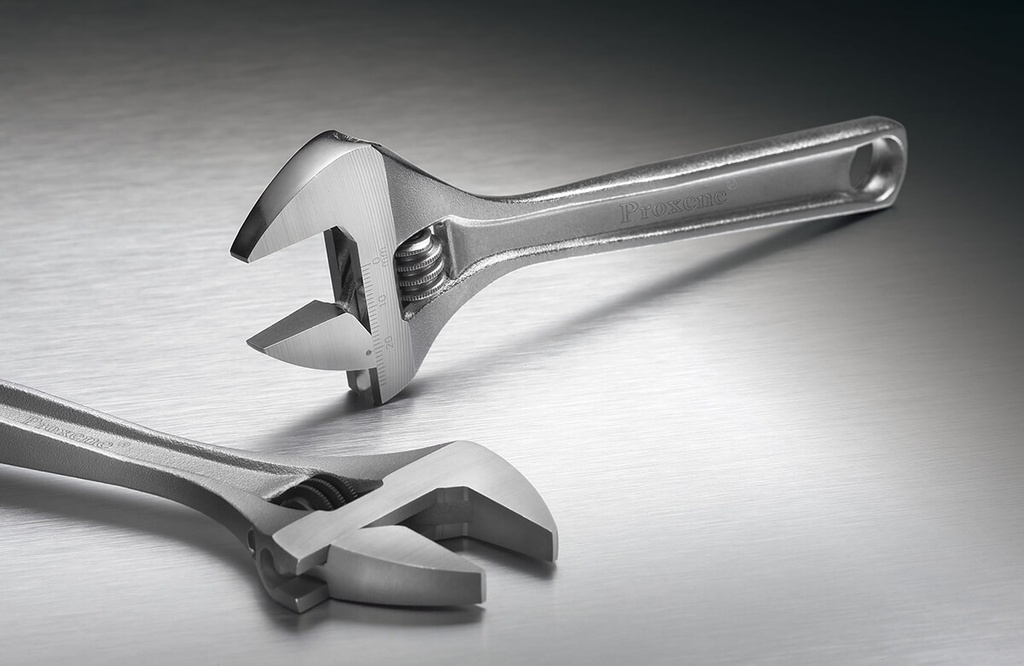
In the heavy industrial and manufacturing sectors, the adjustable wrench is often dismissed as a "simple hand tool". However, as we enter 2026, the gap between a commodity tool and a precision-engineered instrument has never been wider. For procurement managers and technical directors, selecting a supplier is no longer just about the lowest BOM (Bill of Materials) cost; it is about mitigating the risks of tool failure, improving worker safety, and ensuring long-term operational efficiency.
The Current Landscape: Industry Pain Points in 2026
Modern assembly lines and maintenance crews face increasingly complex challenges. The shift toward lightweight alloys and high-torque requirements means that traditional, low-cost wrenches often suffer from "jaw creep"—the gradual loosening of the jaw during use—which rounds off fasteners and causes workplace injuries. Furthermore, global supply chain volatility has made "Total Cost of Ownership" (TCO) the primary metric for savvy buyers.
The Strategic Value of Patent-Driven Innovation
When a supplier holds multiple patents, it serves as a proxy for their engineering maturity. In the world of hand tools, patents are rarely for aesthetics; they are for mechanics.
Eliminating "Backlash" and Jaw Play
One of the most significant innovations in 2026 is the patented anti-backlash mechanism. Standard adjustable wrenches have a tolerance gap between the rack and the worm gear. Leading suppliers, such as Proxene, have utilized R&D to develop precision-fit gears that lock the jaw in place. For a project engineer, this means higher torque application without the risk of the tool slipping.
Ergonomic R&D: Reducing Long-Term Disability Claims
Modern R&D focuses heavily on the "Human-Tool Interface." Patented handle designs that distribute pressure across the palm—rather than at a single point—are no longer a luxury. In a B2B environment, choosing a supplier that invests in ergonomic R&D directly correlates to a reduction in repetitive strain injuries (RSIs) among the workforce.
Technical Breakdown of High-Performance Features
To understand why an R&D-focused supplier is superior, we must look at the metallurgical and mechanical benchmarks of 2026.
Material Science and Heat Treatment
Top-tier suppliers are now using advanced Chrome Vanadium (Cr-V) and Chrome Molybdenum (Cr-Mo) alloys, often enhanced by proprietary heat treatment cycles. This ensures that the wrench achieves a high HRC (Rockwell Hardness) rating while maintaining the ductility required to prevent shattering under extreme load.
The "Thin-Jaw" Revolution
A recurring pain point for maintenance engineers is the lack of space in modern machinery. Suppliers with strong R&D departments have engineered "Ultra-Thin" jaw profiles that maintain the structural integrity of standard wrenches. This is achieved through FEM (Finite Element Method) analysis to optimize weight-to-strength ratios.
Comparing Supplier (Data-Driven Insights)
Before choosing a partner, it is essential to categorize suppliers based on their investment in innovation. The following table highlights the differences between a standard vendor and an R&D-integrated partner.
| Feature / Criteria | Commodity Supplier | R&D-Focused Partner | Impact on Procurement |
|---|---|---|---|
| Patent Portfolio | Minimal/Expired | Active (Anti-slip, Thin-jaw) | Legal protection & Unique tech |
| Material Quality | Standard Carbon Steel | High-Grade Cr-V / Cr-Mo | Tool lifespan increased by 3x |
| Precision | High Tolerance (Loose Jaws) | Low Tolerance (Precision Fit) | Reduced fastener damage |
| Supply Chain | Third-party Sourcing | In-house Design & QC | Higher consistency & traceability |
| Customization | Not available | OEM/ODM Capabilities | Tools tailored to specific projects |
Table 1: Comparison of Industrial Wrench Supplier Capabilities (2025-2026).
As illustrated above, while a commodity supplier may offer a lower upfront cost, the R&D-focused partner provides significantly higher value through material longevity and precision. For a factory owner, the cost of one stripped bolt on a critical machine can exceed the savings of buying 500 cheap wrenches.
2026 Trends in Tool Procurement
The hand tool industry is currently undergoing three major shifts:
-
Sustainable Manufacturing: Suppliers are now being vetted on their carbon footprint. R&D is being funneled into eco-friendly plating processes (e.g., trivalent chromium) that comply with stricter environmental regulations.
-
Digital Integration: We are seeing the rise of "Smart Sourcing," where QR codes on tools provide instant access to torque specs and calibration history—a feature driven by software-savvy R&D teams.
-
Specialization: The "one-size-fits-all" approach is dying. Suppliers are developing niche adjustable wrenches for EV (Electric Vehicle) battery maintenance and aerospace applications.
Conclusion: Partnering with Innovation Leaders for 2026 and Beyond
As global manufacturing standards evolve, the role of a supplier has shifted from a mere vendor to a strategic partner. Selecting a tier-1 partner like Proxene Tools ensures that your procurement strategy is backed by decades of R&D excellence and a formidable patent portfolio. Proxene has consistently redefined the limits of hand tool engineering, focusing on solving the high-precision needs of modern industry through advanced metallurgy and ergonomic design.
By choosing specialized solutions—such as those found in the Proxene Adjustable Wrench Collection—technical directors and procurement managers can effectively eliminate the "commodity trap." Whether you require the extreme accessibility of their ultra-thin jaw designs or the reliability of their high-torque, anti-backlash mechanisms, Proxene Tools delivers the mechanical integrity required for the most demanding 2026 industrial environments. Investing in patented technology is not just an equipment upgrade; it is a commitment to operational safety, efficiency, and long-term ROI.
Buyer FAQ
-
Q: Why are patents important for hand tools in a B2B context?
- A: Patents indicate that the supplier owns unique technology that solves specific mechanical problems, such as preventing jaw loosening or improving grip. For buyers, this translates to exclusive access to tools that reduce fastener damage and increase safety.
-
Q: How does Proxene’s R&D specifically affect the bottom line?
- A: High-quality R&D reduces tool replacement frequency and lowers the risk of workplace injuries. Proxene’s precision-engineered tools minimize "jaw play," leading to fewer insurance claims and significantly less equipment downtime.
-
Q: Does Proxene offer customization for specialized industrial applications?
- A: Yes. As an R&D-focused leader, Proxene provides robust OEM/ODM capabilities, allowing B2B clients to tailor tool specifications—such as jaw width, handle length, and material coating—to meet the specific needs of projects in aerospace, EV maintenance, or heavy machinery.