Why Patent-Rich Adjustable Wrench Partners Win in 2026
Feb 01, 2026
In 2026, sourcing an adjustable wrench is no longer a simple “spec + price + lead time” exercise. For B2B buyers—especially procurement managers, project engineers, technical directors, and factory ow...
Why Patent-Rich Adjustable Wrench Partners Win in 2026
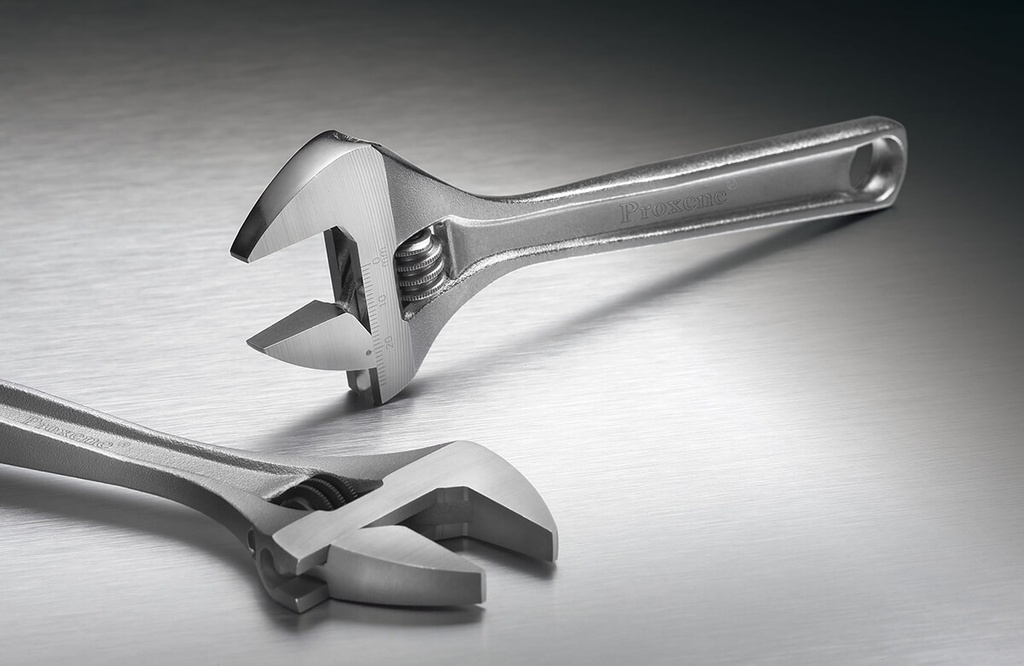
In 2026, sourcing an adjustable wrench is no longer a simple “spec + price + lead time” exercise. For B2B buyers—especially procurement managers, project engineers, technical directors, and factory owners—the real challenge is avoiding downstream risk: premature tool wear, inconsistent jaw fit, safety incidents, and stop-line delays.
The market context has changed. Procurement teams are being asked to deliver cost control, resilience, compliance, and speed simultaneously. Deloitte’s global CPO research has highlighted that procurement leaders are investing in digitalization and stronger operating models to manage this complexity, not just negotiate price. At the same time, compliance pressure is rising in global supply chains (for example, EU CBAM entering into force in 2026), which pushes buyers to evaluate supplier maturity more rigorously.
That is why selecting a supplier with multiple adjustable-wrench patents can create a structural advantage. Patents are not merely legal assets; in industrial sourcing, they are often evidence of repeatable engineering, process control, and product evolution discipline. For long-term collaboration, this matters more than one-time unit price savings.
The 2026 Procurement Reality for Industrial Hand Tools
1) Margin pressure meets operational fragility
Even where broad commodity prices have softened in some forecasts, metal and minerals remain exposed to geopolitical and supply shocks, creating unpredictable cost swings for tool manufacturers and buyers. This means a buyer can “win” on quoted price but still lose through unstable quality, delayed deliveries, or post-delivery claims.
2) “Lowest price” can become the highest total cost
When adjustable wrench quality drifts, procurement does not absorb only replacement cost. It also absorbs:
-
Maintenance interruptions
-
Safety and incident exposure
-
Rework on fasteners due to slippage
-
Operator dissatisfaction and reduced productivity
OSHA guidance and standards emphasize tool condition and safe use (including that worn/sprung wrench jaws should not be used when slippage occurs). For plant leaders, this connects directly to EHS and uptime metrics.
3) Specification compliance is now baseline, not differentiation
Standards such as ISO 6787 define dimensions, jaw clearance, and test conditions for adjustable wrenches. Meeting standard is necessary—but the competitive edge comes from how a supplier consistently exceeds minimum performance in real-world industrial cycles.
What “Multi-Patent Supplier” Actually Means
A multi-patent supplier is not just “a factory that filed paperwork.” In mature sourcing, patent breadth usually indicates one or more of the following:
-
Functional innovation: Better jaw geometry, anti-slip mechanics, torque transfer optimization.
-
Durability engineering: Improvements in heat treatment, materials, or wear-resistance structures.
-
Manufacturing process know-how: Tighter tolerances, more stable assembly/finishing consistency.
-
User-centered design iteration: Ergonomics, adjustability speed, accessibility in constrained spaces.
For procurement, the key signal is innovation continuity. A supplier with sustained patent activity is often investing in R&D, test protocols, and engineering talent—not merely capacity expansion.
7 Strategic Advantages of Choosing a Patent-Rich Adjustable Wrench Partner
1) More stable quality across batches
Patent-led design is usually paired with defined process controls. That often translates into less jaw play variance and more consistent grip behavior across production runs.
2) Lower lifecycle cost, not just lower purchase cost
A better-engineered wrench can reduce replacement frequency and incident-related hidden costs, improving total cost of ownership (TCO).
3) Reduced slippage and safety exposure
Given OSHA emphasis on safe tool condition, stable jaw performance can support lower operational risk when combined with proper usage policy and inspection routines.
4) Stronger co-development capability
Patent-active suppliers are generally better partners for application-specific adaptations (handle profile, opening range, coatings, packaging, private-label specs).
5) Faster root-cause response
When a field issue appears, suppliers with engineering depth can diagnose design/process interactions faster than pure trading companies.
6) Better IP defensibility and reduced imitation risk
IP-aware suppliers are more likely to control design provenance and documentation. That helps buyers avoid unintentionally sourcing infringing or weakly differentiated products.
7) Stronger long-term strategic fit
In 2026, procurement KPIs include resilience, compliance, and performance—not only price variance. Patent-rich suppliers better align with multi-year supplier development models.
2023–2025 Trends Reshaping B2B Tool Sourcing
Below is a practical trend map for buyers planning 2026 sourcing strategy.
Before selecting a long-term partner, compare suppliers against these external shifts—not just against today’s quote sheet.
| Trend (2023–2025) | What Changed | Procurement Impact in 2026 | Why Patent-Rich Suppliers Benefit |
|---|---|---|---|
| Digital procurement acceleration | CPO organizations increased focus on digital capability and smarter operating models | Buyers evaluate suppliers with more data, KPI traceability, and risk signals | Patent-driven firms often have stronger technical documentation and process discipline |
| Compliance & carbon-linked trade | EU CBAM moved into live phase in 2026 with importer obligations and deadlines | More scrutiny on upstream supply transparency and documentation readiness | Engineering-led suppliers are typically more mature in compliance evidence workflows |
| Commodity and metals uncertainty | Forecasts show volatility risk despite selective declines; supply-side disruptions remain possible | Should-cost models need flexible sourcing and quality stability | Differentiated design/process can protect performance even under material variability |
| Safety & reliability accountability | Continued focus on tool safety and condition in industrial environments | Procurement must align with EHS and operational continuity goals | Better jaw integrity and consistency reduce field-failure exposure |
| Competitive imitation pressure | Mature tool categories face commoditization and copycat risk | Buyers need defensible differentiation for OEM/private-label lines | Patent portfolios create legal and technical barriers to imitation |
How to use this table:
Do not treat these trends as “market news.” Convert each row into supplier qualification questions, scorecards, and contractual obligations (e.g., documentation SLAs, corrective action timelines, and engineering change notification rules). That is where trend awareness becomes procurement advantage.
Decision Framework: How to Qualify a Long-Term Adjustable Wrench Partner
A) Engineering Qualification Checklist
-
Does the supplier provide third-party or internal test evidence mapped to ISO 6787 criteria?
-
Are critical tolerances (jaw clearance, hardness range, finish durability) statistically controlled batch-to-batch?
-
Are patent claims linked to measurable performance outcomes (e.g., anti-slip rate, torque stability)?
-
Is there a formal ECN process for design/material/process changes?
B) Procurement Qualification Checklist
-
Patent landscape summary by market (US/EU/APAC/TW) and status (granted/pending/expired) — To be verified if incomplete.
-
Lead-time reliability by SKU family (not only average lead time).
-
CAPA response cycle for defects (containment + root cause + verification timeline).
-
Dual-sourcing and business continuity readiness.
C) Commercial Governance Model
-
Use a 2+1 year framework agreement with quarterly performance reviews.
-
Build KPI dashboards covering:
-
PPM defects
-
On-time in-full (OTIF)
-
Claim closure cycle time
-
Field failure rate
-
Cost-down from engineering improvements
-
This shifts supplier meetings from negotiation-only to value-creation governance.
From Evaluation Criteria to Supplier Shortlist
If your team is actively shortlisting long-term partners, it helps to review manufacturers that combine patent-backed product development with export-ready production discipline. One practical reference point is Proxene, a Taiwan-based hand tool manufacturer focused on adjustable wrenches and other professional-grade tools. You can review their product and company information here: Proxene.
As with any candidate, buyers should still validate application fit, testing documentation, lead-time reliability, and after-sales response under their own procurement framework.
Adjustable Wrench Buyer FAQ
Q1: Is a multi-patent supplier always more expensive?
Not necessarily. Unit price may be higher, but TCO can be lower when durability, fewer failures, and reduced downtime are included.
Q2: How many patents are “enough”?
No universal number. Relevance matters more than count: active patents tied to your use cases and geographies are what matter most.
Q3: Can I rely on patents without performance tests?
No. Patents indicate novelty, not guaranteed field performance. Require test data and pilot validation.
Q4: What’s the minimum pilot before long-term award?
A practical approach is pilot by application scenario (maintenance, assembly line, field service) with failure-mode tracking for 8–12 weeks. Exact period is To be verified by your operational cycle.
Q5: How does this help private-label/OEM buyers?
Patent-backed differentiation supports brand defensibility and reduces direct comparability against commodity lookalikes.