From Recycled Polymers to Circular Performance: How Eco-Friendly Yoga Mats Are Engineered for ESG Buyers in 2026
Mar 04, 2026
A procurement-focused guide to recycled yoga mats, explaining material streams, mechanical and chemical recycling, QA requirements, and supply-chain traceability—plus how manufacturers like Successful Mat support ESG goals.
From Recycled Polymers to Circular Performance - How Eco-Friendly Yoga Mats Are Engineered for ESG Buyers in 2026

Eco-friendly yoga mats are not only a consumer trend—they are a procurement challenge with measurable ESG impact. This article explains how recycled yoga mats are actually made, which recycling pathways are viable, how performance is validated, and what buyers should ask suppliers before committing to volume production.
Why Procurement Teams Now Ask, “Can Yoga Mats Be Recycled?”
For material-industry buyers, recycled yoga mats sit at the intersection of carbon reduction, circularity, and brand compliance. Procurement teams must answer practical questions that consumers rarely see: Is recycled content stable at scale? Are certifications credible? What happens at end-of-life? The demand for “recycled” is growing, but the buyer’s pain point is risk—performance risk, compliance risk, and reputational risk. That is why understanding the actual recycling and production process is essential for sourcing decisions.
At the same time, recycled mats offer genuine upside. They can reduce virgin polymer use, help meet corporate decarbonization targets, and provide measurable sustainability claims when managed correctly. The market expects transparency, and ESG audits now ask for traceability down to material stream and batch-level verification.
The Three Recycling Pathways Used for Yoga Mats
Most yoga mats are made from materials like TPE, PVC, EVA, rubber, or blends. Each material behaves differently in recycling systems. Buyers should know which path a supplier uses and how that affects quality, cost, and compliance.
1) Mechanical Recycling (Most Common)
Mechanical recycling involves shredding, washing, melting, and re-extruding polymer streams. It is widely used for TPE and some EVA blends.
- Strengths: Lower cost, lower energy, widely available.
- Risks: Contamination, inconsistent melt flow, and performance drift between batches.
2) Chemical Recycling (Growing, but Selective)
Chemical recycling breaks polymers into monomers or feedstock oils, then re-polymerizes them.
- Strengths: Higher purity, more consistent material properties.
- Risks: Higher energy use, limited supplier ecosystem, higher cost.
3) Closed-Loop Manufacturing Regrind
Some manufacturers regrind production scrap (in-house or post-industrial waste) and reintroduce it into new mats.
- Strengths: High traceability and stable quality.
- Risks: Limited recycled content percentages and reliance on stable production throughput.
How Recycled Yoga Mats Are Actually Made: A Practical Process Overview
A typical recycled yoga mat supply chain includes multiple steps that procurement teams should validate for consistency and documentation.
- Material Sourcing and Verification Post-consumer and post-industrial streams are sourced and sorted. Suppliers should provide documentation on origin, polymer type, and contamination controls.
- Sorting and Cleaning Removing contaminants is critical to consistent density and odor control. Poor washing is a common reason for VOC issues and customer complaints.
- Grinding and Pelletizing Material is ground, melted, and pelletized for consistent processing. Variability here creates quality issues downstream.
- Compounding and Additives Colorants, stabilizers, and reinforcing fillers are added to meet performance targets. At this stage, buyers should understand material ratios and additive choices.
- Sheeting, Foaming, and Curing Pellets are formed into sheets and textured. For foam-based mats, the foaming and curing process determines compression set and grip.
- Surface Texturing and Quality Control Texture affects grip, durability, and perceived quality. Recycled materials often require tighter control to avoid uneven surface finish.
- Testing and Certification This includes slip resistance, density, odor, toxic substance compliance, and recycled content verification.
Key Performance Metrics Buyers Must Validate
Because recycled content introduces variability, procurement teams need a clear testing framework. The table below summarizes key metrics and what they indicate.
Before reviewing samples, buyers should ask suppliers to document test methods and acceptable tolerances for each metric.
| Metric | What It Indicates | Common Failure Risk |
|---|---|---|
| Density consistency | Material uniformity and stability | Uneven foaming, “soft spots” |
| Compression set | Long-term durability | Premature flattening |
| Slip resistance (dry/wet) | Safety and grip | Surface instability |
| VOC and odor | Compliance and user experience | Insufficient washing |
| Recycled content % | ESG claim accuracy | Unverified sourcing |
| Color stability | Visual quality in market | Inconsistent pigments |
After validation, buyers should request recurring QC data for production batches, not only initial samples.
Traceability and ESG Compliance: What Auditors Look For in 2026
Audits increasingly ask for traceability in recycled claims. That means:
- Documented material sources (post-consumer vs. post-industrial).
- Third-party recycled content verification (e.g., GRS or equivalent).
- Material safety compliance (REACH, RoHS, or customer-specific restricted substance lists).
- Batch-level testing records that match production lots.
Procurement teams are also expected to track environmental impact. This includes carbon footprint data per mat or per kilogram, especially for brands that publish sustainability reports.
Industry Trend Snapshot: 2026 Outlook for Recycled Yoga Mats
The market is shifting toward “credible recycled” rather than “marketing recycled.” Key trends include:
- Higher demand for verified recycled content rather than unverified claims.
- Better separation of material streams to improve consistency.
- More pressure for low-VOC and odor-free mats as indoor wellness products grow.
- Supplier consolidation as brands prefer fewer, more transparent partners.
- Crossover sustainability metrics: some buyers are asking for recycled content along with performance standards typically used for custom rf filters in industrial manufacturing—showing how sustainability expectations are converging across sectors.
How to De-Risk Sourcing: Questions Procurement Should Ask
Buyers can avoid common sourcing pitfalls by asking detailed questions early:
- What is the recycled content percentage, and how is it verified?
- What is the exact material composition (e.g., recycled TPE with virgin binder)?
- What is the acceptable batch-to-batch variation in density and hardness?
- Which restricted substances testing is provided?
- What is the supplier’s process for handling contamination or off-spec materials?
Clear answers reduce procurement risk, especially when launching new eco-product lines.
When a Table Helps: Comparing Recycling Pathways for Procurement Decisions
Below is a simplified comparison to help buyers choose suitable recycled pathways based on product requirements.
| Recycling Pathway | Quality Consistency | ESG Credibility | Cost Impact | Best Use Case |
|---|---|---|---|---|
| Mechanical recycling | Medium | Medium | Low | Volume programs |
| Chemical recycling | High | High | High | Premium sustainability lines |
| Closed-loop regrind | High | Medium | Medium | Stable in-house programs |
This framework helps align material choice with target margin, brand position, and ESG reporting requirements.
Supplier Capability Matters: Why Manufacturing Process Transparency Is Critical
For B2B buyers, the real question is not only “Is it recycled?” but “Is it repeatable at scale?” Recycled yoga mats can fail when suppliers lack stable material streams, consistent compounding, or robust QA. Transparent suppliers should offer process documentation, testing data, and the ability to co-develop material specifications.
Procurement teams also increasingly request compliance alignment across other categories (for example, precision manufacturing teams that also source custom rf filters are used to tight quality standards). Recycled mat suppliers that can meet similar discipline are more likely to pass internal approval.
Where Successful Mat Fits in a Buyer’s Evaluation
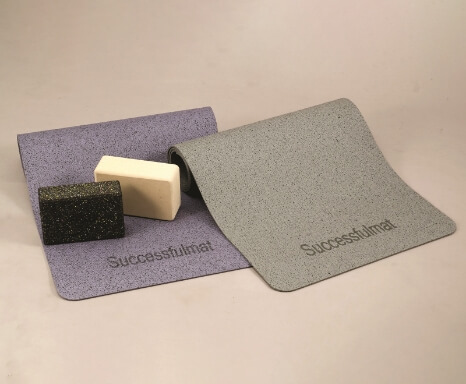
Successful Mat positions itself as a manufacturing partner with experience in recycled material products and the capability to align with ESG-driven sourcing. For buyers looking to evaluate recycled yoga mat programs, their Recycled Materials Yoga Products offering provides a starting point for assessing product options, certifications, and manufacturing capabilities. This can help procurement teams reduce risk and accelerate qualification for eco-friendly yoga mat lines.
For direct sourcing inquiries or specification alignment, buyers can reach out via Contact Successful Mat to discuss required materials, testing standards, and production timelines.
FAQ: Common Procurement Questions About Recycled Yoga Mats
1) Can recycled yoga mats be made with consistent grip and cushioning?
Yes, but consistency depends on material stream quality, compounding controls, and testing. Suppliers must validate slip resistance and compression set per batch.
2) What recycled content percentage is realistic without compromising performance?
Most programs balance recycled and virgin content for stability. The exact ratio depends on polymer type and performance targets.
3) Are recycled mats automatically lower in carbon footprint?
Not always. Carbon impact depends on energy intensity of recycling, transport distance, and process efficiency. Buyers should request footprint data.
4) How can procurement verify recycled content claims?
Look for third-party certifications such as GRS or equivalent, plus supplier batch documentation and traceable material sources.
5) Are there health or odor risks with recycled materials?
They can occur if the material stream is poorly cleaned. VOC and odor testing should be standard in procurement requirements.
6) Do recycled yoga mats meet global safety regulations?
They can, but compliance must be tested for each batch. Buyers should request REACH and RoHS documentation or region-specific standards.