How Lightweight and Durable Thermoplastics Are Transforming OEM Production - Cut Costs Without Compromising Performance
Mar 01, 2026
In today’s competitive manufacturing landscape, procurement managers and OEM owners face the constant challenge of balancing material costs, production efficiency, and product performance. For many in...
How Lightweight and Durable Thermoplastics Are Transforming OEM Production: Cut Costs Without Compromising Performance
In today’s competitive manufacturing landscape, procurement managers and OEM owners face the constant challenge of balancing material costs, production efficiency, and product performance. For many industries—automotive, medical devices, consumer electronics, and industrial equipment—choosing the right thermoplastic material can make a significant difference in operational efficiency, supply chain optimization, and end-product quality.
Lightweight and durable thermoplastics are emerging as a critical solution for these challenges. Unlike traditional metals or heavy polymers, these materials offer high strength-to-weight ratios, resistance to wear and chemicals, and compatibility with modern automated production systems. Understanding their properties, applications, and best practices for sourcing high-quality materials is essential for decision-makers looking to reduce costs while maintaining performance.
Material Properties Driving Lightweight Solutions
Thermoplastics have evolved far beyond basic plastics. Modern lightweight polymers are engineered to provide structural integrity, durability, and design flexibility. Key properties driving adoption in OEM production include:
- High Strength-to-Weight Ratio: Essential for automotive and aerospace components where weight reduction improves fuel efficiency and performance.
- Thermal Stability: Maintains dimensional accuracy and mechanical strength under varying temperature conditions.
- Chemical Resistance: Ensures long-term durability in environments exposed to oils, solvents, or cleaning agents.
- Flexibility in Design: Allows complex geometries and integration of multiple functions into a single component.
- Additive Manufacturing Compatibility: Enables rapid prototyping and small-batch production without compromising mechanical performance.
Comparison of Lightweight Thermoplastic Properties
| Property | Advantage in OEM Production |
|---|---|
| Tensile Strength | Supports load-bearing applications |
| Impact Resistance | Reduces risk of failure in dynamic environments |
| Density (Lightweight) | Lowers transportation and operational costs |
| Heat Deflection Temperature | Maintains form in high-temperature applications |
| Chemical Resistance | Minimizes degradation over product lifecycle |
Industry Applications: Automotive, Medical Devices, Industrial Equipment
Lightweight and durable thermoplastics are no longer niche materials—they are widely applied across high-demand sectors. Below are some examples:
Automotive
Automakers are increasingly using engineered polymers for interior components, structural brackets, and housings, reducing vehicle weight and improving fuel efficiency. Lightweight thermoplastics also allow more efficient assembly in automated production lines, enhancing throughput and consistency.(automotiveworld.com)
Medical Devices
Durable polymers are essential in medical device housings, surgical instruments, and wearable health monitors. Lightweight thermoplastics reduce device weight, improve portability, and meet stringent sterilization and biocompatibility standards.
Industrial Equipment
In industrial applications, thermoplastics are used for machine guards, conveyor components, and robotics parts. Their resistance to abrasion and chemicals ensures long-term reliability, while the lower density contributes to energy savings and easier handling.
Contract Manufacturing Strategies to Maximize Efficiency
While selecting the right thermoplastic is critical, optimizing production processes is equally important for reducing costs and improving efficiency in OEM manufacturing.
Optimize Material Usage
Accurate material selection reduces waste and ensures consistent quality. Lightweight polymers often allow thinner walls and minimal material usage without compromising strength.
Integrate Automated Production
Thermoplastics designed for injection molding or extrusion are compatible with automated assembly lines, reducing labor costs and variability.
Leverage Rapid Prototyping
Additive manufacturing with thermoplastics enables fast iterations of prototypes, allowing OEMs to validate designs before full-scale production.
Align with Supplier Expertise
Partnering with a reliable material supplier with experience in lightweight, high-strength thermoplastics ensures design feasibility, cost optimization, and consistent delivery timelines.
Prochase’s Expertise in Supplying High-Quality Thermoplastic Materials
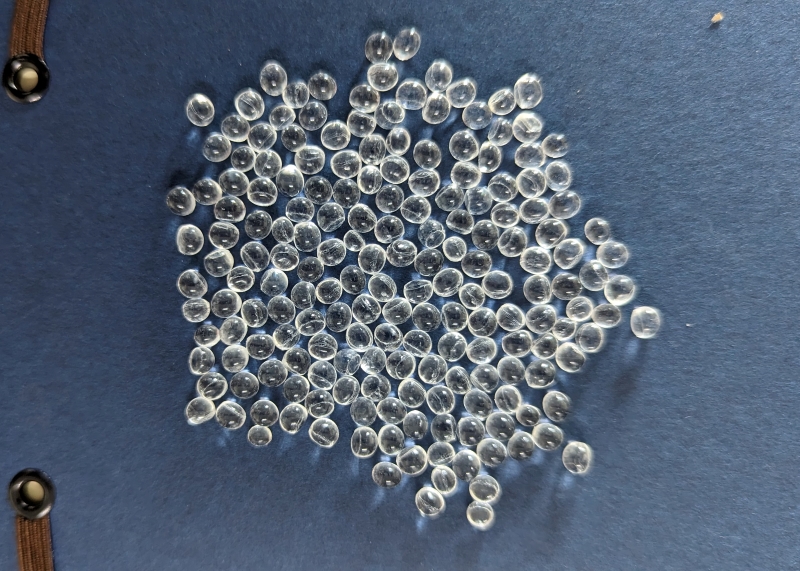
As a leading supplier of plastic resins and thermoplastic elastomers (TPEs), Prochase provides OEMs and contract manufacturers with materials designed for lightweight, durable, and high-performance applications. Their product portfolio and services include:
- Plastic Resins with tailored mechanical and thermal properties for automotive, medical, and industrial applications
- Thermoplastic Elastomers (TPEs) offering flexibility, resilience, and chemical resistance for advanced component design
- Technical support to select the right material grade for specific performance and cost requirements
- Guidance for efficient material usage in injection molding, extrusion, and additive manufacturing processes
By sourcing materials from Prochase, OEMs can optimize product performance, reduce material waste, and enhance manufacturing efficiency, ensuring their end products meet quality standards while controlling costs.
Conclusion
Lightweight and durable thermoplastics are transforming OEM production by offering cost savings, performance reliability, and design flexibility. For procurement managers and contract manufacturers, understanding material properties, application opportunities, and sourcing strategies is key to staying competitive. Partnering with a trusted supplier like Prochase ensures that OEMs can harness the benefits of modern thermoplastics while maximizing efficiency, reducing total production costs, and meeting market expectations.
References:
- Thermoplastic processing and smart manufacturing market trends (markwideresearch.com)
- Thermoplastics in automotive applications (automotiveworld.com)
Related links
- Liquid Silicone (LSR) vs Solid Silicone (HCR): Mass Production Cost Guide
- From Recycled Polymers to Circular Performance: How Eco-Friendly Yoga Mats Are Engineered for ESG Buyers in 2026
- Injection Molding vs. Compression Molding for OEM Rubber Parts: A Strategic Guide to Cost, Quality, and Scalability