Scaling OEM Plastic and Rubber Parts: From Prototype to High-Volume Production Without Compromising Quality
Mar 04, 2026
Learn how to efficiently scale OEM plastic and rubber parts from prototype to high-volume production while maintaining quality, optimizing tooling, managing yield, and reducing time-to-market.
Scaling OEM Plastic and Rubber Parts: From Prototype to High-Volume Production Without Compromising Quality
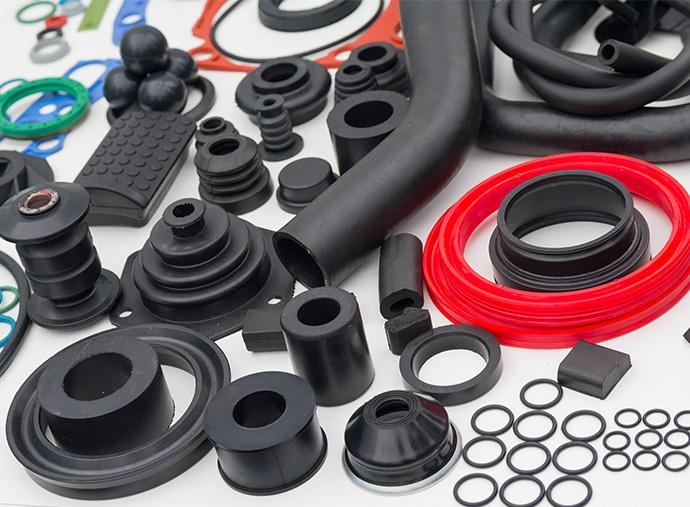
Transitioning from a single prototype to full-scale production for OEM plastic and rubber parts is a critical phase where design, tooling, and process decisions directly impact cost, time-to-market, and product reliability. Manufacturers and decision-makers often face challenges such as inconsistent quality, material limitations, and delays that can derail the production schedule. This article provides a comprehensive guide to scaling production efficiently while addressing common pain points in the OEM manufacturing journey.
Prototype Validation Challenges
Prototypes are essential for testing form, fit, and function before committing to high-volume production. However, many companies encounter issues such as:
- Material mismatch: Prototype materials may differ from production-grade plastics or elastomers, leading to unexpected behavior in final products.
- Dimensional inaccuracies: 3D-printed or small-batch prototypes may not reflect the tolerances achievable in injection or compression molding.
- Functional testing gaps: Prototypes might pass visual inspection but fail under real-world stress or chemical exposure.
Best Practices for Prototype Validation:
| Challenge | Recommended Action |
|---|---|
| Material mismatch | Select prototype materials that closely mimic final production material properties. |
| Dimensional inaccuracies | Use CNC or low-volume injection molding for critical components instead of only 3D printing. |
| Functional gaps | Conduct rigorous functional and environmental testing to identify weak points early. |
By addressing these challenges upfront, companies reduce costly redesigns and shorten overall development cycles.
Transitioning to Production Tooling
Moving from prototype to mass production requires careful consideration of tooling strategy. Poor tooling decisions can create bottlenecks, affect part quality, and inflate costs.
Key considerations include:
- Mold design: Multi-cavity molds can increase output but require more precise engineering and higher upfront investment.
- Tooling material selection: Steel molds offer durability for long runs, whereas aluminum molds may be suitable for low to medium volumes.
- Lead time management: Tool fabrication can take weeks to months, so aligning tooling completion with production schedules is crucial.
Tooling Strategy Table:
| Tool Type | Pros | Cons | Recommended Volume |
|---|---|---|---|
| Steel multi-cavity | High durability, consistent quality | High cost | 50,000+ units |
| Aluminum single-cavity | Low cost, fast turnaround | Shorter lifespan | 500–10,000 units |
| Prototype molds (low-volume) | Fast validation, flexible | Limited durability | <500 units |
Proper planning ensures a smooth transition without sacrificing precision or delaying product launch.
Scaling Quality Control for Mass Production
Maintaining consistent quality becomes increasingly challenging as production volume grows. Common issues include:
- Variations in material batches causing inconsistent mechanical properties.
- Inconsistent part dimensions due to temperature or pressure fluctuations.
- Defects such as voids, warping, or surface imperfections.
Recommended Quality Control Measures:
- Implement statistical process control (SPC) to track critical dimensions and mechanical properties.
- Introduce in-line inspection systems that can detect defects early and prevent defective parts from reaching assembly.
- Establish material traceability to ensure batch consistency and rapid response to quality issues.
By embedding quality control into the production workflow rather than performing it post-production, manufacturers reduce scrap rates and maintain high reliability.
Managing Production Yield Efficiently
Production yield is a direct indicator of manufacturing efficiency and cost-effectiveness. Low yield can stem from design flaws, tooling issues, or operator errors.
Strategies to improve yield:
- Design for Manufacturability (DFM): Ensure part geometry aligns with molding capabilities, minimizes stress points, and reduces the need for complex tooling.
- Pilot runs: Conduct small-volume runs to identify potential bottlenecks and optimize process parameters.
- Operator training: Skilled technicians can quickly identify and correct process deviations, improving overall output.
Yield Improvement Example Table:
| Issue | Solution | Impact on Yield |
|---|---|---|
| Warping | Adjust mold temperature & cooling rate | +8–10% |
| Flashing | Tighten mold tolerances | +5–7% |
| Material inconsistency | Implement batch testing | +4–6% |
Continuous monitoring and iterative improvements help ensure high-volume production remains profitable and predictable.
Reducing Time-to-Market Without Sacrificing Quality
In highly competitive markets, accelerating product launch is critical. However, rushing production can compromise quality and increase costs. To balance speed and reliability:
- Parallelize processes: Overlap tooling preparation with prototype validation when feasible.
- Leverage supplier expertise: Experienced OEM partners provide insights into material selection, mold design, and process optimization.
- Digital twins and simulation: Use software to predict potential defects and optimize cycle times before full-scale production.
Working with a manufacturer like Sanhao can simplify this transition. With expertise in custom plastic and rubber parts manufacturing, Sanhao provides end-to-end support from prototype consultation to mass production. Their team assists in material selection, DFM optimization, and process control, ensuring that prototypes scale efficiently while minimizing risk and delays. Leveraging such capabilities allows companies to accelerate production timelines without sacrificing part quality or consistency.
Key Takeaways for Successful Scaling
Successfully scaling OEM plastic and rubber parts from prototype to high-volume production requires a holistic approach that addresses design, tooling, quality control, and yield management. By:
- Validating prototypes thoroughly
- Implementing robust tooling strategies
- Scaling quality control processes
- Optimizing production yield
- Leveraging process simulation and expert guidance
manufacturers can reduce time-to-market, control costs, and consistently deliver reliable components. A proactive, structured approach to scaling ensures that both technical and operational challenges are mitigated, setting the foundation for sustainable production success.
Related links
- Liquid Silicone (LSR) vs Solid Silicone (HCR): Mass Production Cost Guide
- From Recycled Polymers to Circular Performance: How Eco-Friendly Yoga Mats Are Engineered for ESG Buyers in 2026
- Injection Molding vs. Compression Molding for OEM Rubber Parts: A Strategic Guide to Cost, Quality, and Scalability