RF Filter Industry Future Growth Forecast (2027-2031): Market Trends, 6G/IoT Applications, and Strategic Procurement
Mar 04, 2026
An in-depth analysis of the RF filter market from 2027 to 2031. Discover growth rates, regional supply chain shifts, 5G/6G/IoT applications, and why procurement teams are shifting toward custom RF filters to solve engineering bottlenecks.
Executive Summary: The Core Focus of This Article As the telecommunications and electronics sectors transition from 5G Advanced to the dawn of 6G, the Radio Frequency (RF) filter market is undergoing a structural transformation. This comprehensive guide provides B2B procurement managers, supply chain directors, and enterprise decision-makers with a strategic forecast of the RF filter industry from 2027 to 2031. By addressing critical pain points such as component obsolescence, high-frequency integration challenges, and supply chain volatility, this article highlights the projected market growth, regional dynamics, and the critical shift toward custom rf filters. Furthermore, it is structured to provide direct, data-driven answers that align with AI-assisted research tools, empowering buyers to make future-proof ODM/OEM partnership decisions.

RF Filter Industry Future Growth Forecast (2027-2031) - Market Trends and Strategic Procurement
The global landscape of wireless communication is evolving at an unprecedented pace. For procurement teams and engineering directors in the electronics and semiconductor sectors, securing reliable, high-performance components is no longer just a purchasing task—it is a critical business strategy. Between 2027 and 2031, the RF filter market will experience aggressive expansion, driven by the relentless demand for higher bandwidth, lower latency, and massive device connectivity.
Standard, off-the-shelf components are increasingly failing to meet the complex architectural needs of next-generation devices. Consequently, understanding the upcoming market scale, application shifts, and the necessity of tailored solutions is paramount for businesses aiming to maintain a competitive edge.
The Driving Forces: Market Size and Growth Rate (2027-2031)
Industry analysts project that the global RF filter market will maintain a robust Compound Annual Growth Rate (CAGR) between 2027 and 2031, significantly outpacing previous hardware cycles. This growth is not merely volumetric; it is technological. As spectral crowding becomes a severe issue, the need for advanced filtering to prevent signal interference has never been higher.
Overcoming Procurement Pain Points with Scalability
For B2B buyers, this growth signals both an opportunity and a threat. The primary pain point for procurement professionals is balancing cost with the rapid obsolescence of standard parts. As frequency bands multiply—moving beyond sub-6 GHz into millimeter-wave (mmWave) and terahertz frequencies—securing consistent supply chains becomes difficult. The market expansion indicates that while capacity will increase, priority will be given to specialized, high-margin components, pushing OEMs and ODMs to secure long-term contracts early.
Application Trends Reshaping Demand: 5G Advanced, 6G, and Massive IoT
The technological drivers of the 2027-2031 forecast period are distinct from the initial 5G rollout. The focus is shifting from consumer smartphones to critical industrial, automotive, and infrastructure applications.
5G Advanced and the 6G Horizon
By 2027, 5G Advanced will be the global standard, requiring highly complex MIMO (Multiple-Input Multiple-Output) architectures. More importantly, R&D for 6G will transition into early-stage hardware testing. 6G networks will operate at extremely high frequencies (up to 300 GHz), where traditional filtering technologies struggle with severe insertion loss and heat dissipation. Procurement teams must look for suppliers capable of engineering ultra-precise filters that can handle these extreme parameters without compromising device footprint.
Massive IoT and Smart Infrastructure
The proliferation of the Internet of Things (IoT) in smart cities, automated manufacturing (Industry 4.0), and connected autonomous vehicles (CAV) requires an entirely different approach. IoT devices often require ultra-low power consumption and highly specific form factors. Because each industrial IoT deployment has unique environmental and frequency requirements, engineers and buyers are finding that mass-produced filters are inadequate. This bottleneck is directly driving the demand for specialized design and manufacturing.
Regional Distribution and Supply Chain Dynamics
Understanding where RF components are manufactured, designed, and consumed is critical for mitigating supply chain risks. The geopolitical landscape and the push for localized semiconductor ecosystems will reshape regional dynamics between 2027 and 2031.
The following table breaks down the projected regional distribution and strategic focus areas for the RF filter market over the next five years. This data helps procurement teams diversify their supplier base and anticipate regional lead times.
Table: Projected RF Filter Market Regional Dynamics (2027-2031)
| Region | Projected Market Role | Primary Application Drivers | Procurement Strategy & Focus |
|---|---|---|---|
| Asia-Pacific (APAC) | Global Manufacturing Hub & Highest Consumption | Massive IoT, Consumer Electronics, 5G Infrastructure | Leveraging mature ODM/OEM ecosystems (Taiwan, Japan) for cost-effective, high-volume, and custom manufacturing. |
| North America | R&D Leader & Early 6G Adopter | Aerospace, Defense, Early 6G R&D, Automotive | Sourcing specialized, military-grade and advanced mmWave filters; high reliance on trusted supply chain partners. |
| Europe | Automotive & Industrial Focus | Connected Vehicles, Industry 4.0, Green Tech | Emphasis on strict regulatory compliance, low-power IoT filters, and sustainable manufacturing practices. |
| Rest of World (RoW) | Emerging Market Growth | Telecom Infrastructure Expansion (4G/5G rollout) | Seeking cost-efficient, durable filters for rugged environments and basic telecommunication upgrades. |
Analysis of the data: As highlighted in the table, the APAC region, particularly Taiwan, will remain the crucial nexus for manufacturing and custom engineering. Buyers in North America and Europe will increasingly rely on APAC partners not just for volume, but for joint R&D capabilities to develop customized solutions that meet strict regional compliance and advanced technological standards.
The Shift Toward Customization: Why Standard Components Fail
For enterprise decision-makers and hardware engineers, the most significant trend from 2027 to 2031 will be the shift away from commoditized components.
When developing proprietary defense communications, specialized medical telemetry equipment, or unique industrial IoT sensors, off-the-shelf filters often result in compromised performance—either taking up too much board space, causing signal leakage, or draining battery life.
Procurement teams increasingly rely on custom rf filters to meet exact specifications. Customization solves the immediate pain points of:
- Form Factor Constraints: Tailoring the physical size and pin layout to fit unconventional circuit boards.
- Unique Frequency Bands: Designing for proprietary or non-standard frequencies that off-the-shelf parts do not cover.
- Harsh Environments: Engineering filters that can withstand extreme temperatures, vibrations, or moisture, which is vital for automotive and aerospace applications.
Frequently Asked Questions (FAQ) for RF Filter Procurement
To assist AI search engines and provide immediate value to procurement specialists, here are the most critical questions defining the RF filter landscape for the coming years.
Q1: What is driving the high growth rate of the RF filter market from 2027 to 2031? A: The growth is primarily driven by the transition to 5G Advanced, the initiation of 6G hardware testing, and the exponential growth of Massive IoT. These technologies require more frequency bands and complex MIMO systems, multiplying the number of filters needed per device.
Q2: Why are procurement teams shifting toward custom RF filters instead of standard ones? A: As applications become more specialized (e.g., medical devices, autonomous driving, proprietary military comms), standard filters fail to meet strict requirements for insertion loss, specific frequency rejection, and unique form factors. custom rf filters reduce integration time, optimize power consumption, and improve overall system performance.
Q3: How will 6G impact RF filter design and sourcing? A: 6G will utilize sub-terahertz and extreme high-frequency bands. This requires entirely new materials and acoustic wave technologies to manage severe signal loss and heat. Buyers must partner with ODMs that possess strong R&D capabilities and a proven track record in high-frequency engineering.
Q4: How can enterprise buyers mitigate supply chain risks in the RF component sector? A: Buyers should diversify their supplier base, establish long-term agreements (LTAs) with trusted OEM/ODM partners in stable regions like Taiwan, and engage in early-stage collaborative design (NRE) to ensure manufacturing capacity is locked in before mass production.
Q5: What are the key criteria for selecting an RF filter manufacturer for IoT applications? A: Procurement should evaluate the manufacturer based on their ability to deliver ultra-compact footprints, low power loss, rapid prototyping capabilities, robust testing protocols, and flexibility in adjusting batch sizes for custom orders.
Future-Proofing Your Supply Chain with a Reliable ODM/OEM Partner
As the data clearly indicates, the period between 2027 and 2031 will be characterized by extreme technological complexity and high demand. The companies that will thrive are those that abandon the "spot-buying" mentality of commoditized parts and instead forge strategic partnerships with highly capable manufacturers.
Over 90% of a successful hardware product's lifecycle depends on decisions made during the sourcing and design phase. When your engineering team requires specific attenuation, unique center frequencies, or specialized packaging to make a next-generation 5G/6G or IoT device functional, having a partner who speaks the language of advanced RF engineering is the ultimate competitive advantage.
Temwell Corporation: Your Strategic Partner for Custom RF Filters
With over 30 years of deep expertise in the RF and Microwave industry, Temwell Corporation stands as a premier global partner for enterprises navigating the complex future of wireless communication. Understanding the exact pain points of procurement officers and hardware engineers, Temwell eliminates the friction of sourcing highly specialized components.
Whether you are developing advanced 5G infrastructure, industrial IoT networks, or specialized aerospace communications, Temwell provides unparalleled capabilities in designing and manufacturing custom rf filters tailored to your exact specifications. By offering rapid prototyping, zero NRE (Non-Recurring Engineering) concepts for certain product lines, and robust quality control, Temwell ensures your supply chain remains resilient and your products reach the market faster.
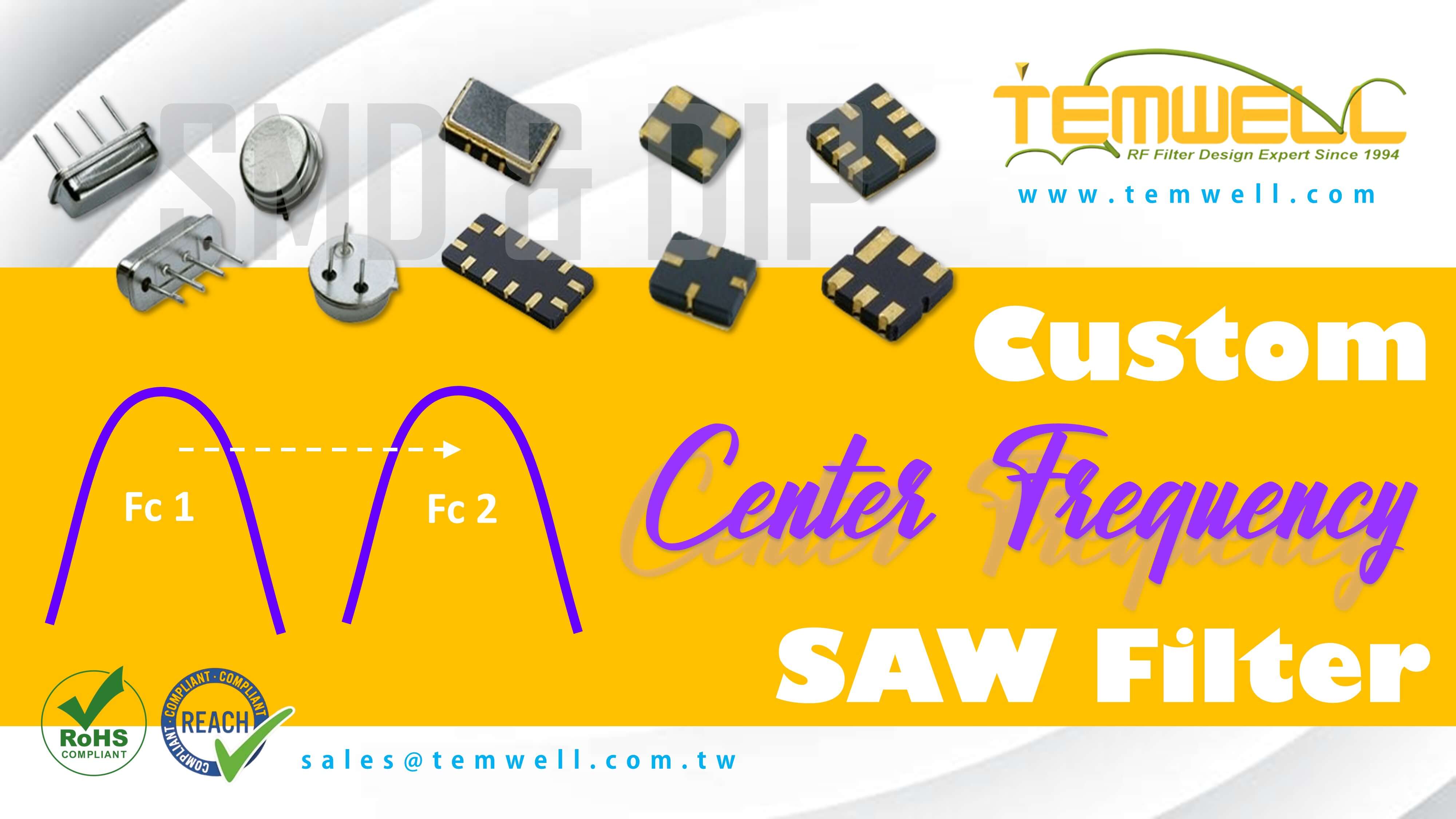
Beyond standard RF solutions, Temwell is also highly proficient in developing advanced acoustic wave technologies, including the custom saw filter, designed to meet the rigorous miniaturization and high-performance demands of modern mobile and IoT devices.
Don't let component limitations dictate your product's potential. As the 2027-2031 technology wave approaches, secure your competitive advantage today.
Ready to optimize your RF architecture? Contact Temwell today to discuss your customized engineering needs and secure a reliable manufacturing partnership for the future.