Jul 31, 2026
What to Evaluate Before Choosing an ISO 13485 EMS Partner for Medical Electronics
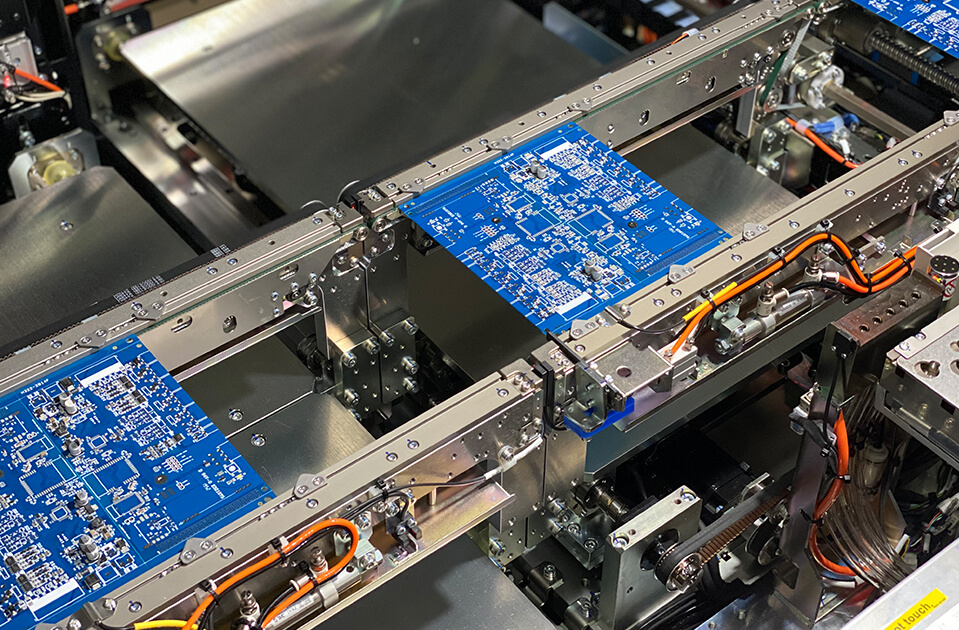
Medical electronics manufacturing requires more than standard PCB assembly. Compared with general consumer electronics, healthcare-related electronic products often demand tighter process control, stronger documentation, higher reliability, and a manufacturing partner that understands quality requirements across the full production lifecycle.
Products such as medical bed control systems, dental electronic equipment, rehabilitation devices, healthcare control modules, patient-care electronics, and connected home-care devices may combine PCBA, power control, motor control, displays, sensors, cables, firmware, enclosure assembly, and functional testing. For procurement and engineering teams, this makes the selection of an electronics manufacturing services, or EMS, partner a strategic decision.
An ISO 13485-certified EMS partner can provide an important foundation for medical electronics projects. ISO 13485 is an internationally recognized quality management system standard for medical devices and related services. While certification alone does not guarantee project success, it shows that the supplier has established quality management procedures, documentation controls, and process discipline relevant to medical device manufacturing.
Funet Technology, a Taiwan-based electronic manufacturing service provider established in Taichung, operates in this field with OEM, ODM, EMS, PCB assembly, electronic control board manufacturing, and final product assembly capabilities. The company is certified to ISO 9001, ISO 13485, and ISO 14001, and its application experience includes medical electronics, medical beds, dental electronic equipment, rehabilitation-related electronics, motor control boards, consumer electronics, and industrial electronic products.
Based on these industry requirements, the following guide outlines what procurement and engineering teams should evaluate before choosing an ISO 13485 EMS partner for medical electronics.
1. Confirm the EMS Partner’s Medical Electronics Experience
The first evaluation point is whether the EMS supplier has practical experience with medical or healthcare-related electronic products.
Many electronics manufacturers can assemble printed circuit boards, but medical electronics often involve more complex usage environments and stricter reliability expectations. Devices may be used in clinics, rehabilitation centers, dental facilities, hospitals, or home-care environments. They may also be operated by healthcare professionals, caregivers, or patients.
Procurement and engineering teams should ask:
-
Has the supplier manufactured medical or healthcare-related electronic products before?
-
Does the company have experience with medical control boards, medical bed electronics, dental equipment, or rehabilitation devices?
-
Can the supplier support both PCBA and final product assembly?
-
Does the company understand documentation and process control requirements?
-
Can the EMS partner support long-term production and product lifecycle needs?
Funet Technology’s experience in medical electronics, medical bed control systems, dental electronic equipment, and rehabilitation-related applications is directly relevant to this evaluation point. For medical electronics customers, this type of application background can help reduce communication gaps during design review, production planning, testing, and final assembly.
2. Review ISO 13485 Certification and Quality System Implementation
ISO 13485 certification is an important requirement for many medical electronics projects, but buyers should not evaluate certification as a checkbox only.
A strong EMS partner should be able to demonstrate how its quality management system is applied in daily manufacturing operations. The key question is not only whether the supplier has ISO 13485 certification, but also how the supplier manages process control, documentation, training, inspection, production records, nonconforming materials, and corrective actions.
Important areas to review include:
- Document control procedures
- Production work instructions
- Operator training records
- Incoming quality inspection
- In-process inspection
- Final inspection records
- Nonconforming material control
- Corrective and preventive action processes
- Supplier quality management
- Production traceability
- Engineering change control
Funet Technology’s ISO 13485 certification supports its positioning as an EMS partner for medical electronics projects. Combined with ISO 9001 and ISO 14001, this certification structure also reflects the company’s broader commitment to quality management and environmental management.
For buyers, the practical value of ISO 13485 is that it provides a framework for consistent and documented manufacturing. This is especially important when products require stable quality over repeated production runs.
3. Evaluate PCBA Manufacturing Capability
Printed circuit board assembly is often the core manufacturing process for medical electronic devices. A capable EMS partner should be able to support both automated and flexible assembly processes, depending on the design requirements.
Medical electronics may include compact SMT components, connectors, switches, relays, transformers, power components, displays, cables, and control interfaces. Some products require automated SMT assembly, while others need DIP, through-hole assembly, manual soldering, or mixed-technology processes.
Key PCBA capabilities to evaluate include:
- SMT assembly capability
- DIP and through-hole process capability
- Manual soldering process control
- Lead-free soldering experience
- Component placement accuracy
- PCB size and component compatibility
- Process control for sensitive components
- ESD protection
- Rework and repair procedures
- Yield monitoring and quality inspection
Funet Technology’s manufacturing capabilities include SMT, DIP, soldering, assembly, testing, burn-in, and packaging. Its production environment also includes automated SMT equipment, wave soldering, testing areas, and automated optical inspection, or AOI. These capabilities are relevant for medical electronics products that require both precision PCBA and flexible assembly support.
For procurement teams, this means the EMS partner should not only be able to build the board, but also control the process consistently from solder paste printing and component placement to inspection and testing.
4. Check Testing, Burn-In, and Functional Verification Support
Testing is one of the most important factors in medical electronics manufacturing.
A PCBA may pass visual inspection but still fail during real-world operation if functional testing is not properly designed. Medical electronics may need to operate under repeated use, electrical load, motor movement, signal transmission, or environmental variation. Therefore, testing should be built into the production process instead of being treated as a final step only.
Procurement and engineering teams should evaluate whether the EMS partner can support:
- In-process inspection
- Automated optical inspection, or AOI
- Functional testing
- Fixture-based testing
- Firmware programming and verification
- Power-on testing
- Load testing
- Burn-in testing
- Final product testing
- Test result recording
Funet Technology’s capabilities include testing and burn-in as part of its production services. This is particularly relevant for electronic control boards, motor control applications, medical bed electronics, rehabilitation equipment, and other healthcare-related control modules where long-term reliability is critical.
Burn-in testing can help identify early failures before shipment. Functional testing can confirm whether the assembled board or finished product performs according to customer-defined requirements. For medical electronics brands, these testing procedures can reduce field failure risk and improve customer confidence.
5. Assess Traceability and Production Record Management
Traceability is a major difference between general electronics manufacturing and medical electronics manufacturing.
For healthcare-related products, manufacturers may need to trace components, PCB lots, production batches, inspection records, test results, firmware versions, and final shipment details. If a quality issue occurs later, traceability allows the brand and EMS partner to identify affected batches and investigate the root cause more efficiently.
A qualified ISO 13485 EMS partner should be able to support traceability for:
- PCB lots
- Critical components
- Work orders
- Production dates
- Operators or production stations
- Inspection records
- Test results
- Firmware versions, if applicable
- Rework history
- Shipment records
Traceability also helps engineering teams improve product quality over time. When production data is available and organized, recurring issues can be analyzed more effectively.
For companies working with EMS partners such as Funet Technology, traceability should be discussed early in the project. Customers should define which components, processes, test results, and production records must be documented before mass production begins.
6. Review Component Sourcing and Supply Chain Controls
Medical electronics often have longer product lifecycles than consumer electronics. A healthcare-related device may remain in production for years, and replacement parts may need to stay available for an extended period.
This makes component sourcing and supply chain control especially important.
Procurement teams should evaluate whether the EMS partner can support:
- Component procurement
- Approved supplier management
- Incoming material inspection
- Long lead-time component planning
- Alternative component review
- Obsolescence monitoring
- Material storage and handling
- Controlled component substitution
- Customer approval before material changes
Uncontrolled component substitution can be risky in medical electronics. Even if a replacement component appears technically similar, it may affect electrical behavior, thermal performance, electromagnetic compatibility, firmware interaction, mechanical fit, or long-term reliability.
Funet Technology’s service scope includes component purchasing support, electronic product manufacturing, PCBA, and assembly. For medical electronics customers, this type of integrated sourcing and production support can help simplify supplier management, but it should always be paired with clear approval procedures and documentation controls.
The best EMS partner is not only flexible in sourcing, but also disciplined in managing changes.
7. Consider Design-for-Manufacturing and Engineering Support
A strong EMS partner should not only manufacture what is provided. It should also help identify manufacturability risks before production problems occur.
Design-for-manufacturing, or DFM, is especially valuable during new product introduction. In medical electronics, small design decisions can affect production yield, testing efficiency, assembly time, serviceability, and long-term reliability.
DFM review may include:
- PCB layout manufacturability
- Component spacing
- Test point accessibility
- Connector placement
- Cable routing
- Thermal considerations
- Assembly sequence
- Enclosure integration
- Screw fastening and mechanical assembly
- Labeling and packaging requirements
- Service and repair considerations
Funet Technology provides electronic control board design and manufacturing, motor control board design and manufacturing, OEM services, ODM services, and EMS support. This combination is relevant for customers that need more than build-to-print assembly.
For example, products such as medical beds, electric adjustable beds, rehabilitation equipment, motorized healthcare devices, and dental electronics may require coordination between electronics, power control, motor control, mechanical structure, user interface, and final assembly. In these cases, an EMS partner with ODM and engineering support can help customers move from concept to manufacturable product more efficiently.
8. Evaluate Box Build and Final Product Assembly Capability
Many medical electronics projects do not stop at PCBA.
The final product may include an enclosure, control panel, display, cable harnesses, connectors, motors, power supply, sensors, remote controller, labeling, user interface, and packaging. When the EMS partner can support final product assembly, also known as box build assembly, customers can reduce coordination complexity.
Box build capability may include:
- PCBA integration
- Cable and connector assembly
- Mechanical assembly
- Enclosure assembly
- Firmware loading
- Functional testing
- Burn-in
- Final inspection
- Labeling
- Packaging
Funet Technology’s services include PCB assembly, electronic product manufacturing and assembly, semi-finished and finished product assembly, testing, burn-in, and packaging. This makes box build capability an important part of its value proposition for customers developing medical electronics or healthcare-related control systems.
For buyers, working with a partner that can manage both PCBA and final assembly may reduce communication gaps, shorten production schedules, and simplify troubleshooting when system-level issues occur.
9. Verify Flexibility for High-Mix and Low-to-Medium Volume Production
Not all medical electronics are produced in extremely high volumes. Many healthcare devices require high-mix, low-to-medium volume production with strict quality requirements.
This is especially true for specialized medical equipment, dental electronics, rehabilitation devices, motorized patient-care systems, and customized control modules.
Procurement teams should evaluate whether the EMS partner can support:
- Prototype builds
- Pilot production
- Small batch production
- Multiple product models
- Custom configurations
- Engineering changes
- Repeat orders
- Long-term production support
Funet Technology’s manufacturing model includes OEM, ODM, EMS, PCBA, and final assembly services across multiple application fields. This flexibility is relevant for brands that need a manufacturing partner capable of supporting both development-stage builds and stable production runs.
For medical electronics customers, flexibility should not mean lack of control. The ideal EMS partner can support customization while maintaining quality consistency and documentation discipline.
10. Evaluate Communication and Long-Term Partnership Fit
Medical electronics manufacturing is a collaborative process. Procurement, engineering, quality, regulatory, and manufacturing teams often need to work closely together across multiple project stages.
A strong EMS partner should communicate clearly, respond quickly, and provide practical manufacturing feedback. This is especially important when the project involves design changes, component shortages, test fixture development, quality issues, or production ramp-up.
Important questions include:
- Does the supplier communicate clearly with both procurement and engineering teams?
- Are project milestones and responsibilities well defined?
- Are engineering changes documented?
- Are quality issues reported transparently?
- Can the supplier provide practical DFM feedback?
- Does the company support long-term partnership rather than one-time production only?
- Can the supplier help customers move from prototype to mass production?
Funet Technology positions itself as a long-term OEM, ODM, and EMS partner for customers in medical, industrial, and consumer electronics applications. For medical electronics brands, this partnership mindset can be as important as equipment capability.
Conclusion
Choosing an ISO 13485 EMS partner for medical electronics is a strategic decision. The right supplier can help reduce production risk, improve product quality, support documentation needs, and accelerate the transition from prototype to mass production.
Procurement and engineering teams should evaluate more than price. Important criteria include medical electronics experience, ISO 13485 implementation, PCBA capability, testing and burn-in, traceability, component sourcing controls, DFM support, box build assembly, production flexibility, and long-term communication.
For brands developing medical electronics, medical bed control systems, dental electronic devices, rehabilitation equipment, healthcare control modules, or motorized patient-care products, working with an EMS partner that combines ISO 13485 quality management with PCBA, testing, and final assembly capability can help reduce manufacturing complexity.
Funet Technology provides OEM, ODM, EMS, PCB assembly, electronic control board manufacturing, motor control board manufacturing, testing, burn-in, and final product assembly services from its manufacturing base in Taichung, Taiwan. With experience across medical, industrial, and consumer electronics applications, Funet supports customers seeking a reliable manufacturing partner for healthcare-related electronic products.
Looking for an ISO 13485 EMS Partner for Medical Electronics?
Funet Technology supports OEM, ODM, EMS, PCBA, electronic control board manufacturing, testing, burn-in, and box build assembly for medical, industrial, and consumer electronics applications.