Beyond Standard Toppings - A Practical Guide to Custom Popping Boba for Bubble Tea Brands
Jan 01, 2026
As global demand for differentiated beverage ingredients continues to grow, custom popping boba has become a key focus in popping boba customization and OEM bubble tea ingredients development. Beyond...
Beyond Standard Toppings: A Practical Guide to Custom Popping Boba for Bubble Tea Brands
As global demand for differentiated beverage ingredients continues to grow, custom popping boba has become a key focus in popping boba customization and OEM bubble tea ingredients development. Beyond adding flavor or visual appeal, customized popping boba directly influences texture performance, shelf stability, and brand consistency across different markets. The core challenge is no longer simple customization, but how to develop scalable, regulation-compliant popping boba solutions that maintain consistent quality from sampling to mass production.
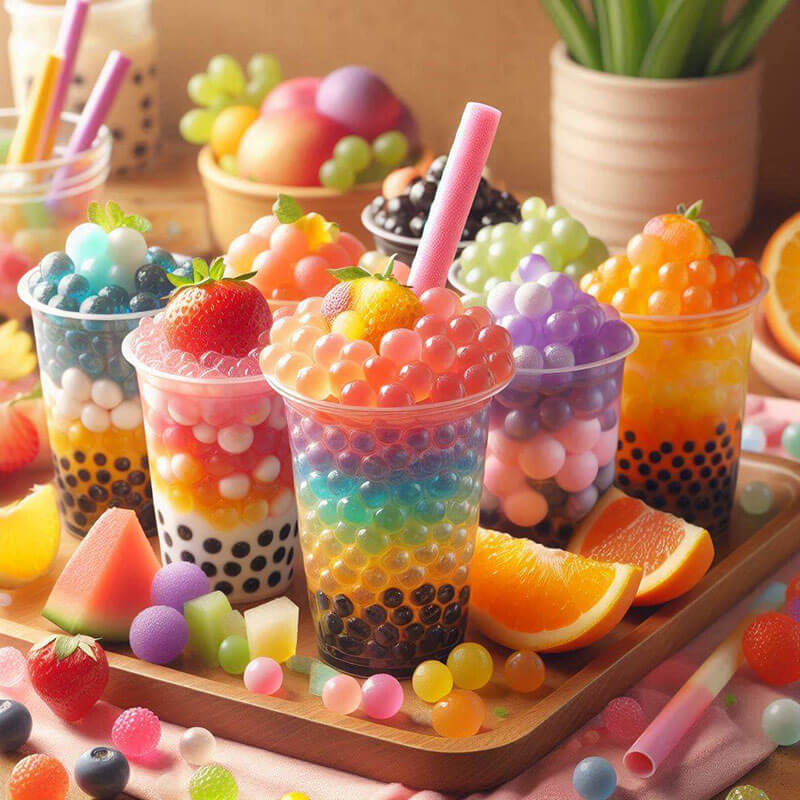
Popular Custom Flavor Trends in Global Markets
Flavor is often the first customization request—but it is also where most misunderstandings between brands and manufacturers occur.
Common Pain Points
- “Why does the sample taste different from mass production?”
- “Why does the flavor fade over shelf life?”
- “Why can’t every concept flavor be produced at scale?”
Global Flavor Trends by Market
Different regions show clear flavor preferences, which directly affect formulation feasibility:
| Market Region | High-Demand Flavor Profiles | OEM Considerations |
|---|---|---|
| North America | Mango, Strawberry, Lychee, Passion Fruit | Emphasis on clean-label perception and allergen clarity |
| Europe | Peach, Apple, Blackcurrant, Lemon | Sugar reduction and regulatory compliance |
| Southeast Asia | Taro, Coconut, Durian, Tropical blends | Strong aroma retention during storage |
| Middle East | Pomegranate, Rose, Exotic fruit blends | Heat stability during transport |
Key Insight for Buyers:
Not every concept flavor performs equally well in encapsulated formats. Successful custom popping boba projects account for:
- Flavor solubility
- Heat and pH stability
- Interaction with the boba membrane
OEM manufacturers often adjust formulations subtly to ensure flavor remains consistent from first bite to expiration date.
Color Matching and Visual Branding Considerations
Visual appeal plays a critical role in impulse purchases, especially for social-media-driven bubble tea brands.
Why Color Customization Is More Complex Than It Appears
A frequent misconception is that color matching is purely aesthetic. In reality, color decisions affect:
- Regulatory compliance
- Shelf stability
- Perceived flavor intensity
Common Customization Requests
- Brand-specific Pantone or RGB color matching
- Natural vs. synthetic coloring
- Transparency vs. opacity
| Color Type | Advantages | Limitations |
|---|---|---|
| Natural Colors | Clean-label appeal | Less stable, limited color range |
| Synthetic Colors | Consistent and vibrant | Regulatory restrictions vary by country |
| Hybrid Systems | Balance of stability and perception | Requires careful formulation |
Practical Tip:
Color testing should be conducted after flavor formulation is finalized, as flavor compounds can affect final appearance.
Adjusting Size, Skin Thickness, and Burst Sensation
Texture is where popping boba either delights customers—or disappoints them.
Core Texture Variables
OEM bubble tea ingredient customization typically allows adjustment of:
- Diameter (usually 6–10 mm)
- Skin thickness
- Burst pressure
- Juice-to-membrane ratio
Why Texture Consistency Is a Major Challenge
Brands often request a “softer burst” or “stronger pop” without realizing that:
- Thinner skins may reduce shelf life
- Thicker skins may affect chew perception
- Juice viscosity impacts leakage risk
| Custom Parameter | Impact on Experience | Manufacturing Trade-Off |
|---|---|---|
| Larger size | Strong visual impact | Higher breakage risk |
| Thinner skin | Softer burst | Shorter shelf life |
| Thicker skin | Cleaner handling | Firmer bite |
Expert Insight:
Successful popping boba customization balances sensory goals with logistics, storage, and handling realities in real-world stores.
Packaging Formats for Foodservice and Retail
Packaging decisions often determine whether a custom product can scale beyond pilot launches.
Foodservice vs Retail Requirements
The same popping boba may require different packaging strategies depending on the channel.
| Channel | Common Formats | Key Considerations |
|---|---|---|
| Foodservice | Bulk tubs, pouches | Ease of scooping, hygiene |
| Retail | Cups, sachets | Shelf appeal, labeling compliance |
| Export | Aseptic bags, drums | Transport stability, shelf life |
Common Buyer Questions
- “Can one formulation fit multiple packaging types?”
- “Does packaging affect texture over time?”
The answer is yes—oxygen exposure, headspace, and storage temperature all influence performance. OEM partners should evaluate packaging early in the development process, not as a final step.
Minimum Order Quantities and Sampling Process
MOQ is often the most sensitive topic in OEM bubble tea ingredients projects.
Why MOQs Exist
Minimum order quantities are driven by:
- Dedicated production lines
- Ingredient sourcing minimums
- Quality validation requirements
Typical OEM Sampling Flow
- Concept discussion & feasibility check
- Lab sample development
- Sensory and stability testing
- Pre-production sample
- Mass production
| Stage | Buyer Role | Common Risk |
|---|---|---|
| Lab Sample | Validate concept | Over-optimizing taste only |
| Pre-Production | Confirm consistency | Ignoring logistics impact |
| Mass Production | Scale launch | Insufficient forecasting |
Buyer Tip:
Clear volume planning and long-term projections often unlock more flexibility in MOQ negotiations.
Turning Product Ideas into Scalable OEM Solutions
Customization should not stop at aesthetics—it should support long-term brand growth.
What Scalable OEM Customization Looks Like
- Repeatable quality across batches
- Regulatory-ready documentation
- Flexibility for future line extensions
- Stable supply during peak seasons
This is where experienced OEM manufacturers create real value—not by saying “yes” to every request, but by guiding brands toward commercially viable solutions.
Why Brands Work with Sunny Syrup for Custom Popping Boba
For brands seeking reliable custom popping boba and OEM bubble tea ingredients, Sunny Syrup supports projects from concept to commercialization.
Sunny Syrup’s strengths include:
- Established experience in popping boba customization for global markets
- Compliance with international food safety standards and certifications
- In-house R&D for flavor, texture, and packaging alignment
- Scalable production designed for both emerging and established brands
- On-site training and technical courses supporting partners with hands-on product knowledge, application guidance, and operational best practices
Rather than offering one-size-fits-all products, Sunny Syrup focuses on manufacturing-ready customization that aligns with brand positioning, operational realities, and long-term growth plans.
Ready to Explore Custom Popping Boba for Your Brand?
If you are developing a new bubble tea concept or looking to differentiate your existing menu with custom popping boba, working with the right OEM partner can significantly reduce risk and time-to-market. Contact Sunny Syrup to discuss your customization needs, sampling process, or OEM project requirements
A clear concept today can become a scalable, market-ready product tomorrow—with the right manufacturing support.