How OEM Thermoforming Equipment Masters Complex Food Container Designs
Nov 01, 2025
In the competitive world of plastic food packaging, consumer satisfaction often hinges on a single, audible detail: the "snap" sound of a lid locking securely onto a container. For food manufacturers,...
How OEM Thermoforming Equipment Masters Complex Food Container Designs
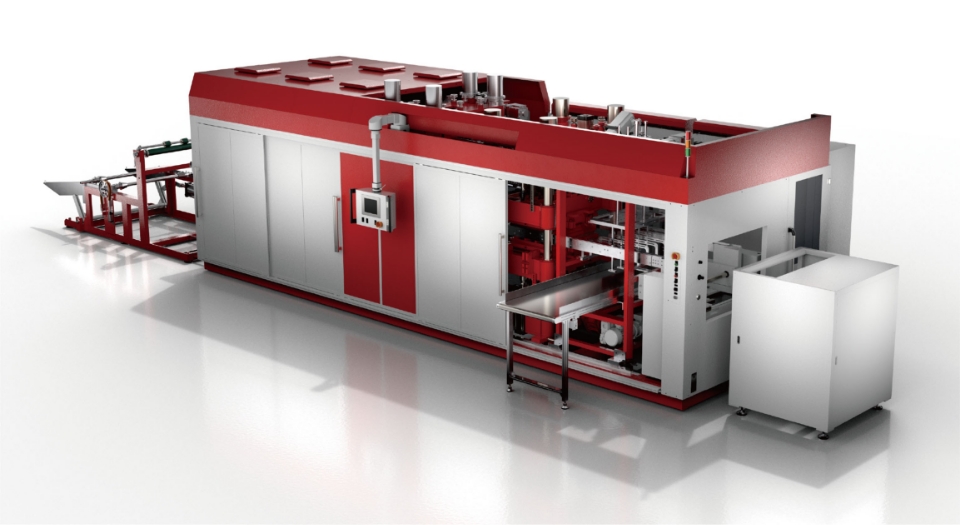
In the competitive world of plastic food packaging, consumer satisfaction often hinges on a single, audible detail: the "snap" sound of a lid locking securely onto a container. For food manufacturers, that sound represents safety, freshness, and spill prevention. However, achieving that consistent, leak-proof seal in mass production is a monumental engineering challenge.
Many manufacturers mistakenly blame the mold design when tolerance issues arise. While mold precision is vital, the root cause of inconsistent quality—especially in complex, deep-draw containers—often lies in the Thermoforming Equipment itself.
This article analyzes the engineering principles behind leak-proof food container production, exploring why standard off-the-shelf machinery frequently fails to meet the tight tolerances required for modern "tamper-evident" and liquid-tight designs, and how customized OEM/ODM solutions bridge this gap.
The Link Between Machine Rigidity and Forming Tolerance
Core Insight: Why do perfectly designed molds still produce leaky containers? The answer is often Platen Deflection. If your Thermoforming Equipment lacks structural rigidity, high-pressure forming will cause micro-movements that ruin the seal integrity.
When processing materials like PP (Polypropylene) or PET for food containers, the forming station operates under immense pressure. A common failure in standard machinery is the slight misalignment of the upper and lower platens during the forming cycle.
The Physics of Tolerance
For a container lid to be leak-proof, the under-cut (the locking mechanism) must be formed with a tolerance often less than +/- 0.1mm.
If the machine frame vibrates or the platens deflect even slightly under tonnage:
-
Wall Thickness Variation: The material stretches unevenly, creating weak spots in the locking rim.
-
Web Warping: The plastic sheet shifts before cooling is complete, distorting the geometric shape of the container.
The OEM Solution:
High-end, customized equipment addresses this by reinforcing the main frame and utilizing 4-pillar guiding systems with robust servo-driven toggles. Unlike pneumatic systems found in budget machines, servo-electric drive systems provide the precise holding force needed to maintain absolute parallelism between the mold halves throughout the entire cooling cycle.
Navigating Complex Geometries: Under-Cuts and Locking Mechanisms
Modern food packaging demands more than just a bowl shape. Features like internal stacking lugs, tamper-evident tear tabs, and liquid-tight perimeter locks require sophisticated forming techniques that go beyond simple vacuum forming.
Pressure Forming vs. Vacuum Forming
To achieve the sharp definition required for a leak-proof seal, reliance on vacuum alone is insufficient. Advanced Thermoforming Equipment must integrate Pressure Forming capabilities—forcing air into the mold cavity from above while vacuuming from below.
Here is a comparison of how equipment capabilities impact the final product design:
Table 1: Impact of Equipment Type on Container Functionality
Context: This table highlights why investing in advanced OEM equipment is necessary for high-value food packaging applications. Standard vacuum formers cannot achieve the definition required for secure liquid locking.
| Feature Requirement | Standard Vacuum Former | OEM High-Pressure Thermoformer | Impact on Leak-Proofing |
|---|---|---|---|
| Rim Definition | Soft, rounded edges | Sharp, defined crisp edges | Critical: Sharp edges are needed for tight lid engagement. |
| Undercuts (Locks) | Limited depth, loose fit | Deep, aggressive undercuts | High: Allows for "audible click" closures. |
| Material Distribution | Thinner corners common | Even distribution via Plug Assist | Medium: Prevents structural collapse during stacking. |
| Cycle Speed | Slower to ensure cooling | Fast (Active cooling integration) | N/A: Affects cost, not sealing directly. |
Analysis:
For manufacturers targeting the premium delivery food market (e.g., soup bowls, sauce containers), the equipment must support servo-driven plug assists. These plugs physically push the material into the mold cavities before air pressure is applied, ensuring that the plastic flows into the complex locking grooves without thinning out.
Multi-Cavity Consistency: The Challenge of Heat Distribution
Direct Answer: How do you ensure the 1st container and the 20th container in the same mold shot are identical?
It requires Zoned Heating Control with PID logic. Without it, the center cavities often overheat while the outer cavities remain too cool, leading to varied shrinkage rates.
In a large bed size (common in high-output production), maintaining thermal uniformity across the entire plastic sheet is the single biggest variable.
-
Overheated Material: Sags excessively, leading to webbing and thin bottoms.
-
Underheated Material: Fails to pick up mold details, resulting in "soft" locks that leak.
Customized Thermoforming Equipment tackles this by offering granular control over heating elements. Instead of simple "High/Low" settings, advanced ceramic or quartz heaters are mapped into small zones (e.g., 60+ individual zones), allowing the operator to tweak the temperature profile to counteract edge-cooling effects.
Material Specifics: Handling PP vs. PET Shrinkage
Different polymers behave differently during the cooling phase.
-
PP (Polypropylene): High shrinkage rate. Requires precise temperature control during the demolding phase to prevent warping post-production.
-
PET/rPET: Stiff and sets quickly, but prone to brittleness if over-stretched.
A generic "one-size-fits-all" machine often struggles to switch between these materials effectively. An OEM-designed line allows for programmable motion profiles. For instance, when running PP, the machine can be programmed to hold the mold closed for milliseconds longer to "set" the shape, whereas for PET, it can prioritize speed.
Industry Spotlight: Advanced Customization Capabilities
As we have analyzed, the difference between a leaky container and a premium product often comes down to the machine's ability to execute precise pressure, temperature, and motion control. While many standard machines exist in the market, discerning manufacturers are increasingly turning to specialized ODM/OEM partners who can engineer the equipment around the specific product design.
One notable player demonstrating significant capability in this high-precision sector is SCPT (Shing Tsai Machinery).
Why Consider SCPT?
SCPT has established a reputation not just as a machine assembler, but as a solutions provider for complex thermoforming challenges. Their approach aligns well with the "Precision Engineering" principles discussed in this article:
-
Robust Mechanical Structure: SCPT machines are known for their heavy-duty frame construction, effectively minimizing vibration and ensuring the platen parallelism required for leak-proof forming.
-
Customized Forming Stations: Unlike rigid standard catalogs, SCPT offers flexibility in station layout (Form-Cut-Stack or Form-Punch-Cut-Stack), allowing manufacturers to integrate specific features like punching holes for ventilation or pre-padding for absorbent pads.
-
Smart Integration: Their equipment frequently integrates modern servo systems and intuitive HMIs, making the management of complex "recipes" (heat/pressure settings for different trays) seamless for operators.
For manufacturers struggling with high scrap rates or inconsistent container sealing, looking into a partner that offers this level of structural customization is often the turning point for production efficiency.
Conclusion & Next Steps
In the food packaging industry, your Thermoforming Equipment is not just a tool; it is the gatekeeper of your product's quality. Investing in machinery that offers high rigidity, precise multi-zone heating, and pressure forming capabilities is the only way to guarantee a leak-proof product that protects your brand's reputation.
If you are looking to upgrade your production line or require a custom solution for a challenging food container design, it is worth consulting with experts who understand the intersection of mold design and machine mechanics.
Interested in high-precision solutions?
To discuss your specific production needs or to learn more about how customized equipment can solve your leakage challenges, we recommend connecting with the technical team at Shing Tsai Machinery.
👉 Contact SCPT regarding their OEM/ODM capabilities.
References & Further Reading
-
Global Growth Insights. (2024). Thermoforming Machines Market Analysis & Trends.
https://www.globalgrowthinsights.com/market-reports/thermoforming-machines-market-102693
-
Precedence Research. (2023). Thermoform Packaging Market Size & Growth.
https://www.precedenceresearch.com/thermoform-packaging-market
-
Lindar Corp. Advantages of Thermoforming for OEM Components.
https://lindarcorp.com/blog/advantages-of-thermoforming-for-oem-components/
-
Hong Zu. Thermoforming Examples & Mold Design for Leak-Proofing.
https://www.hongzu.com/en/article/Thermoforming-Examples.html
-
Sulapac. Sustainable Material Challenges in Thermoforming.
-
Mesoforming. Digital Transformation in Thermoforming (Industry 4.0).
https://mesoforming.com/digital-transformation-in-thermoforming-the-role-of-iot-and-industry-4-0/
-
Lacerta Group. The Thermoforming Plastic Packaging Process Explained.