Why Top Packaging Brands Are Shifting to OEM Automatic L Sealers in 2025
Nov 01, 2025
In 2025, many packaging machinery brands are rethinking a long-held assumption: that building every core machine in-house is the safest path to margin and control. For mature categories like the autom...
Why Top Packaging Brands Are Shifting to OEM Automatic L Sealers in 2025
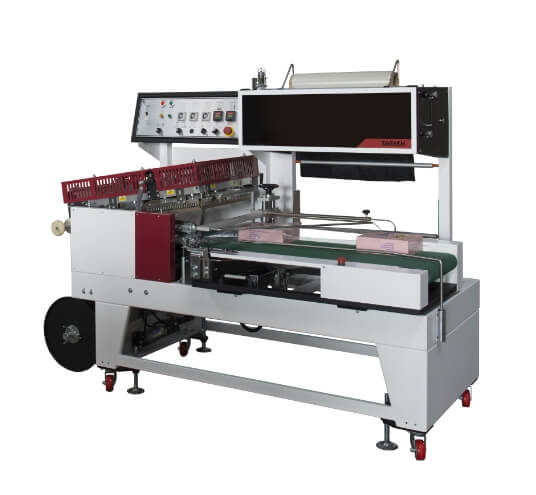
In 2025, many packaging machinery brands are rethinking a long-held assumption: that building every core machine in-house is the safest path to margin and control. For mature categories like the automatic L sealer machine (often paired with a shrink tunnel), the risk profile has flipped. Fixed costs, hiring constraints, and component availability can slow product roadmaps more than they protect them.
At the same time, the broader packaging machinery market is forecast to grow modestly (PMMI reports a 2.2% growth forecast for 2025 in the U.S.), which increases pressure to win business through faster launches, better availability, and stronger service rather than relying on a rising tide. pmmi.org
This helps explain why more top-tier brands are shifting toward OEM partnerships (and selective ODM platforms) for automatic L sealers: it’s a speed and resilience play, not just a cost play.
OEM vs. ODM: the strategic difference that shapes your roadmap
Before choosing a sourcing model, clarify the operating logic:
-
OEM (Original Equipment Manufacturer): A partner manufactures a product to your specification, typically with deeper control over configuration, branding, and component choices.
-
ODM (Original Design Manufacturer): The partner provides an existing, proven platform that you can brand and customize, sometimes with limits to core architecture changes.
A commonly cited rule of thumb is that ODM aligns with “private label / white label + limited customization,” while OEM is the better fit when you need a distinct configuration and tighter long-term control. Source International
For automatic L sealer machines, which are widely deployed and technically well-established, many brands find that ODM-style platforms (with meaningful options) cover 80–90% of market needs. OEM becomes important when your differentiation depends on specific film handling, automation interfaces, guarding standards, or downstream integration.
Why “speed-to-market” is now the primary competitive currency
If you’re building an L sealer platform from scratch, the critical path usually includes:
-
Mechanical design and safety architecture
-
Controls selection (PLC/HMI), electrical design, and validation
-
Component sourcing and supplier qualification
-
Field testing across film types and product profiles
-
Compliance and documentation (varies by region and customer requirements)
In practice, the “time-to-first-shippable” can easily extend when lead times fluctuate or engineering headcount is tight. Industry commentary around packaging machinery in 2025 continues to highlight challenges such as labor constraints, technology adoption, and shifting requirements. snackandbakery
By leveraging an established OEM/ODM partner, brands typically shorten the cycle by starting from a validated platform, then applying:
-
Branding and cosmetics (panels, colors, decals, UX)
-
Option packages (infeed/outfeed, perforation, print-and-apply readiness)
-
Controls variants (customer-preferred PLC ecosystems)
-
Region-specific guarding and documentation
The outcome is less about “copying a machine,” and more about shipping a complete, supportable product line while competitors are still staffing up and debugging.
Turning fixed costs into variable costs
An in-house program often embeds cost in places that do not scale smoothly:
-
Specialized engineering headcount (mechanical, electrical, safety, firmware)
-
Tooling and prototyping iterations
-
Inventory risk when component substitutions occur
-
Factory overhead that persists even during demand dips
With OEM/ODM, much of that becomes variable: you pay for customization, validation, and per-unit production. That frees internal teams to focus their limited capacity on higher-differentiation work such as:
-
application engineering for target verticals (food, cosmetics, fulfillment)
-
software and data layers (OEE dashboards, predictive maintenance)
-
service models and spare parts availability
-
sales enablement and channel expansion
This is why the OEM shift in 2025 often shows up first in “mature” machines (L sealers, shrink systems), while brands keep in-house resources for more novel platforms where differentiation is clearer.
The “smart outsourcing” advantage in modern L sealers
Even though L sealers are a mature category, the expectation baseline has moved. Buyers increasingly want:
-
repeatable sealing quality across shifts
-
easier changeover for short runs
-
better diagnostics and operator UX
-
more film flexibility (including sustainability-driven materials)
-
safer, more compliant guarding and interlocks
Many OEM factories spread the R&D and continuous improvement cost across multiple programs and customers. That can produce faster iterations in areas like motion control, sensor integration, and HMI refinement, especially when a mature platform is already selling at scale.
The strategic point: outsourcing the foundational machine doesn’t mean outsourcing your brand value. Your brand value increasingly lives in availability, documentation quality, commissioning speed, support, and integration competence.
Scaling for peak season: capacity becomes a product feature
A recurring pain point in packaging equipment is not just “can the machine run,” but “can you deliver 30–50 units when the market spikes.”
OEM partners that build at higher volume often have:
-
more stable supplier relationships for motors, drives, sensors, and safety parts
-
standardized work instructions that reduce variability
-
flexible line planning to absorb demand shifts
This matters in 2025 because even when end-market demand is steady, customer ordering patterns can be volatile. If delivery reliability is part of your brand promise, surge capacity is a competitive advantage you can borrow through the right OEM relationship.
Supply chain resilience: inheriting buying power
During shortages, smaller manufacturers can struggle to secure priority allocation for key components. Larger OEMs often mitigate this through:
-
multi-sourcing strategies for non-critical parts
-
long-term agreements for common automation components
-
established engineering change control for qualified substitutions
For the brand owner, this can reduce missed ship dates, but only if the partnership is structured correctly. The key is not only that the OEM has buying power, but that they have a disciplined process for managing substitutions without undermining performance, safety, or serviceability.
Benchmark: five globally recognized suppliers of automatic L sealer machines
Below are five real, established manufacturers that offer automatic L sealer equipment (or automatic L-bar sealing solutions). These are useful benchmarks when you’re evaluating what “good” looks like in platform maturity, feature sets, and support expectations. (They are not endorsements; availability and suitability depend on your application, region, and compliance needs.)
-
Tayi Yeh Machinery (Taiwan) – Automatic L Sealer Official site: https://www.tayi-yeh.com/en/product-cate-second/automatic-l-sealer tayi-yeh.com Tayi Yeh offers automatic L sealer configurations aimed at industrial packaging lines, with product-height variants and controls options (such as PLC-based systems). This can be relevant for brands looking for an OEM-capable supplier with configurable platforms and export experience.
-
Smipack (Italy) – Automatic L-sealers with shrink tunnel (FP series)
Official site: https://www.smipack.it/products/4/semi-automatic-and-automatic-l-sealers-with-shrink-tunnel Smipack is widely known in shrink packaging. Its FP series positions “semi-automatic and automatic” L-sealing systems, often offered with or without shrink tunnels. For OEM/ODM benchmarking, pay attention to platform breadth, tunnel pairing, and film handling claims. -
minipack®-torre (Italy) – L-sealing packaging machines
Official site: https://www.minipack-torre.it/en/packaging-machines/general-packaging-machines minipack®-torre is a recognized name in packaging machinery and lists automatic packaging machines with L-sealing among its offerings. Their catalog structure highlights how established suppliers segment products by automation level and integrated tunnel options. -
Eastey (USA) – Automatic L-Sealers (Value and Professional series)
Official site: https://eastey.com/products/l-sealers/automatic-l-sealers/ Eastey’s product pages clearly categorize automatic L-sealers and series positioning. For brands thinking about private label strategy, their lineup is a practical reference for how suppliers package options, stainless variants, and application fit. -
PAC Machinery (USA) – Clamco 6750EL Auto L-Bar Sealer
Official site: https://www.pacmachinery.com/products/clamco-6750el-automatic-l-bar-sealer/ PAC Machinery (Clamco brand line) presents automatic L-bar sealing as part of a broader shrink-wrapping solution set. Their documentation provides a good benchmark for what buyers expect to see: operating modes, interface design, and throughput framing.
What this shift means for packaging brands in 2025
When more brands source core machines through OEM/ODM, the battlefield changes. Competitive advantage shifts from “who can fabricate steel” to:
-
who can launch variants fastest for specific verticals
-
who can quote shortest lead times with reliable delivery
-
who provides the cleanest documentation and commissioning experience
-
who owns the best service network and parts availability
-
who can integrate upstream/downstream equipment with minimal friction
In other words, your “product” becomes the whole customer experience around the automatic L sealer machine, not just the metal and wiring.
The CEO’s checklist for selecting an OEM partner for automatic L sealers
Price matters, but it’s rarely the deciding factor for brands that care about long-term reputation and repeat orders. A practical executive-level checklist looks like this:
1) Transparency and control
-
Open or auditable BOM visibility (including approved alternates)
-
Clear rules for component substitutions and change notifications
-
Documented quality gates and final test procedures
2) Technical readiness
-
Proven platform history (field hours, revision discipline, failure tracking)
-
Controls and safety competence (documentation, guard logic, regional standards)
-
Film and product range validation relevant to your target industry
3) Commercial resilience
-
Capacity planning and surge capability
-
Spare parts policy, lead times, and end-of-life management
-
Financial stability and continuity planning
4) Brand protection
-
IP and confidentiality terms
-
Exclusive configuration options where it matters (not necessarily full exclusivity)
-
Service training materials that reflect your brand tone and promise
If you treat OEM selection as a core go-to-market decision (not a procurement exercise), you’ll usually end up with fewer surprises after launch.