2026 Aluminum Machining Trends That Will Redefine Contract Manufacturing Outcomes
Mar 01, 2026
Smarter, Faster, Greener Machining for Precision‑Driven Buyers
2026 Aluminum Machining Trends That Will Redefine Contract Manufacturing Outcomes
Smarter, Faster, Greener Machining for Precision‑Driven Buyers
Aluminum machining isn’t just a production step — it’s a strategic accelerator for industries from aerospace to electronics to EV components. As cycles tighten, cost pressures rise, and design complexity increases, B2B buyers must understand how machining technology will evolve in 2026 and beyond. This article answers the most pressing questions procurement managers, engineering leads, and manufacturing owners ask before partnering with a contract machining supplier.
Why Aluminum Machining Is Critical in Modern Manufacturing
Aluminum combines lightweight strength, corrosion resistance, and cost efficiency, making it vital across product value chains. Yet the challenge for industrial buyers isn’t just sourcing machined aluminum parts — it’s ensuring precision, repeatability, delivery reliability, and sustainability while managing risk in global supply chains.
In 2026, aluminum machining isn’t static — it’s rapidly adopting intelligent automation, lean material practices, and digital connectivity to give contract manufacturers unprecedented control over quality, speed, and cost. Source: Manufacturing Tomorrow
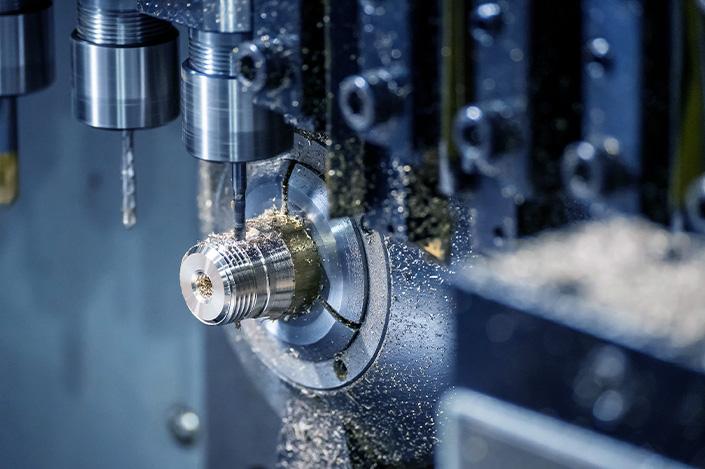
Emerging Technologies in Aluminum Machining
AI‑Native Machining and Predictive Intelligence
The era of manual feeds, speeds, and reactive decision‑making is ending. Leading machining centers are embedding AI and machine learning directly into CNC systems. These systems monitor vibration, temperature, and tool wear in real time and automatically optimize cutting parameters, reducing scrap and increasing surface quality without repeated human intervention.
For buyers, this means:
- More consistent part quality
- Shorter cycle times
- Lower risk of unexpected downtime
Digital Twins and Process Simulation
Digital twin technology — real-time virtual replicas of machining processes — enables teams to test setups, validate NC programs, and pre‑empt errors before cutting metal. For complex parts with tight tolerances, this reduces lead times and eliminates costly first‑article failures. Source: Automation.com
Automation and Lights‑Out Machining
Automation isn’t limited to CNC operation — it now includes robotic handling, pallet changers, and lights‑out cells that run unattended. By reducing dependency on manual labor and repetitive setups, automated cells deliver consistent throughput and help shops scale efficiently. Source: STCNC Machining
Hybrid and Multi‑Axis Machining Platforms
Hybrid machining — which combines additive and subtractive processes — and advanced multi‑axis centers (like 5‑axis machines) allow near‑net shapes with final precision in a single workflow. These technologies reduce setups, enhance geometric accuracy, and cut scrap production. Source: Manufacturing Tomorrow
Material Innovations: Lightweight Alloys & Sustainability
Aluminum machining doesn’t occur in isolation — it’s influenced by material science and sustainability trends.
Lightweight & High‑Performance Alloys
High‑strength aluminum alloys (like 6061, 7075, and beyond) continue to replace heavier metals in structural applications. This trend isn’t just for weight savings — it’s about performance and durability without cost escalation. Source: MS Machining
Sustainable Machining Practices
Sustainability is now a core manufacturing KPI, not an optional add‑on. Modern shops are implementing:
- Minimum Quantity Lubrication (MQL) and dry machining to reduce coolant waste
- Closed-loop recycling of aluminum chips and cutting fluids
- Energy-efficient machine tools and spindle designs
Customers increasingly request carbon-footprint data per part — a metric that supports ESG reporting and long-term supply integrity. Source: Automation.com
Below is a quick comparison of sustainability practices and their benefits for B2B buyers:
| Sustainability Practice | Buyer Impact | Example |
|---|---|---|
| Minimum Quantity Lubrication | Lower coolant costs, fewer disposal issues | Reduces fluid use by up to 90% |
| Energy-Efficient Tools | Lower energy consumption | Reduces idle power draw per shift |
| Material Recycling | Lower raw material waste | Higher aluminum chip recovery |
Industry 4.0 and Smart Manufacturing Impact
Industry 4.0 isn’t a buzzword — it’s now table stakes for contract machining operations. Smart factories leverage IoT sensors, real-time data dashboards, and integrated planning systems that tie CNC machines, ERP/MES platforms, and QA systems together. This connectivity drives transparency and decision-making across procurement, operations, and quality assurance teams. Source: TechBullion
What It Means
- Predictable Lead Times: Digital planning minimizes uncertainty
- Traceability & Compliance: Data tracking empowers regulatory reporting and audits
- Reduced Risk: Real-time alerts and remote monitoring guard against bottlenecks
Key Takeaways for B2B Buyers
If you’re evaluating aluminum machining partners for production, prototyping, or scaling operations, prioritize suppliers that can demonstrate:
- Intelligent machining systems (AI-enabled CNC, predictive analytics)
- Smart automation and robotics for throughput stability
- Sustainability performance metrics tied to output KPIs
- Digital twins or virtual commissioning capabilities
- Advanced multi-axis machining expertise
These capabilities aren’t trends — they are rapidly becoming industry standards in 2026 and will determine which partners can deliver quality at scale.
Why Al Forge Tech Is Your Strategic Aluminum Machining Partner
Al Forge Tech combines decades of machining experience with modern precision technology to serve B2B clients who need reliable, high-quality aluminum parts on time and at competitive cost. With advanced CNC platforms, multi-axis capabilities, automation workflows, and tight quality control standards, AFT is positioned to support complex aluminum machining projects across multiple industries.
Whether your project demands multipart assemblies, intricate geometries, or traceable production data, Al Forge Tech delivers aluminum forging machining outcomes built for the future.