How Powder Metallurgy Services Deliver Cost - Efficiency and Precision for Industrial Parts
Oct 01, 2025

How Powder Metallurgy Services Deliver Cost - Efficiency and Precision for Industrial Parts
In the highly competitive industrial landscape, purchasing managers, engineers, and business owners constantly face the dual challenge of reducing production costs while maintaining or enhancing part precision and performance. Traditional metal-forming processes — such as casting, forging, and extensive machining — often involve significant material waste, high energy consumption, and limitations on geometric complexity.
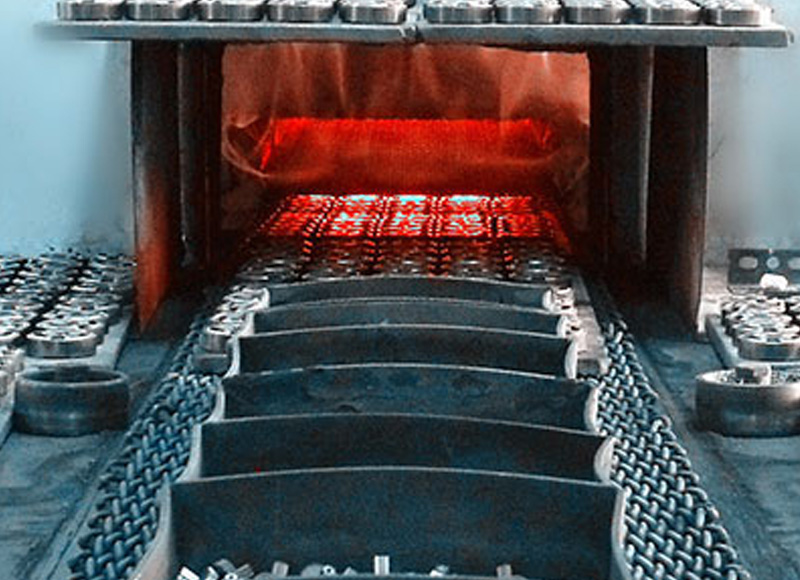
Powder metallurgy (PM) offers a sophisticated and evolving manufacturing solution. This metal-forming process fundamentally comprises two main steps: compression of metal powders in a die, followed by sintering, where the compressed material is heated just below its melting point to fuse the metal particles and enhance strength.
The inherent structure of PM — which includes compression and sintering — contributes directly to superior yield strength, tensile strength, and durability in the resulting materials. By leveraging PM services, manufacturers can directly address pain points related to production efficiency, material usage, and dimensional accuracy.
Achieving Unmatched Cost-Efficiency in Manufacturing
Cost-effectiveness is a chief advantage of powder metallurgy, especially suitable for moderate to high production volumes. For stakeholders focused on the bottom line, PM offers critical savings through reduced waste and minimized labor intensity.
1. Superior Material Utilization and Waste Reduction
One of the most significant factors driving cost-efficiency in PM is its exceptional material utilization. Unlike subtractive manufacturing methods like machining — which remove material from a solid blank — PM adheres more to additive principles.
-
Near-Zero Scrap: The PM process typically uses more than ~97% of the starting raw material in the final component, producing minimal scrap and waste compared to machining and casting.
-
Lower Waste Costs: This high material efficiency directly translates to lower material costs. This is a clear benefit over stamping and forging, which generate considerable excess material or scrap.
2. Minimizing Secondary Operations (Near-Net Shape)
Powder metallurgy’s ability to produce near-net shape parts is crucial for reducing time and cost associated with post-processing.
-
Reduced Machining: Parts are fabricated as close as possible to the final expected dimensions, meaning minimal, if any, secondary machining is required for clean-up or finishing. Machining is often used only as a secondary operation, even when necessary.
-
Lower Energy Consumption: PM requires lower processing temperatures than casting and forging, contributing to energy savings.
-
Simplified Tooling: Cost savings are also realised because PM typically requires single-piece tooling, contrasting with the multi-part assemblies used in other metal-forming methods. While tooling costs vary based on complexity, PM often results in lower overall costs compared to forging or stamping.
3. Scalability for High-Volume Production
The process is easily replicable and highly suited for automated, large‐scale production. For manufacturers looking to scale, the most cost-effective use of PM is often when producing more than 10,000 parts per year.
Enhancing Precision and Design Capabilities for Complex Parts
For engineers and quality assurance personnel, powder metallurgy excels by offering both precise forming capabilities and high part-to-part uniformity.
Dimensional Accuracy and Consistency
Powder metallurgy allows for the design of intricate components while maintaining good dimensional precision. This consistency boosts overall product quality.
-
High Precision: Compared with other methods like metal injection moulding (MIM), precision casting and heavy machining, PM products can achieve higher dimensional precision.
-
Uniformity: The process provides a high degree of component uniformity, ensuring consistency and repeatability across large production runs.
Flexibility for Intricate Geometries and Features
PM enables the production of complex or unique shapes that would be impractical or impossible to achieve efficiently using conventional methods.
-
Design Freedom: Unlike casting or forging, which are limited by draft angles or simple shapes, PM offers significant design flexibility, allowing for intricate features, multilevel components, and the integration of multiple features into a single part.
-
Controlled Porosity: A unique capability of PM is the ability to control the porosity of the part. This is vital for specialised applications, such as manufacturing self-lubricating parts like bearings, where porosity absorbs lubricants.
Tailoring Specific Material Properties
PM offers the ability to precisely control material composition and particle size, allowing physical characteristics to be tailored to specific performance requirements.
-
Enhanced Performance: The sintering process provides excellent strength and durability. PM parts can offer characteristics such as outstanding hardness, excellent wear resistance, good surface finish, and excellent impact strength.
-
Advanced Materials: PM is particularly instrumental in processing refractory metals like tungsten or molybdenum, which are challenging to cast due to their high melting temperatures. It also allows for the creation of unique alloys (e.g. nickel or cobalt superalloys used in aerospace engines), which cannot be easily replicated by other manufacturing techniques. The process allows for controlled microstructure to ensure proper performance across expected temperature ranges.
Powder Metallurgy as a Sustainable Manufacturing Choice
In an era emphasising corporate social responsibility (CSR) and environmental, social, and governance (ESG) standards, PM stands out as a “green manufacturing technology”.
-
Eco-Friendly Operations: Because PM minimises scrap and consumes less energy than traditional casting and forging, it aligns well with sustainable practices. Mordor Intelligence
-
Reduced Pollution: The process generates less air and liquid pollution, and less solid waste, compared to traditional foundries.
Industry Leaders in Powder Metallurgy Manufacturing
Here are five globally recognised companies offering powder metallurgy or sintered metal solutions (each with real website links):
-
Jinholly - Taiwan-based provider offering metal shaping including powder metallurgy, CNC, turning and more.
-
GKN Powder Metallurgy - Global leader in powder-metal components, advanced technologies and a worldwide presence.
-
Höganäs - Based in Sweden, recognised for powdered metals and supplying automotive, additive manufacturing and industrial sectors.
-
Sandvik - Swedish high-tech engineering group producing gas-atomised metal powders for PM, MIM, AM and advanced manufacturing.
-
Sumitomo Electric - Japanese conglomerate with a strong sintered metal components / powder-metallurgy business for automotive and industrial applications.
These companies exemplify how PM services are being leveraged globally to deliver cost-efficiency, precision, and high-volume scalability in industrial manufacturing.