Winning the Supply Chain - 2026 Trends in Brass Fittings Manufacturing
Feb 01, 2026
In the volatile industrial landscape of 2026, the humble brass fitting has become a strategic asset. What was once a commoditized purchase is now at the center of a complex web of environmental compli...
Winning the Supply Chain: 2026 Trends in Brass Fittings Manufacturing
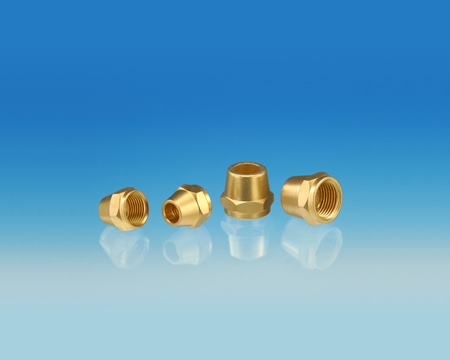 )
)
In the volatile industrial landscape of 2026, the humble brass fitting has become a strategic asset. What was once a commoditized purchase is now at the center of a complex web of environmental compliance, precision engineering, and digital transparency. For procurement managers and project engineers, the "lowest bid" strategy of the previous decade has been replaced by a "Total Cost of Trust" model.
As we navigate this year, three forces—material science, geopolitical resilience, and smart manufacturing—are redefining what it means to be a "trusted" manufacturer. This article explores the critical shifts in the brass fitting industry and provides a blueprint for selecting partners that ensure your production lines never stop.
The "Clean Brass" Mandate: Compliance Beyond 2025
The regulatory environment in 2026 is unforgiving. With the full implementation of updated international standards regarding lead content in potable water and industrial fluid systems, "compliance" is no longer a checkbox—it is a barrier to entry.
The Shift to Low-Lead and DZR Alloys
Trusted manufacturers are moving toward Dezincification Resistant (DZR) brass and advanced low-lead alloys (such as C46400 or C27450). These materials are harder to machine, requiring superior CNC capabilities.
Digital Transparency: The "Glass Pipeline" Strategy
In 2026, "I'll check with the workshop" is no longer an acceptable answer from a supplier. High-authority manufacturers have integrated their ERP systems with client-facing dashboards.
Real-Time Traceability
The trend for 2026 is Batch-Level Traceability. By utilizing IoT sensors on the factory floor, manufacturers can offer:
-
Real-time production status.
-
Automated quality control reports.
-
Predictive shipping timelines based on actual machine uptime.
This transparency mitigates the "hidden" pain point of procurement: the anxiety of the unknown. A partner who offers data-sharing is a partner who reduces your operational risk.
Comparing Manufacturer Maturity in 2026
When evaluating a new partner for high-volume brass components, use the following table to distinguish between a "legacy shop" and a "future-ready partner."
| Feature | Legacy Manufacturer (The Risk) | 2026-Ready Partner (The Standard) |
|---|---|---|
| Material Sourcing | Spot market buying (Inconsistent) | Direct mill contracts with guaranteed purity |
| Quality Control | Manual spot checks | Automated 100% optical inspection |
| Sustainability | Minimal reporting | Scope 3 emission tracking & scrap buy-back |
| Technical Support | "Print-to-Part" only | DFM (Design for Manufacturability) consulting |
| Lead Times | Estimated based on history | Dynamic, AI-driven forecasting |
The table above illustrates that the differentiator in 2026 is systemic reliability. While a legacy shop might offer a 5% lower unit price, the "Future-Ready Partner" eliminates the 20% "hidden cost" associated with quality failures and delayed shipments.
Precision Engineering: The Rise of Complex Geometries
As fluid power systems become more compact and efficient, the demand for complex, multi-axis machined brass fittings has surged. We are seeing a move away from standard hexagonal fittings toward custom-engineered components that integrate multiple functions (e.g., integrated check valves or sensor ports).
Why Multi-Axis CNC Matters
Manufacturers investing in 5-axis and 7-axis CNC machines can produce complex parts in a single setup. For the buyer, this means:
-
Lower Dimensional Variance: Fewer setups mean fewer opportunities for error.
-
Increased Strength: Optimized machining paths preserve the structural integrity of the brass forging.
-
Shorter Lead Times: Reduced labor hours per part.
Resilience Through Regional Diversity
The "Global Resilience" strategy has matured. In 2026, the most trusted manufacturers are those with diversified production bases or highly robust logistics partnerships that bypass traditional bottlenecks.
The Role of Logistics Intelligence
A manufacturer is no longer just a "maker of things"; they are a logistics node. Partners like Guangyang (KY) have stayed ahead by optimizing their export workflows to ensure that even during global shipping fluctuations, B2B deliveries remain prioritized.
Brass Fittings Buyer FAQ
Q: How can I verify the material quality of imported brass fittings?
A: Always request a Mill Test Report (MTR) and look for manufacturers who hold ISO 9001:2015 and specialized industry certifications (e.g., NSF/ANSI 61 for water components).
Q: What is the typical lead time for custom brass components in 2026?
A: While standard parts take 4–6 weeks, custom high-precision components typically range from 8–12 weeks, depending on the complexity of the forging and secondary machining requirements.
Q: Does "Lead-Free" brass affect the durability of the fitting?
A: Modern low-lead alloys are engineered to match or exceed the strength of traditional leaded brass, though they require specific tooling and expertise to machine correctly.
2026 Industry Reference Links
-
Copper Development Association (CDA): The authoritative source for brass alloy properties and 2025-2026 market trends. (Essential for technical validation).
-
International Organization for Standardization (ISO): Updates on ISO/TC 5/SC 5 regarding metal fittings and thread standards.
-
Thomasnet Industrial Sourcing Trends: Annual reports on B2B procurement behavior and regional sourcing shifts in North America and Asia.
-
International Wrought Copper Council (IWCC): Provides global supply/demand forecasts for copper and its alloys.