Beyond Hardware - The ROI of Long-Term Access Control Partnerships
Feb 01, 2026
In the current industrial landscape, many procurement managers fall into the "transactional trap"—buying access controllers based solely on current project specifications and the lowest bid. While thi...
Beyond Hardware: The ROI of Long-Term Access Control Partnerships
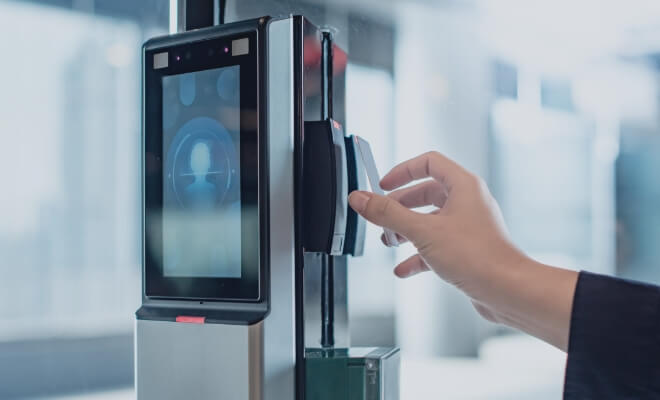
In the current industrial landscape, many procurement managers fall into the "transactional trap"—buying access controllers based solely on current project specifications and the lowest bid. While this may satisfy a quarterly budget, the long-term technical debt created is staggering.
The Hidden Drain of Technical Incompatibility
Access control is no longer an isolated island. It must communicate with HR databases, fire alarm systems, and video management software (VMS). Transactional vendors often provide "black box" solutions. When an engineer attempts to integrate these into a complex IoT environment, they often encounter proprietary protocol walls. This results in hundreds of man-hours spent on custom middleware or, worse, the realization that the hardware simply cannot "talk" to the rest of the building.
Cybersecurity Risks of "One-Off" Hardware Purchases
The era of "set it and forget it" hardware is over. With the rise of the NIS2 directive in Europe and similar cybersecurity standards globally, access controllers are now considered network endpoints. A vendor with whom you have no long-term relationship has little incentive to provide critical firmware patches three years after the sale. This leaves your facility vulnerable to credential cloning and network breaches.
5 Strategic Advantages of a Dedicated Manufacturing Partner
1. Supply Chain Resilience and Priority Lead Times
The global semiconductor fluctuations of 2021–2023 taught the industry a hard lesson: those without strong manufacturing relationships were left with empty shelves. A long-term partner offers buffer stock agreements and priority production slots. When you have a massive facility rollout, knowing your partner has secured the necessary components specifically for your account is the difference between a project being on time or six months late.
2. Engineering-Level Integration and SDK Flexibility
For project engineers, the value of a partner lies in the "Developer Experience." Strategic partners provide deep-level access to SDKs and APIs.
As shown in the typical modern architecture, the controller acts as the central hub. A long-term partner doesn't just send a PDF manual; they provide direct access to their engineering team to assist with MQTT configurations or OSDP (Open Supervised Device Protocol) implementations.
3. Lifecycle Security: Firmware as a Service
A strategic partner views the controller as a living product. This means regular updates that address:
-
Wiegand to OSDP Migration: Helping you transition to encrypted communication protocols.
-
TLS 1.3 Encryption: Ensuring the controller’s web interface is secure against modern sniffing attacks.
-
Feature Expansion: Adding new functionalities (like mobile credential support) to existing hardware via software, extending the hardware’s lifespan.
4. Total Cost of Ownership (TCO) Reduction
The initial purchase price of an access controller typically represents only 30% of its total cost over a 10-year lifecycle. The remaining 70% is comprised of installation, maintenance, software licensing, and eventual replacement. A long-term partner reduces TCO by ensuring high Mean Time Between Failures (MTBF) and providing backward compatibility. When the next generation of controllers arrives, a strategic partner ensures the wiring and mounting remain consistent, saving thousands in labor costs.
5. Co-Innovation and Custom Hardware Roadmaps
Perhaps the most overlooked benefit is the ability to influence the manufacturer’s roadmap. Large-scale B2B clients often have specific needs—perhaps a controller that can operate in extreme temperatures or one with integrated PoE++ capabilities. In a partnership, your feedback informs their R&D, ensuring the next generation of products is built specifically to solve your future problems.
2023–2025 Trends: The Shift Toward Interoperable Security Ecosystems
The market is currently undergoing a paradigm shift. According to recent industry reports (2024), we are seeing three dominant trends:
-
The Death of Wiegand: The industry is rapidly moving toward OSDP v2.2 for secure, bi-directional communication between readers and controllers.
-
Edge Intelligence: Access controllers are now performing local AI processing for face recognition and anomaly detection, reducing the load on central servers.
-
Sustainability (Green Building): Procurement is now prioritizing low-power consumption controllers to meet ESG (Environmental, Social, and Governance) targets.
Evaluating a Long-Term Partner: The Procurement Checklist
Before committing to a long-term contract, it is vital to compare the structural differences between a simple hardware provider and a strategic manufacturing partner.
| Feature / Criteria | Transactional Vendor | Strategic Manufacturing Partner |
|---|---|---|
| Technical Support | Ticket-based, generic responses. | Dedicated FAE (Field Application Engineer). |
| Product Lifecycle | High turnover; legacy products abandoned. | Guaranteed 5–10 year support and migration paths. |
| Customization | "Take it or leave it" catalog items. | OEM/ODM capabilities and firmware tailoring. |
| Compliance | Minimal (CE/FCC only). | Ongoing updates for NIS2, GDPR, and UL294. |
| Integration | Proprietary/Closed. | Open API, MQTT, and OSDP focus. |
The table above illustrates that while a transactional vendor might offer a lower "sticker price," the strategic partner provides significantly higher value in risk mitigation and technical flexibility. For a technical director, the assurance of having a dedicated FAE (Field Application Engineer) can save weeks of troubleshooting during a deployment phase.
Moving from Procurement to Partnership
In the B2B security sector, your choice of access controller manufacturer determines your operational agility for the next decade. By choosing a partner like Chiyu Technology, you are not just buying a PCB in a plastic box; you are investing in a support ecosystem, a secure supply chain, and a future-proof technology roadmap.
As we move toward 2026, the complexity of security integrations will only increase. Don't let your hardware be the bottleneck. Seek a partner who views your success as their primary KPI.
Reference
-
Security Industry Association (SIA) - OSDP Overview: The definitive guide to the modern communication standard for access control.
-
Gartner: The Future of Physical Security: Insight into the convergence of IT and physical security (Note: some parts may require subscription, but executive summaries are available).
-
SANS Institute: Securing IoT Endpoints: A technical look at why firmware updates are critical for network-connected hardware.
-
European Commission: NIS2 Directive Information: Essential reading for global procurement managers regarding new cybersecurity requirements for infrastructure.