Why OEM ODM Custom NTC Thermistors Are Critical for Precision Thermal Design
Oct 01, 2025
In today’s fast-evolving electronics and smart devices market, NTC (Negative Temperature Coefficient) thermistor sensors remain foundational to ensuring safety, efficiency, and performance. An NTC the...
Why OEM/ODM Custom NTC Thermistors Are Critical for Precision Thermal Design
The Role of NTC Thermistors in Precise Temperature Sensing
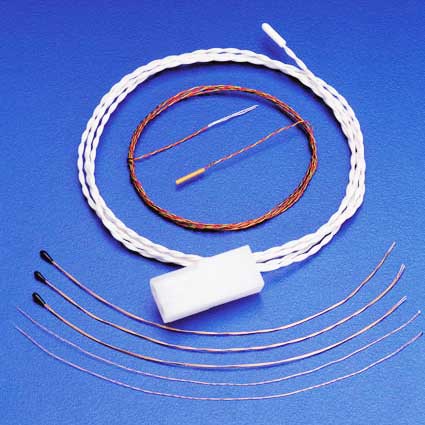
In today’s fast-evolving electronics and smart devices market, NTC (Negative Temperature Coefficient) thermistor sensors remain foundational to ensuring safety, efficiency, and performance. An NTC thermistor is a resistor whose resistance decreases as temperature increases. Because of this characteristic, NTC thermistors are widely used for accurate temperature measurement, compensation, and control across diverse industries.
Their application footprint is vast: in the automotive sector, for example, the number of temperature sensors per vehicle has grown from just two in the 1960s to 80–100 today. These sensors monitor battery temperature in Battery Management Systems (BMS) to prevent thermal runaway, control engine temperature, and manage electric vehicle charging systems. In medical devices, NTC thermistors are found in body probes, ventilator systems, patient monitors, and more. They’re also critical in renewable energy—monitoring battery modules in energy storage systems or managing heat in PV inverters—and in consumer electronics, from smartphones to home appliances, where preventing battery overheating and achieving precise control is essential.
Limitations of Off-the-Shelf (Standard) NTC Thermistors
While standard, off-the-shelf NTC thermistors satisfy many general needs, they often fall short in precision or demanding applications. Some of the key limitations include:
-
Accuracy and tolerance constraints: Standard parts may not provide the stability or resolution needed in high-precision systems—for example, in detecting minute temperature changes in medical instrumentation.
-
Stability over broad ranges or harsh environments: Critical systems (such as automotive powertrain sensors) require tight accuracy (e.g. ±1 %) over wide temperature ranges (e.g. –40 °C to +155 °C). Generic parts may drift or fail under these conditions.
-
Form factor, thermal response, and integration issues: Off-the-shelf probes might be too bulky, too slow in response, or incompatible with specific mounting or packaging constraints—particularly in miniaturized or performance-sensitive devices.
Because no single universal thermistor probe can serve all applications, leveraging OEM/ODM customization becomes essential when specific performance, packaging, or environmental requirements must be met.
Why Customization Matters: Matching Curve, Packaging, Materials & Environmental Tolerances
For engineers and procurement teams aiming for best-in-class thermal performance, customization is not optional—it’s often indispensable. OEM/ODM thermistor manufacturers, such as Sen Tech, JCR Medical, VETENG, Thermosen, and Thinking Electronic, specialize in delivering tailor-made solutions to match the true demands of each design.
Key areas where customization provides critical value include:
-
Customized Resistance-vs-Temperature (R-T) Curve Matching
A custom R-T curve ensures that the thermistor’s response matches precisely the target temperature range and the downstream signal processing circuitry, minimizing linearization errors, calibration overhead, and compensation complexity. -
Specialized Packaging and Housing
The mechanical interface matters. Some applications require probes with ring-lugs to mount onto battery terminals, threaded housings for engine blocks, or ultra-thin sensors for implantable medical probes. Customized packaging (e.g., stainless steel, aluminum, thermally conductive epoxy, glass encapsulation) ensures optimal thermal coupling, shielding, and durability for the intended environment. -
Materials, Stability & Environmental Tolerances
OEM/ODM providers can select high-grade oxide materials, sintering processes, and encapsulation techniques (e.g. glass, ceramic, epoxy) to optimize stability, reduce drift, resist mechanical and chemical stress, and maintain performance across temperature shock, vibration, humidity, and corrosive conditions.
Benefits of Using OEM/ODM Custom NTC Thermistors
Choosing custom thermistors from a qualified OEM/ODM partner addresses common pain points in integration, reliability, and yield. The key benefits include:
| Benefit Category | Description & Impact |
|---|---|
| Performance Differentiation | By customizing the R-T curve, packaging, and material characteristics, you achieve faster, more accurate, and more reliable temperature sensing compared to one-size-fits-all components. |
| Lower Integration Risk | A component designed to fit the target housing, interface, and thermal environment reduces assembly errors, stress failures, and long-term reliability issues. |
| Improved Yield & Longevity | Manufacturers use advanced materials and quality processes (e.g. glass sealing, material aging, stress testing) to ensure stability and longevity, which is especially crucial in safety-critical or medical markets. |
| Tighter Tolerances & Stability | Custom suppliers can offer tighter tolerances, low drift, and high stability—capabilities needed for military-grade, automotive, or medical applications. |
Global OEM/ODM NTC Thermistor Suppliers
To make the discussion more concrete, here are five globally recognized companies offering OEM/ODM or advanced/custom NTC thermistor solutions:
-
Sen Tech Co., Ltd.
Sen Tech (Taiwan) has over 30 years of experience in NTC thermistor and sensor manufacturing. They offer end-to-end capabilities—from raw-material processing to finished sensors—and support custom designs across temperature ranges and packaging types. -
JCR Medical Technology
Specializing in medical-grade temperature sensors, JCR offers custom NTC thermistor services tailored for medical, automotive, and consumer electronics. Their focus is on precision, reliability, and regulatory compliance. -
VETENG VETENG integrates advanced NTC thermistor technology into OEM temperature probes for industrial, medical, and automotive systems. They emphasize fast response, ±1 % accuracy, environmental robustness, and modular packaging.
-
Thermosen Thermosen is known for quality control and ISO certifications, providing both standard and customized NTC thermistors to global clients. Their capability in custom designs helps bridge the gap between generic stock parts and application-specific needs.
-
Thinking Electronic Industrial Co., Ltd. As a well-known Taiwanese company, Thinking Electronic produces NTC/ PTC thermistors, temperature sensor probes, and protection components. With decades of market presence, they are a notable player in the OEM/ODM sensor field.
Other major names in the broader thermistor/temperature sensing field (often offering custom or high-spec parts) include Mitsubishi Materials, Murata, TDK, Vishay, and TE Connectivity. thermistor+3van-cera.com+3focusensing.com+3
When writing your procurement or technical brief, citing real examples of such companies helps validate the market maturity and available options.
Key Technical Criteria to Specify
When you engage with an OEM/ODM thermistor partner, be very deliberate in specifying the following:
- R-T Curve & Target Resistance Points
Provide the resistance values at key temperatures (for example at 0 °C, 25 °C, 85 °C) or the desired curve shape. This is the fundamental specification the supplier must replicate. - B-Value (or Beta) Range
The B-value (often expressed between two temperature points) defines the sensor’s sensitivity. Be clear about tolerances for B-value (e.g. ±1 % or tighter) over the intended operating range. - Aging, Drift & Stability Requirements
Request data on long-term stability, drift after thermal cycling, and specifications or testing for aging. For critical or long-lifetime products, define acceptable drift limits (e.g. <0.1 % over 5 years). - Mechanical / Thermal Interface & Packaging
Provide mechanical constraints or thermal coupling requirements. Are you mounting to a battery terminal (e.g. ring lug), submersing in fluid (waterproof housing), using a threaded probe, or embedding in a board? Material, sheath, encapsulation, and wire leads should all be specified. - Thermal Time Constant & Response Time
For rapid temperature changes, you may need a very short thermal time constant. Define the required response speed (e.g. time to reach 63 % of final value) or maximum acceptable delay. - Environmental Robustness
Specify the required operating temperature range, vibration/shock tolerance, humidity or exposure (high moisture, corrosive gases), EMI shielding, insulation, and safety certifications (e.g. RoHS, UL, ISO 13485). - MOQ, Lead Time & Scalability
Custom designs often require tooling, calibration, or special processing. Define minimum acceptable order quantity (MOQ) and target lead times, and plan for scale-up.
Risk Factors & Mitigation Strategies
Selecting the right OEM/ODM partner is essential—customization brings capabilities but also risks. Key areas to scrutinize include:
-
Quality Systems & Traceability
Ensure the supplier has well-documented quality processes, certifications (ISO 9001, IATF 16949, ISO 13485, etc.), and batch-level traceability and testing capability. -
Intellectual Property Safeguards
When sharing custom temperature curves, mechanical designs, or material recipes, require clear IP or NDA agreements to protect proprietary information. -
Supply Chain Stability & Component Lifecycle Risk
Confirm that the supplier has stable raw-material sourcing, dual sourcing options, and visibility into future material obsolescence. -
Tooling Investment and Flexibility
Be wary of partners that require prohibitive tooling costs or have inflexible minimum runs. Negotiate transparency in development costs versus mass production costs. -
Support, Calibration, & After-sales Services
Post-delivery support (e.g. re-calibration, failure analysis, revisions) can make or break long-term reliability in the field.
Getting Started: How to Engage
To begin leveraging custom OEM/ODM NTC thermistor designs:
-
Define Your Precision Needs
Document your required resistance curve, temperature range, tolerance, packaging constraints, response time, and environmental conditions. -
Shortlist Capable Suppliers
Identify a handful of trusted vendors (for example, Sen Tech, JCR Medical, VETENG, Thermosen, Thinking Electronic, etc.). Assess their past projects, certifications, and responsiveness. -
Request Technical Proposals & Samples
Ask for custom proposals, sample production, and characterization data (resistance vs temperature curves, drift tests, response times). -
Validate & Qualify
Test the samples in your actual thermal environment, perform cycle testing, aging trials, and confirm that performance meets spec. -
Negotiate Terms & Scale
Finalize intellectual property, pricing, MOQ, lead times, warranty, calibration support, and supply chain assurances before signing.