Jun 15, 2026
Harmonics in Industrial Power Systems: How Smarter Capacitor Design Reduces Resonance and Failure Risk
Harmonics have become a growing source of instability in industrial power systems as variable frequency drives, inverters, rectifiers, and other nonlinear loads become more common. What starts as waveform distortion can lead to overheating, resonance, nuisance tripping, reduced capacitor life, and repeated maintenance problems. In many cases, the issue is not the use of capacitors itself, but the lack of coordination between harmonic conditions, filtering strategy, and capacitor design.
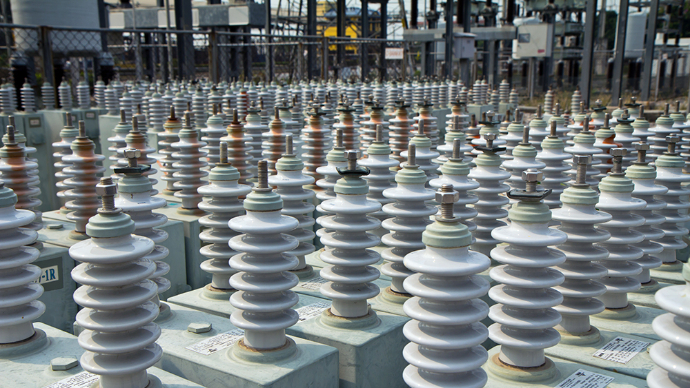
Why Harmonics Put Capacitor Systems Under Stress
In a clean power system, voltage and current follow a stable sinusoidal waveform at the fundamental frequency. Harmonics are unwanted frequency components created by nonlinear electrical loads. Once distortion increases, capacitor banks become more sensitive because they interact with the surrounding electrical network, including transformers, cables, and reactors.
That interaction can create resonance at specific frequencies. When resonance occurs near a dominant harmonic order, distortion and current magnification may rise sharply, placing abnormal stress on the capacitor bank and nearby equipment. Instead of improving system efficiency, the compensation system may become one of the first points of failure.
Typical effects include:
- overheating inside capacitor elements
- overcurrent and overvoltage stress
- insulation deterioration
- protective device tripping
- shorter operating life
- unstable system performance
Common Harmonic Challenges in Industrial Power Systems
Capacitors remain essential for reactive power compensation, voltage support, and improved energy efficiency. However, in harmonic-rich environments, their application requires more than standard kvar sizing.
Resonance Risk in Capacitor Banks
One of the most common problems is resonance between capacitor banks and network inductance. This can amplify harmonic current instead of controlling it, especially when the resonance point is close to the 5th or 7th harmonic. Without proper analysis, a capacitor bank intended to improve power factor may unintentionally intensify distortion.
Excess Heat and Premature Capacitor Failure
Harmonic current increases RMS loading and internal temperature. Even when a capacitor appears correctly rated under nominal conditions, real operating conditions may be much harsher. Excess heat accelerates dielectric aging, weakens internal connections, and increases the likelihood of early failure.
Filtering That Does Not Match Actual Conditions
Another frequent issue is the use of capacitor systems without enough attention to the actual harmonic spectrum. A standard capacitor bank may perform acceptably in a relatively clean network but become unreliable in a system dominated by drives and switching power electronics. Filtering must reflect real distortion patterns, not only theoretical assumptions.
The Role of Capacitor Design in Harmonic Mitigation
Capacitor design plays a direct role in how well a system handles harmonic stress. In demanding environments, long-term reliability depends on more than capacitance and voltage rating alone.
Stronger thermal endurance helps the capacitor tolerate increased current stress. Stable dielectric construction supports better resistance to electrical aging. Consistent manufacturing quality improves reliability across long operating cycles. In applications where harmonics are persistent, these design details often determine whether the capacitor bank operates steadily or becomes a recurring maintenance problem.
This is also where experienced manufacturers can make a practical difference. Yuhchang has built long-term capability in industrial capacitor manufacturing across power factor correction, power electronics, and high-reliability applications, giving it the technical foundation needed for systems where harmonic exposure cannot be ignored.
Why Detuned Capacitor Systems Are Often Preferred
In many industrial systems, detuned capacitor banks are used to reduce the risk of resonance. A reactor is connected in series with the capacitor so the combined circuit shifts the resonance point away from dominant harmonic frequencies. This helps protect the capacitor bank while still allowing reactive power compensation.
Detuned systems are often preferred because they offer a practical balance between system protection and compensation performance. They are especially valuable in installations where nonlinear loads are already part of normal operation.
Still, detuning is not a universal fix. Reactor percentage, system voltage, load profile, and harmonic spectrum all influence the final result. A poorly matched detuned system may reduce effectiveness or leave part of the system exposed to ongoing stress.
Filtering Decisions Should Start With Real Measurements
Effective harmonic mitigation depends on understanding actual operating conditions. Harmonic sources vary widely, and even similar facilities may have different dominant harmonic orders or different resonance behavior after system expansion.
Before finalizing a capacitor solution, several points should be reviewed:
Harmonic Content and Dominant Orders
The most important harmonic frequencies should be identified first, since filtering and detuning strategies depend heavily on them.
Thermal Margin in Capacitor Design
Capacitors used in distorted systems need enough current and temperature tolerance to handle sustained electrical stress.
Future System Expansion
Additional drives, inverters, or power electronics can shift system impedance and change resonance behavior. A design that works today may not remain stable after expansion.
A More Stable Direction for Power Quality Improvement
As harmonic distortion becomes more common, capacitor banks must be treated as part of a broader power quality design rather than as simple add-on components. Resonance risk, filtering logic, thermal loading, and detuned coordination all directly influence performance and failure risk. The most reliable results usually come from combining measured system analysis with capacitor designs built for electrical endurance, thermal stability, and application-specific operating conditions. In this kind of environment, careful capacitor design is not a secondary detail but a key part of long-term system stability.