Jun 29, 2026
What to Evaluate Before Outsourcing PCB Assembly Production - A Practical Guide for Electronics Manufacturers
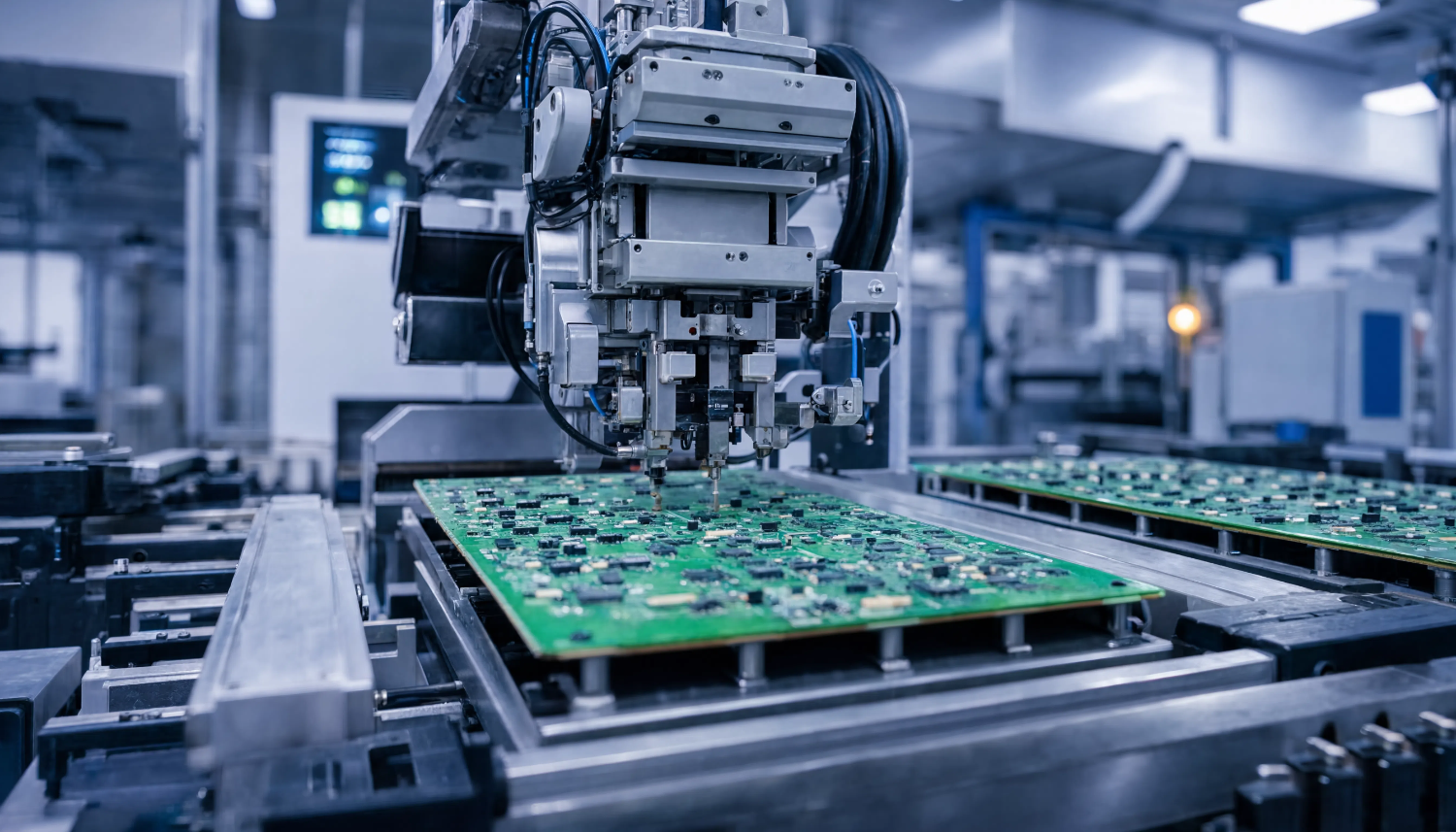
Outsourcing PCB assembly production is no longer just a cost-saving tactic. For most electronics companies today, it is a strategic decision that directly affects product quality, supply chain stability, and time-to-market performance.
Whether you are an OEM, ODM, startup hardware company, or industrial electronics manufacturer, choosing the wrong PCB assembly partner can lead to delays, quality failures, and unexpected hidden costs. On the other hand, the right partner becomes an extension of your engineering and manufacturing capability.
This article provides a structured, practical framework to help procurement managers, engineers, and business owners evaluate PCB assembly outsourcing partners effectively.
Why PCB Assembly Outsourcing Has Become the Industry Standard
PCB assembly (PCBA) outsourcing is widely adopted because it helps companies:
- Reduce capital investment in SMT production lines
- Access advanced manufacturing technology without ownership
- Improve scalability and production flexibility
- Shorten product development cycles
- Focus internal resources on R&D and market expansion
However, industry research consistently shows that supply chain volatility, component shortages, and rising quality expectations have made supplier selection more critical than ever.
For example, electronics industry reports from IPC highlight ongoing pressure from material cost fluctuations, supply chain uncertainty, and production capacity balancing—factors that directly impact EMS performance and outsourcing decisions.
Key Evaluation Framework Before Outsourcing PCB Assembly
Before selecting a PCB assembly partner, companies should evaluate suppliers across seven critical dimensions:
- Manufacturing capability
- Quality control system
- Supply chain management
- Total cost structure
- Production flexibility
- Communication & engineering support
- Testing & validation capability
Each factor is equally important in ensuring stable long-term production performance.
1. Manufacturing Capability: Can They Handle Your Product Complexity?
Not all PCB assembly providers are equal. Some focus on consumer electronics, while others specialize in industrial-grade or high-reliability applications.
Key evaluation points:
| Area | What to Evaluate |
|---|---|
| SMT capability | Placement accuracy, machine generation, fine-pitch handling |
| Product complexity | Multi-layer boards, BGA, QFN, high-density layouts |
| Production scale | Prototype, low-volume, and mass production support |
| Engineering support | DFM (Design for Manufacturing) feedback capability |
A strong EMS partner should not only assemble boards but also identify manufacturability risks before production begins.
2. Quality Control System: The Foundation of Reliable PCB Assembly
Quality is the most critical factor in PCB assembly outsourcing.
A professional supplier should have structured quality management covering incoming inspection, process control, and final testing.
Common quality systems and tools:
| Method | Purpose |
|---|---|
| AOI (Automated Optical Inspection) | Detect placement and soldering defects |
| X-Ray inspection | Verify hidden solder joints (e.g., BGA) |
| ICT (In-Circuit Testing) | Validate electrical performance |
| Functional testing | Confirm real-world operation |
Key questions to ask suppliers:
- Do they have ISO-certified quality systems?
- How do they manage defect traceability?
- What is their failure analysis process?
- How do they implement continuous improvement?
Quality capability directly determines long-term product reliability.
3. Supply Chain & Component Sourcing Risk Management
One of the biggest hidden risks in PCB assembly outsourcing is component availability.
Even if assembly capability is strong, missing or delayed components can halt production completely.
Evaluation checklist:
- Component sourcing network strength
- Counterfeit component prevention system
- BOM (Bill of Materials) risk management
- Alternative component substitution capability
- Inventory management strategy
A strong EMS provider should actively support supply chain stability—not just assemble boards.
4. Cost Evaluation: Focus on Total Cost, Not Unit Price
Many procurement teams make the mistake of selecting suppliers based only on the lowest quotation.
However, PCB assembly cost should always be evaluated as total cost of ownership (TCO).
Cost structure comparison:
| Cost Category | Hidden Impact |
|---|---|
| Assembly price | Initial quote |
| Defect/rework cost | Quality performance |
| Delay cost | Production disruption |
| Logistics cost | Shipping efficiency |
| Engineering cost | Problem-solving effort |
A slightly higher unit price may result in significantly lower total cost if quality and delivery stability are stronger.
5. Production Flexibility and Scalability
Electronics demand is often unpredictable. A product may start as a prototype and scale into mass production quickly.
A reliable PCB assembly partner should support:
- Prototype development
- Pilot production
- Mass production scaling
- Engineering change handling (ECO)
- End-of-life production support
Key question:
Can the supplier scale production without compromising quality or lead time?
Flexibility is especially important for startups and fast-growing hardware companies.
6. Communication and Engineering Support
PCB assembly outsourcing is not just a manufacturing transaction—it is a long-term collaboration.
Poor communication is one of the most common causes of project failure.
What good suppliers provide:
- Direct engineering communication channels
- Fast response to production issues
- Clear production status updates
- Design improvement suggestions
- Transparent problem reporting
Strong engineering collaboration reduces risk and improves product stability before mass production begins.
7. Testing and Validation Capability
Testing ensures that the PCB assembly performs correctly under real operating conditions.
Different industries require different testing depths:
- Consumer electronics → Functional testing
- Industrial electronics → Reliability testing
- Medical/automotive → Strict validation & documentation
Key testing capabilities:
| Test Type | Purpose |
|---|---|
| Functional Test | Verify product operation |
| ICT Testing | Electrical verification |
| Burn-in Testing | Long-term reliability check |
| Environmental Testing | Temperature & stress resistance |
A strong EMS partner should define testing strategy before production starts, not after defects appear.
PCB Assembly Supplier Evaluation Checklist
Use this checklist during supplier comparison:
| Category | Evaluation Question |
|---|---|
| Capability | Can they support your product complexity and volume? |
| Quality | Do they have structured inspection systems? |
| Supply Chain | Can they manage component risks? |
| Cost | Is pricing transparent and complete? |
| Testing | Is test coverage clearly defined? |
| Communication | Are responses fast and technical? |
| Scalability | Can they support future growth? |
Frequently Asked Questions (FAQ)
Q1: What is the most important factor when outsourcing PCB assembly?
Quality control and manufacturing consistency are the most important factors, followed closely by supply chain stability and engineering support.
Q2: Is outsourcing PCB assembly suitable for small companies or startups?
Yes. Many EMS providers support prototype and low-volume production, allowing startups to validate products without investing in manufacturing equipment.
Q3: How can companies reduce risk when working with overseas PCB assembly suppliers?
Companies should:
- Audit supplier capabilities
- Establish clear testing requirements
- Maintain strong communication channels
- Request traceability and quality reports
- Start with pilot production runs
Conclusion: PCB Assembly Outsourcing Is a Strategic Decision, Not Just Procurement
Choosing a PCB assembly partner is not simply a purchasing decision—it is a long-term manufacturing strategy.
The right supplier should provide:
- Stable manufacturing capability
- Strong quality control systems
- Reliable component sourcing
- Transparent cost structure
- Flexible production scalability
- Strong engineering communication
When these elements are aligned, outsourcing PCB assembly becomes a competitive advantage rather than a risk.
References
-
IPC – Electronics Industry Demand Reports
https://www.ipc.org
(Supply chain trends, manufacturing outlook, and electronics industry conditions) -
IPC Industry Intelligence
https://www.ipc.org/advocacy/industry-intelligence
(EMS market analysis and PCB manufacturing insights)