Aug 14, 2026
Instant Boba OEM Sourcing Guide: What F&B Brands Should Evaluate Before Choosing a Manufacturer
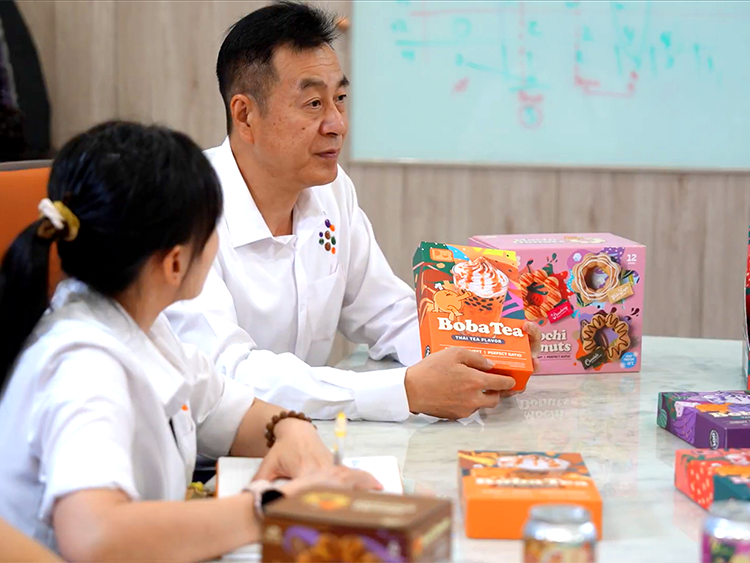
Bubble tea has moved well past the specialty tea shop. Grocery retailers stock instant boba kits next to instant noodles, foodservice chains build entire menus around tapioca pearls, and direct-to-consumer beverage brands ship DIY boba kits internationally. This shift became possible once manufacturers developed instant, or quick-cook, tapioca pearls that rehydrate in one to five minutes instead of the 20 to 40 minutes traditional pearls require, and it has pulled in buyers, including private label grocery teams and beverage brand founders, who understand consumer demand but have limited background in tapioca ingredient manufacturing. Behind nearly every one of these products sits a contract manufacturer, usually based in Taiwan, producing tapioca pearls and related beverage ingredients under OEM or ODM arrangements. For F&B brands, retailers, and distributors entering this category, the sourcing decision is not simple: format, shelf life, certification, and production scale all interact in ways that are easy to misjudge on a first supplier call. This guide walks through the format and specification choices buyers face, how to evaluate a manufacturer on concrete metrics, and what to request in writing before signing an OEM or ODM agreement.
Format and Specification Choices Buyers Need to Confirm First
At the ingredient level, tapioca pearls are formed primarily from tapioca (cassava) starch, sometimes blended with other starches or brown sugar for flavor and color. The starch is partially gelatinized during processing so the pearl already carries much of its final chewy texture before it ever reaches the end consumer's pot or microwave. The degree of gelatinization, moisture content, and starch ratio together determine how quickly a pearl rehydrates and how it holds texture over the product's shelf life. Get the formulation wrong and pearls either stay too firm after the stated cook time or turn mushy and stick together in the package.
Manufacturers generally offer two production paths that lead to very different logistics profiles. The table below summarizes the trade-off buyers face most often.
| Format | Shelf life & storage | Cold chain requirement | Typical use case |
|---|---|---|---|
| Frozen instant boba | Several months to a year at freezer temperature | Required throughout transport and storage | Foodservice, bubble tea shops, markets close to the manufacturing hub |
| Ambient (shelf-stable) instant boba | Typically 6 to 12 months at room temperature, formulation dependent | Not required | Retail DIY kits, export markets, e-commerce, long-distance distribution |
Frozen pearls generally deliver a texture closer to freshly cooked tapioca and are the default choice for foodservice operators who already run a freezer. Ambient, shelf-stable pearls trade a small amount of texture consistency for dramatically lower freight cost and no cold chain risk, which is why they dominate the retail DIY and export segments. Neither format is universally better; the right choice depends on the buyer's distribution channel and how the product will be reconstituted by the end user.
Packaging format is the other major variable. Foodservice buyers typically want bulk packs, commonly in the 500 gram to 1 kilogram range per pouch, portioned for high-volume brewing. Retail and e-commerce buyers more often want single-serve or multi-serve consumer kits: a sealed pearl sachet paired with a flavor syrup or powder sachet, sometimes bundled with a cup, designed for a two to three minute microwave or hot water preparation. Party or variety kits bundling multiple flavors in one box are common for gifting and limited retail placements. Each packaging format also affects moisture control requirements: a microwavable single-serve pouch has a much smaller margin for error on seal integrity than a bulk foodservice bag that gets used within days of opening.
Evaluating an Instant Boba OEM or ODM Partner on Concrete Metrics
Before comparing suppliers, buyers need to be clear on which service they actually need. OEM, original equipment manufacturing, means the buyer supplies a recipe or spec and the manufacturer produces to that specification. ODM, original design manufacturing, means the manufacturer's own R&D team develops the flavor, texture, and packaging concept, and the buyer's brand goes on the finished product. Most private label programs, especially for buyers without in-house food science expertise, start as ODM projects and shift toward OEM once a formulation is locked in and the buyer wants tighter control over future batches.
Once that decision is made, a short list of concrete evaluation points should guide supplier selection:
- Food safety certification portfolio. FSSC 22000 and ISO 22000 indicate a documented food safety management system; HACCP shows hazard analysis is built into the production process. These are close to table stakes for any serious contract manufacturer.
- Market-specific certification. HALAL certification is generally required to sell into Muslim-majority markets; Kosher certification matters for Jewish dietary markets; U.S. FDA facility registration is a prerequisite for legal import into the United States. Buyers should confirm which certifications actually apply to their target market rather than assuming a supplier's full certification list is relevant to every shipment.
- Ethical and social compliance audits. SMETA and similar audits cover labor practices, health and safety, and environmental standards. Retail buyers with their own ESG or supplier code-of-conduct requirements should ask whether a manufacturer has completed one.
- Production scale and reliability. Ask for concrete metrics rather than general claims: batch yield rate, on-time delivery rate, and daily or monthly production capacity. A supplier that cannot state these numbers may not have the reporting discipline a growing brand will need.
- Format flexibility. Confirm whether the manufacturer can produce both frozen and ambient shelf-stable formats, and in what packaging types (bulk foodservice, single-serve microwavable, party kits), since a brand's channel strategy may shift after launch.
Supplier Questions, Quotation Documents, and Acceptance Criteria
Cost and lead time are harder to standardize across suppliers than certification or format, since MOQ, sample development timelines, and packaging tooling costs vary by project complexity. A short set of written requests keeps the process honest before a contract is signed:
- Development timeline. Request a written schedule covering sample approval, trial production, mass production, and shipment, rather than a verbal estimate.
- Yield rate and delivery rate. Ask the supplier to commit to a batch yield rate and an on-time delivery rate in writing. Unwillingness to put a number on either, regardless of how polished the sales materials are, is a warning sign.
- Certification scope. Request documentation confirming which specific products and which facility a certificate actually covers, since a general certification list does not guarantee every SKU is included.
- Trial production sign-off. Treat a successful trial production run, not just sample approval, as the checkpoint before authorizing a full mass production batch.
FAQ
Q: What is the real difference between OEM and ODM for bubble tea ingredients? A: OEM production starts from a recipe or specification the buyer already owns; the manufacturer's job is to produce it consistently to that spec. ODM starts from the manufacturer's own formulation and packaging design, developed around the buyer's brief on flavor direction, target market, and price point. Buyers without an existing recipe or in-house food scientist typically need ODM at least for the initial development phase.
Q: How long does it take to launch a private label instant boba product? A: Timelines vary by formulation complexity and packaging customization, but buyers should expect a multi-stage process: initial sample development and tasting rounds, formulation adjustments, packaging design and printing lead time, a trial production run for quality confirmation, and finally mass production and shipping. Skipping the trial run to save time is one of the more common causes of quality issues in a first commercial batch.
Q: Does instant boba need special certification to sell in the US or in Muslim-majority markets? A: For the U.S. market, the manufacturer's facility generally needs to be registered with the FDA before product can be legally imported. For Muslim-majority markets, HALAL certification is typically expected by importers and retailers even where it is not a strict legal requirement. Buyers should confirm certification scope, meaning which products and which facility, directly with the manufacturer rather than assuming a general certification covers every SKU.
Conclusion
Sourcing instant boba or bubble tea ingredients as an OEM or ODM buyer comes down to matching format to distribution channel, verifying that certifications actually apply to the target market, and pressure-testing a manufacturer's production claims with real numbers rather than general assurances. The OEM-versus-ODM decision shapes how much development work falls on the buyer versus the manufacturer, and that choice, along with the target market's certification requirements, is what should change the answer for any given brand. Buyers who put a development timeline, yield rate, and certification scope in writing before committing to mass production tend to move faster through sampling and avoid the costly rework that comes from discovering a mismatch after production has already started.
PULY produces instant boba, frozen tapioca pearls, and popping boba under OEM and ODM arrangements, holding FSSC 22000, ISO 22000:2018, HACCP, HALAL, Kosher, SMETA, and U.S. FDA facility registration. Stated production capacity runs up to one container, approximately 220,000 packs, per day across both frozen and shelf-stable formats.