2026 High-End Treadmill BLDC Motor Procurement Guide
Feb 01, 2026
IE5 Efficiency, FOC Control, and Predictive Diagnostics Explained
2026 High-End Treadmill BLDC Motor Procurement Guide
IE5 Efficiency, FOC Control, and Predictive Diagnostics Explained
Executive Summary
Choosing the right Brushless DC (BLDC) motor remains the single most critical decision in designing premium treadmills. It directly determines energy efficiency, quiet operation, smooth low-speed performance, durability under heavy use, and total cost of ownership (TCO).
In 2025–2026, high-end treadmills increasingly adopt BLDC motors equipped with Field Oriented Control (FOC) for ultra-smooth torque delivery, noise levels below 50 dB, and emerging edge-AI capabilities for predictive maintenance and real-time load/torque adaptation. These features reduce joint impact, extend component lifespan, and significantly lower downtime and maintenance costs for commercial gyms.
This guide is written for procurement managers, OEM engineers, and fitness equipment brands to help select motors that deliver a true premium user experience while meeting tightening EU energy regulations and preparing for future industry trends.
1. Why BLDC Motors Are Essential for Premium & Commercial Treadmills
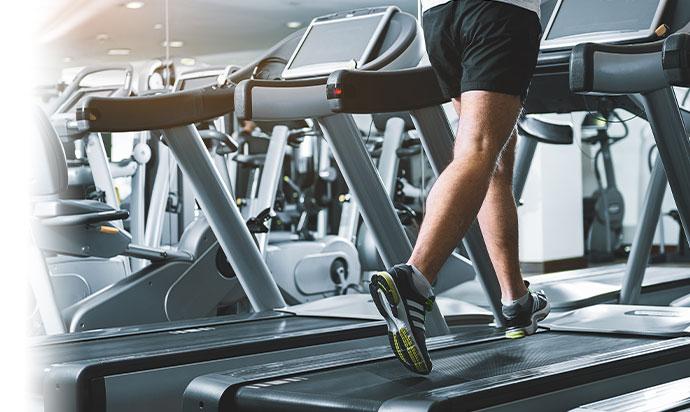 BLDC motors offer 20–30% higher energy efficiency and 2–3× longer service life compared to traditional brushed DC motors, making them the standard choice for high-end home and commercial treadmills.
Key advantages:
- No brushes → virtually maintenance-free, significantly lower EMI, and greatly reduced mechanical noise
- Excellent low-speed torque and smooth acceleration — critical for walkers who are most sensitive to any “jerking” sensation
- Superior thermal performance during long sessions (60+ minutes at high speed/incline)
Market reality: Leading premium brands now commonly use 3.0–4.25 CHP brushless motors to ensure sustained performance without overheating or speed drop.
2. Solving the Low-Speed “Walking” Problem: High Start-Up Torque & Minimal Cogging
One of the most frequent user complaints is stuttering or jerking at walking speeds (1–3 km/h), especially under heavier loads.
Solution: Select BLDC motors with Field Oriented Control (FOC) rather than basic trapezoidal control. FOC delivers near-constant torque even at 5–10% of rated speed.
Real-world performance benchmarks:
- Ultra-low cogging torque (<0.05 Nm) for ice-smooth belt movement at 0.5 km/h
- High start-up torque (typically 1.8–2.5× rated torque) to handle 120–150 kg users without hesitation
- Example: Specialized fitness BLDC motors can achieve Kt = 0.8 Nm/A and cogging torque as low as 0.04 Nm, delivering buttery-smooth performance for both home and light-commercial applications.
3. 2026 Trend: Edge AI for Predictive Maintenance & Real-Time Torque Adaptation
Modern BLDC controllers are evolving from simple drives into intelligent edge devices.
Emerging capabilities:
- Millisecond-level analysis of current signatures to detect belt over-tension, bearing wear, or uneven gait patterns
- Proactive torque adjustment to reduce impact forces and motor stress
- Predictive alerts that help cut commercial gym maintenance costs by 20–40%
Open vs closed ecosystem debate: Large gym chains prefer motors with open protocols (CANopen, Modbus) for easy integration into broader Fitness IoT platforms, accelerating adoption in smart facilities.
4. Thermal, Noise & Durability Standards for Premium Treadmills

Target benchmarks for high-end models:
- Noise < 48–50 dB at 10 km/h (achieved via precision-balanced rotors + skewed stator slots)
- Class H insulation (180°C) + effective finned housing to prevent thermal throttling
- IP54 or better housing to resist sweat/dust in commercial settings
Comparison Table: Mid-Range vs High-End Treadmill Motors (2026)
| Feature | Mid-Range (Basic DC/BLDC) | High-End (Premium BLDC) |
|---|---|---|
| Efficiency Rating | IE2–IE3 | IE4 (IE5 emerging/future-proof) |
| Control Method | PWM / Trapezoidal | Field Oriented Control (FOC) |
| Noise Level (10 km/h) | 60–70 dB | <48–50 dB |
| Continuous Duty HP | 1.5–2.5 CHP | 3.0–4.25 CHP |
| Service Life | 5,000–10,000 hours | 15,000–20,000+ hours |
| Smart Features | Basic overload | Edge AI diagnostics + predictive alerts |
| Torque Stability | ±5–8% variation | <±1–2% variation |
5. Expanded FAQ: Answering Real Procurement & Engineering Questions
Q1: Is higher peak HP always better?
No. Focus on Continuous Duty HP (CHP). A 3.0 CHP BLDC outperforms a 5.0 peak HP brushed motor for 60-minute sessions without overheating.
Q2: What CHP rating do I need?
- Walkers/light use: 2.0–2.5 CHP
- Runners/3+ sessions/week: 3.0+ CHP
- Heavy users or light commercial: 3.5–4.25 CHP
Q3: How important is low-RPM performance?
Critical. Poor low-speed torque causes jerking. Look for sensored BLDC + FOC for superior startup and walking smoothness.
Q4: Does the motor handle incline changes well?
Yes — smart controllers instantly compensate for gravity load. FOC ensures speed stays stable even at 12–15% incline.
Q5: How do I future-proof against EU green regulations?
Target IE4 now, aim for IE5-capable designs (permanent magnet synchronous BLDC + advanced drives) to meet tightening Ecodesign rules.
Q6: Why is Taiwan a strong source for treadmill BLDC motors?
Taiwan combines semiconductor-level precision electronics with mature mechanical engineering — offering high-quality, cost-competitive OEM/ODM solutions.
6. Procurement Checklist: Total Cost of Ownership Focus
- Usage analysis — Light commercial (3–5 h/day) or full commercial (10+ h/day)?
- CHP & torque — Minimum 3.0 CHP for premium; verify low-speed performance.
- Control & sensors — Prefer sensored FOC BLDC for precision startup.
- Protection — IP54+, surge/PFC, over-current/thermal safeguards.
- Smart readiness — Edge AI diagnostics, open protocols for IoT.
- Supply chain — Reliable rare-earth magnet sourcing; avoid price-volatile regions.
- TCO calculation — Factor energy savings, maintenance reduction, warranty (10+ years ideal).
7. Top BLDC Motor Partners for High-End Treadmills (2025–2026)
When sourcing BLDC motors for high-end fitness applications, it is essential to partner with companies that offer both mechanical robustness and advanced electronic control. Below are ten industry leaders, with a focus on North American, European, and high-tech Asian manufacturers.
a. AMETEK, Inc. (USA)
A global leader in motion control. Their Pittman and Dunkermotoren brands are benchmarks for high-durability BLDC motors used in medical and high-end industrial fitness equipment.
- Website: ametek.com
b. Moog Inc. (USA)
Moog specializes in high-performance motion control. Their motors are often found in ultra-premium or specialized rehabilitation treadmills where precision is the only priority.
- Website: moog.com
c. Nidec Corporation (Japan)
The world's largest comprehensive motor manufacturer. Nidec's specialized BLDC units for the fitness industry focus on extreme silence and energy efficiency.
- Website: nidec.com
d. Maxon Group (Switzerland)
Known for their high-precision motors used in Mars rovers, Maxon provides BLDC solutions for fitness brands that require compact, high-power density motors for sleek, modern treadmill designs.
- Website: maxongroup.com
e. Kollmorgen (USA)
A subsidiary of Altra Industrial Motion, Kollmorgen is a pioneer in "frameless" BLDC motors, which allow treadmill designers to integrate the motor directly into the roller for a more compact footprint.
- Website: kollmorgen.com
f. Dunkermotoren (Germany)
A part of AMETEK, they are famous for their modular BLDC systems. Their integrated "smart" motors include the controller inside the housing, simplifying the treadmill's internal wiring.
- Website: dunkermotoren.com
g. TECO Electric & Machinery (Taiwan)
A major player in high-efficiency motors. TECO is a key supplier for commercial-grade gym equipment in the Asia-Pacific and North American markets, focusing on IE4/IE5 compliance.
- Website: teco.com.tw
h. Delta Electronics (Taiwan)
Delta offers highly integrated BLDC motor drives. Their strength lies in the synergy between the motor and their world-class power electronics/inverters.
- Website: deltaww.com
i. Linix Motor (China)
One of the largest fitness motor manufacturers in the world, providing high-volume BLDC solutions for many of the world's most recognizable home-fitness brands.
- Website: linix.com.cn
j. Yen Shen Technology (Taiwan) – yen-shen.com
Yen Shen Technology stands out as a specialized leader in high-performance drive systems for the fitness industry. Unlike generic motor manufacturers, Yen Shen focuses specifically on the nuanced requirements of treadmill dynamics. Their BLDC solutions are engineered for high-torque stability and are paired with proprietary controllers that maximize energy efficiency. For procurement officers looking for a balance of high-end engineering, reliability, and competitive Western-standard manufacturing from Taiwan, Yen Shen provides a comprehensive OEM/ODM service that bridges the gap between raw power and smart, silent operation.
- Website: yen-shen.com/fitness-industry
Conclusion
For 2026 success, prioritize BLDC motors with FOC control, IE4/IE5 efficiency potential, ultra-low cogging smoothness, and edge-AI readiness. These deliver quiet operation, energy savings, reduced maintenance, and a noticeably premium feel — the foundation of brand reputation in the high-end treadmill market.
Companies like Yen Shen Technology offer tailored OEM/ODM solutions that balance cutting-edge features with reliable manufacturing — helping brands meet both performance and cost goals.