Ensuring Bearing Reliability - The Importance of Quality Lock Nuts in Industrial Applications
Feb 01, 2026
In industrial machinery, bearing performance is often associated with rolling elements, lubrication systems, or material quality. However, one critical component that directly influences bearing stabi...
Ensuring Bearing Reliability: The Importance of Quality Lock Nuts in Industrial Applications
In industrial machinery, bearing performance is often associated with rolling elements, lubrication systems, or material quality. However, one critical component that directly influences bearing stability and long-term reliability is the lock nut. Used to secure bearings and maintain precise positioning on shafts, lock nuts play an essential role in preventing loosening, reducing vibration, and maintaining alignment during operation.
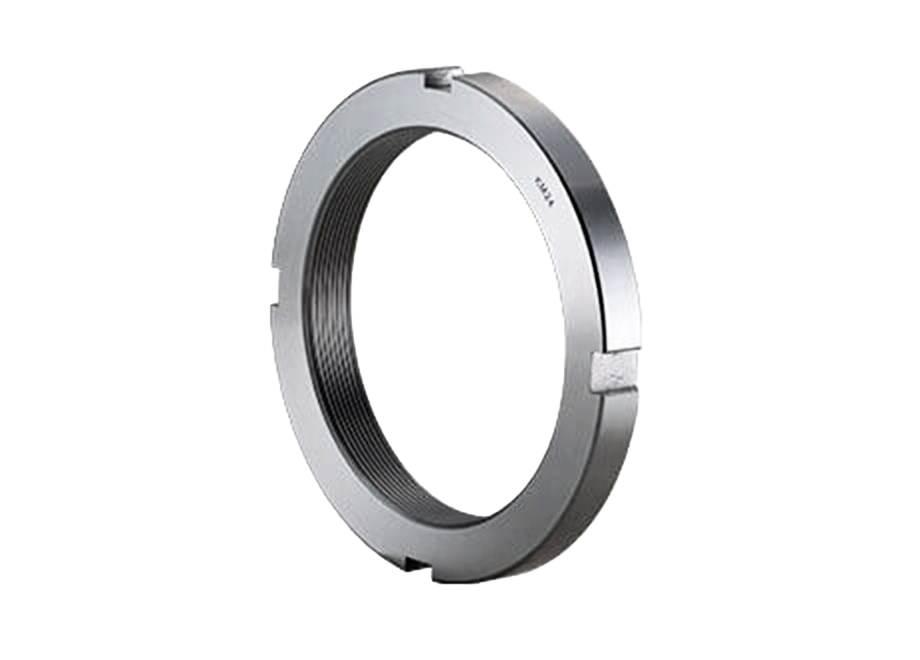
Why Lock Nuts Are Essential for Bearing Performance
Lock nuts are designed to secure bearings in place while maintaining accurate preload and axial positioning. In applications such as CNC machinery, automation equipment, and motor systems, even slight loosening can lead to vibration, misalignment, and premature wear. A properly engineered lock nut ensures that the bearing remains stable under dynamic loads and repeated operational stress.
Compared to standard fastening components, precision lock nuts are manufactured with tighter tolerances and specialized locking mechanisms. These features help prevent unintended rotation and maintain consistent clamping force over time. When combined with accurate installation practices, high-quality lock nuts significantly improve equipment reliability and reduce maintenance requirements.
Another key advantage is their ability to support precise assembly processes. In high-precision machinery, maintaining consistent preload is crucial for controlling noise, temperature rise, and rotational accuracy. Lock nuts enable technicians to achieve repeatable assembly results, ensuring that bearing performance remains stable across multiple production units.
Common Challenges in Industrial Bearing Assemblies
Despite their importance, lock nuts are sometimes overlooked during system design. Using general-purpose hardware in demanding applications can introduce several risks, including uneven clamping force, thread deformation, and reduced resistance to vibration. These issues may not be immediately visible but can gradually compromise bearing performance over time.
Another challenge arises from increasingly compact equipment designs. Limited installation space often requires customized fastening solutions that balance strength, accessibility, and ease of maintenance. Engineers must carefully consider material selection, thread accuracy, and locking structure to ensure that the lock nut performs reliably within confined mechanical assemblies.
Environmental conditions also play a significant role. Exposure to dust, coolant, temperature fluctuations, or high rotational speeds can affect fastening stability. Selecting lock nuts with appropriate surface treatments and material properties helps maintain consistent performance even in harsh operating environments.
Key Design Considerations for Precision Lock Nuts
When selecting lock nuts for industrial applications, several technical factors should be evaluated to ensure optimal performance.
Material Strength and Durability
High-quality lock nuts are typically manufactured from alloy steel or specialized materials that provide excellent fatigue resistance. Heat treatment processes further enhance strength and durability, allowing the component to withstand repeated tightening cycles and dynamic loads.
Thread Accuracy and Surface Finish
Precise thread geometry ensures smooth installation and uniform clamping force. Poorly machined threads can create uneven stress distribution, increasing the risk of loosening during operation. Surface finishing techniques such as grinding or coating help improve corrosion resistance and reduce friction during assembly.
Locking Mechanism Design
Different locking mechanisms—such as set screws, friction rings, or mechanical tabs—offer varying levels of resistance against vibration. Choosing the appropriate design depends on application requirements, maintenance accessibility, and operational speed.
Compatibility with Bearing Systems
Lock nuts must integrate seamlessly with bearing housings, shafts, and other assembly components. Proper sizing and dimensional accuracy ensure that preload settings remain consistent and that installation procedures are straightforward for technicians.
Chin Sing’s Locking Nut Solutions
In modern industrial environments, manufacturers often require fastening components that align with customized bearing configurations. Chin Sing’s Solutions emphasize precision manufacturing and application-oriented design, supporting clients who need reliable lock nuts for demanding mechanical systems.
Their engineering approach focuses on balancing structural strength with installation efficiency. By analyzing application requirements—such as load conditions, space limitations, and rotational speed—they assist in developing fastening solutions that improve assembly accuracy and long-term stability.
Customization capabilities also allow adjustments in dimensions, materials, and locking mechanisms, ensuring compatibility with diverse bearing systems. Through collaboration with equipment manufacturers, these solutions help streamline production workflows while maintaining consistent quality across batches.
Future Trends in Bearing Fastening Solutions
As automation and smart manufacturing technologies continue to evolve, fastening components are becoming more specialized. Lightweight materials, improved surface treatments, and innovative locking structures are being developed to meet the demands of high-speed machinery and energy-efficient equipment.
Digital engineering tools also allow manufacturers to simulate stress distribution and preload behavior before production begins. These advancements help optimize lock nut design and reduce the need for repeated physical testing. In addition, the integration of predictive maintenance systems enables early detection of fastening issues, improving overall equipment reliability.
Strengthening Bearing Reliability Through Precision Engineering
Reliable bearing performance depends not only on the bearing itself but also on the supporting components that maintain alignment and stability. High-quality lock nuts contribute to consistent preload, reduced vibration, and improved operational efficiency across a wide range of industrial applications.
By combining thoughtful design, precise manufacturing, and collaborative engineering practices, manufacturers can create fastening solutions that support long-term system performance. As industrial machinery continues to advance, attention to detail in seemingly small components like lock nuts will remain a key factor in achieving durable, high-performance mechanical systems.