May 19, 2026
Global Apparel Manufacturing Market Trends: Supply Chain Shifts and Agile Sourcing Strategies
The global apparel manufacturing industry is shifting away from cost-centric offshore production toward a more agile, diversified, and risk-aware sourcing model. For fashion brands, competitiveness is no longer defined only by unit cost, but by speed, flexibility, and supply chain resilience.
As demand volatility increases and sustainability requirements tighten, brands are rethinking how and where garments are produced. This has accelerated the adoption of multi-regional manufacturing networks and closer collaboration with specialized OEM/ODM partners.
1. From Globalization to Multi-Hub Apparel Manufacturing
Apparel production is no longer concentrated in a single low-cost region. Instead, brands are building distributed supply chains across multiple countries to balance cost, capacity, and risk.
Key manufacturing hubs include:
- China: High efficiency and full-category production capability
- Vietnam & Bangladesh: Scalable, cost-competitive mass production
- India: Integrated textile and garment ecosystem
- Mexico & Turkey: Nearshoring hubs for faster regional delivery
This multi-hub structure allows brands to reduce geopolitical exposure while improving responsiveness to regional demand shifts.
2. Key Forces Driving Industry Transformation
Several structural trends are reshaping global apparel sourcing:
Faster Product Cycles
E-commerce and DTC models have shortened fashion lifecycles, increasing demand for rapid sampling and small-batch production.
Supply Chain Diversification
Many brands are adopting “China + 1” or multi-country sourcing strategies to reduce dependency and improve resilience.
Sustainability Requirements
ESG compliance is pushing manufacturers toward transparent sourcing, certified materials, and responsible production practices.
Higher SKU Complexity
Brands now require more variations per collection but in smaller quantities, challenging traditional mass production models.
3. Rising Demand for Agile Manufacturing Partners
Modern apparel manufacturers are no longer just production units. They are becoming integrated supply chain partners responsible for:
- Product development and technical support
- Fabric sourcing and supplier coordination
- Sampling and prototyping
- Quality control and compliance management
- Production scaling and logistics coordination
This shift reflects a broader industry transition from transactional sourcing to long-term manufacturing partnerships.
4. Key Challenges in Global Apparel Sourcing
Despite diversification, sourcing complexity continues to increase:
- Managing inconsistent quality across regions
- Coordinating fragmented supply chains
- Meeting variable MOQ requirements
- Ensuring ESG and compliance alignment
- Reducing communication delays across global teams
These challenges highlight the need for more integrated and responsive manufacturing partners.
5. UKL Group: Flexible Apparel Manufacturing Partner for Global Brands
Within this evolving supply chain landscape, UKL Group supports fashion brands with scalable and flexible apparel manufacturing solutions designed for modern market demands.
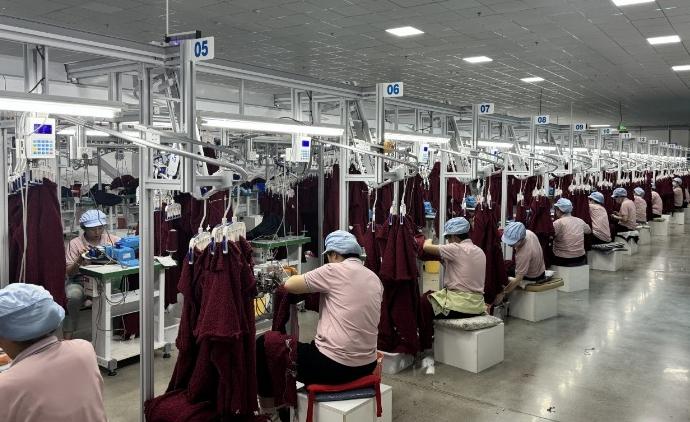
Through its OEM/ODM platform, UKL Group provides:
- Custom apparel manufacturing for global brands
- Flexible production quantities aligned with demand fluctuations
- End-to-end product development support from concept to sampling
- Multi-regional supply chain coordination for improved efficiency
- Export-ready production capabilities for international markets
👉 Learn more: https://oem.ukl-group.com/
By combining production capability with supply chain coordination, UKL Group helps brands reduce operational complexity while improving speed-to-market and production reliability.
Conclusion
The global apparel manufacturing industry is transitioning toward a more distributed and agile model. Success is no longer determined by lowest cost alone, but by how effectively brands can manage complexity, speed, and supply chain risk.
In this environment, manufacturing partners like UKL Group play a critical role by enabling flexible production, coordinated sourcing, and scalable apparel solutions for global brands.