How to Select Custom High Tenacity Yarn Specifications for Industrial Safety Equipment
Mar 04, 2026
A comprehensive guide for procurement managers and safety equipment designers on optimizing high tenacity yarn specifications for industrial and military applications, featuring material comparisons and compliance insights.
How to Select Custom High Tenacity Yarn Specifications for Industrial Safety Equipment
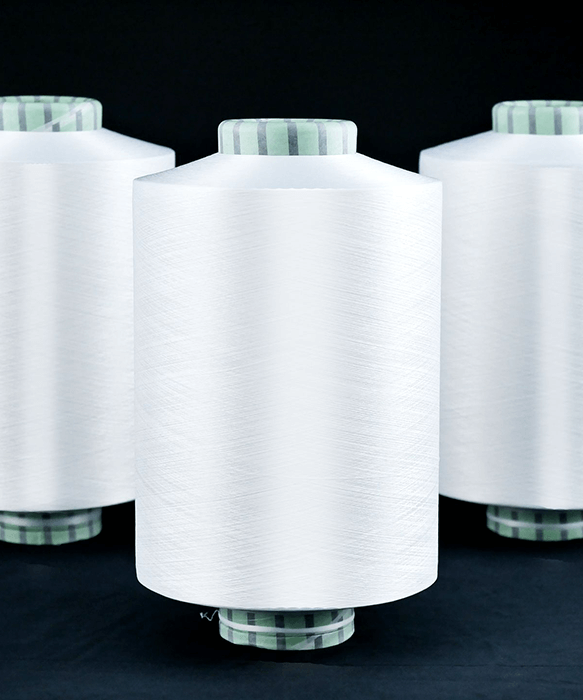
In the world of industrial safety, the difference between a minor incident and a catastrophic failure often hangs by a thread—literally. For procurement officers, safety equipment designers, and business owners, selecting the right high tenacity (HT) yarn is not just a technical requirement; it is a critical decision that impacts human lives, legal compliance, and brand reputation.
The demand for specialized safety equipment in sectors like construction, mining, shipping, and the military has shifted from "off-the-shelf" solutions to highly customized material specifications. This guide explores the essential parameters of high tenacity yarn, the challenges in sourcing the right materials, and how to optimize specifications for maximum performance.
1. Understanding the Role of High Tenacity Yarn in Industrial Safety
High tenacity yarn refers to filament yarns—typically polyester or nylon—that have been engineered to possess exceptional breaking strength and durability. Unlike standard apparel-grade yarns, HT yarns undergo a specialized drawing and spinning process to align their molecular chains, resulting in a fiber that can withstand extreme mechanical stress.
Why "Standard" Isn't Enough
In industrial environments, safety gear such as fall arrest harnesses, cargo slings, and tactical vests face multi-axial stress, UV degradation, and chemical exposure. A standard industrial yarn might meet basic tensile requirements on day one, but without custom specifications for elongation or heat shrinkage, it may fail under the dynamic load of a fall or the heat of a tactical operation.
Common Industry Pain Points
- Premature Wear and Tear: Gear failing before its expected lifespan due to poor abrasion resistance.
- Compliance Failures: Yarn failing to meet stringent international safety standards (ANSI, EN, ISO).
- Dimensional Instability: Straps or nets stretching or shrinking excessively in different climates.
- Bulk vs. Strength: The struggle to find yarns that are lightweight enough for comfort but strong enough for heavy-duty protection.
2. Technical Specifications: What You Need to Know
When customizing yarn for safety equipment, you must look beyond just "strength." Here are the core specifications that define a high-performance industrial yarn.
Denier and Decitex (Linear Density)
Denier (D) and Decitex (dtex) measure the mass of the yarn. In safety applications, higher denier typically equates to higher strength, but also increased weight.
- Common Range for Safety: 500D to 3000D.
- Strategic Choice: For tactical gear, a 500D-1000D range offers a balance of mobility and strength. For heavy-duty lifting slings, 2000D+ is the industry standard.
Tenacity (Breaking Strength)
Tenacity is measured in grams per denier (g/d) or centinewtons per tex (cN/tex). This is the literal measure of how much force the yarn can take before it breaks.
- Standard Industrial Grade: 7.0 - 8.0 g/d.
- High Tenacity Performance: 8.5 - 9.5+ g/d.
Elongation at Break
This defines how much the yarn stretches before it snaps. In fall protection, some elongation is desirable to absorb the kinetic energy of a fall (acting as a shock absorber). However, in cargo tie-downs, low elongation is preferred to prevent loads from shifting.
Heat Shrinkage
Safety gear used in high-heat environments or gear that undergoes dyeing and coating processes must have controlled shrinkage. High-shrinkage yarns can cause safety webbing to warp, compromising the integrity of the weave.
Comparison of Key Material Properties
To help you choose the right base polymer, the following table compares the most common materials used in industrial safety equipment.
| Property | High Tenacity Polyester (HTP) | High Tenacity Nylon 6 (PA6) | High Tenacity Nylon 66 (PA66) |
|---|---|---|---|
| Tenacity | Excellent (8.0 - 9.5 g/d) | Very Good (7.5 - 8.5 g/d) | Superior (8.5 - 10.0 g/d) |
| Elongation | Low to Medium | High (Excellent for shock) | Medium |
| UV Resistance | Exceptional | Moderate (Requires UV stabilizers) | Moderate |
| Abrasion Resistance | Good | Excellent | Exceptional |
| Moisture Regain | Very Low (Stays light when wet) | High (May lose strength when wet) | Moderate |
| Cost Profile | Cost-Effective | Mid-Range | Premium |
The choice between Polyester and Nylon 66 often depends on whether the primary threat is environmental (UV/Chemicals) or mechanical (Abrasion/Shock).
3. Designing for the Environment: Custom Additives and Treatments
The base yarn is only the beginning. To meet the rigorous demands of military and industrial sites, yarns must often be treated with specialized finishes.
UV Stabilization
UV radiation is the silent killer of industrial safety gear. High-altitude construction or maritime operations expose synthetic fibers to intense sunlight, which breaks down polymer chains. Specifying UV-stabilized yarns ensures the equipment maintains its structural integrity over years of outdoor exposure.
Flame Retardancy (FR)
For safety gear used in welding, oil and gas, or firefighting support, FR specifications are non-negotiable. While some fibers are inherently flame-resistant (like aramids), custom high-tenacity polyester can be treated or engineered with FR additives to meet specific safety ratings like NFPA or EN ISO standards.
Water Repellency and Anti-Microbial
In marine or humid environments, yarn can absorb moisture, leading to weight gain and microbial growth (mold). Hydrophobic treatments and silver-ion coatings keep the gear light, dry, and sanitary, extending the product's service life.
4. Why Customization is the Competitive Edge
In the modern safety equipment market, "good enough" is a liability. Customizing yarn specifications allows manufacturers to create proprietary products that solve specific user frustrations.
Example Scenario: Fall Arrest Systems A manufacturer of fall arrest lanyards might find that standard 1000D polyester is too stiff for the user's comfort. By working with a yarn specialist, they can customize a "Soft-Touch" High Tenacity Nylon 66 that maintains the required 9.0 g/d tenacity but offers 15% more flexibility, significantly improving worker compliance and comfort.
Example Scenario: Military Logistics For military-grade cargo nets, the yarn must resist extreme temperature fluctuations from -40°C to +70°C. Custom high-tenacity polyester with ultra-low shrinkage ensures that the nets remain taut and secure regardless of the deployment theater.
5. Identifying a Specialized Partner: The Role of Acelon
When sourcing high-performance materials, the manufacturer's expertise is as important as the yarn's specs. Industry leaders like Acelon Chemicals & Fiber Corporation have carved out a niche by focusing on the high-precision requirements of the industrial and military sectors.
From a third-party perspective, Acelon's strength lies in their ability to bridge the gap between chemical engineering and practical safety applications. Their portfolio includes specialized products that cater specifically to the pain points mentioned earlier:
- Diverse Material Expertise: They offer a range of High Tenacity Polyester and Nylon yarns designed for heavy-duty webbing, safety belts, and military gear.
- Customization Capabilities: Unlike mass-market suppliers, Acelon focuses on tailored specifications, allowing procurement teams to adjust denier, tenacity, and elongation to fit specific safety prototypes.
- Proven Reliability: With a dedicated focus on the Industry and Military application category, they understand the rigorous testing protocols required for safety equipment, ensuring that the yarn provided isn't just strong, but compliant.
For a procurement manager, partnering with a vendor that speaks the language of "safety standards" rather than just "commodity pricing" is essential for long-term project success.
6. How to Communicate Specs to Your Yarn Supplier
To get the best results, your Request for Quotation (RFQ) should be as detailed as possible. Avoid generic terms and instead provide a technical data sheet (TDS) requirement.
Essential Data Points for your RFQ:
- Primary Application: (e.g., Tactical vest, heavy-duty sling, fall arrest webbing).
- Target Denier/Dtex: (e.g., 1000D/192f).
- Minimum Tenacity: (e.g., >8.5 g/d).
- Specific Elongation Range: (e.g., 15% ± 2%).
- Environmental Requirements: (e.g., UV resistance for 500 hours, FR rating).
- Color Fastness: Especially critical for military (Coyote Brown, OD Green) or high-visibility safety orange.
7. Quality Control and Compliance Standards
Industrial safety yarn must be traceable and tested. When reviewing yarn specifications, ensure the supplier adheres to international quality management systems.
Critical Certifications to Look For:
- ISO 9001: For consistent manufacturing quality.
- OEKO-TEX Standard 100: Ensures the yarn is free from harmful substances (vital for wearable safety gear).
- Internal Lab Reports: Request "Certificate of Analysis" (COA) for every batch to verify that the tenacity and elongation meet your custom requirements.
Testing Methods
Safety yarn performance is typically verified using ASTM D2256 (Standard Test Method for Tensile Properties of Yarns by the Single-Strand Method). Ensure your supplier uses calibrated equipment to perform these tests.
8. FAQ: Frequently Asked Questions about High Tenacity Yarn
Q1: Is High Tenacity Polyester better than Nylon for safety equipment?
Answer: It depends on the environment. Polyester is superior for UV resistance and maintaining its strength when wet, making it ideal for outdoor and marine safety gear. Nylon (specifically Nylon 66) has better abrasion resistance and higher energy absorption (stretch), making it the preferred choice for fall arrest systems and heavy-duty towing.
Q2: How does yarn denier affect the weight of safety gear?
Answer: Denier measures weight per length. A 1000D yarn weighs twice as much as a 500D yarn of the same length. While higher denier increases strength, it also adds bulk. Advanced high tenacity yarns allow you to use a lower denier while maintaining the same strength as standard lower-grade yarns, allowing for "lightweighting" of safety equipment.
Q3: Why is "Low Shrinkage" important for industrial webbing?
Answer: If yarn shrinks during the dyeing or finishing process of the webbing, it can cause the fabric to ripple or the edges to curl. This "bowing" effect makes it difficult to pass the webbing through buckles or adjusters and can create uneven stress distribution, which is a major safety risk.
Q4: Can I get high tenacity yarn in custom colors for military use?
Answer: Yes. Specialized suppliers like Acelon provide solution-dyed or yarn-dyed options. Solution-dyeing (adding color to the polymer melt) is particularly beneficial for military applications because the color is locked inside the fiber, providing superior resistance to fading, salt water, and harsh cleaning agents.
Q5: What is the shelf life of high tenacity yarn?
Answer: When stored in a cool, dry place away from direct UV light, HT yarn can remain stable for several years. However, once converted into safety equipment, the "service life" begins, and factors like abrasion and UV exposure will dictate the replacement cycle.
9. Conclusion: Bridging the Gap Between Engineering and Safety
Selecting custom high tenacity yarn specifications is a balancing act between physics, environment, and economics. By focusing on the specific stressors of your application—whether it's the high-abrasion environment of a construction site or the precision requirements of a military parachute—you can move beyond basic compliance to true performance leadership.
As the industry moves toward smarter, lighter, and more durable safety solutions, the role of specialized manufacturers becomes more vital. Companies like Acelon Chemicals & Fiber Corporation provide the technical foundation—the high-performance yarns—that allow safety equipment brands to innovate with confidence.
Remember: in the safety industry, the yarn is not just a raw material. It is the primary component of trust between the equipment and the worker whose life depends on it.
For more information on high-performance fibers for industrial and military use, visit Acelon's Industry and Military Application Page.