Aug 10, 2026
Mastering ER Collet Chucks: How to Select the Right Tool Holder for High-Precision CNC Machining
Selecting an ER collet chuck is not simply a matter of matching a tool diameter. In high-precision CNC machining, the tool holder directly affects surface finish, tool life, and dimensional consistency. When the holder is poorly matched to the spindle or cutting conditions, the result is vibration, premature wear, and inconsistent quality. ER collet chuck selection should be approached as a critical technical decision. The most important factors are spindle interface compatibility, ER nut clearance, runout accuracy, holder rigidity, and dynamic balance. When chosen correctly, the holder becomes a stable link between the spindle and the cutting tool rather than a hidden source of error.
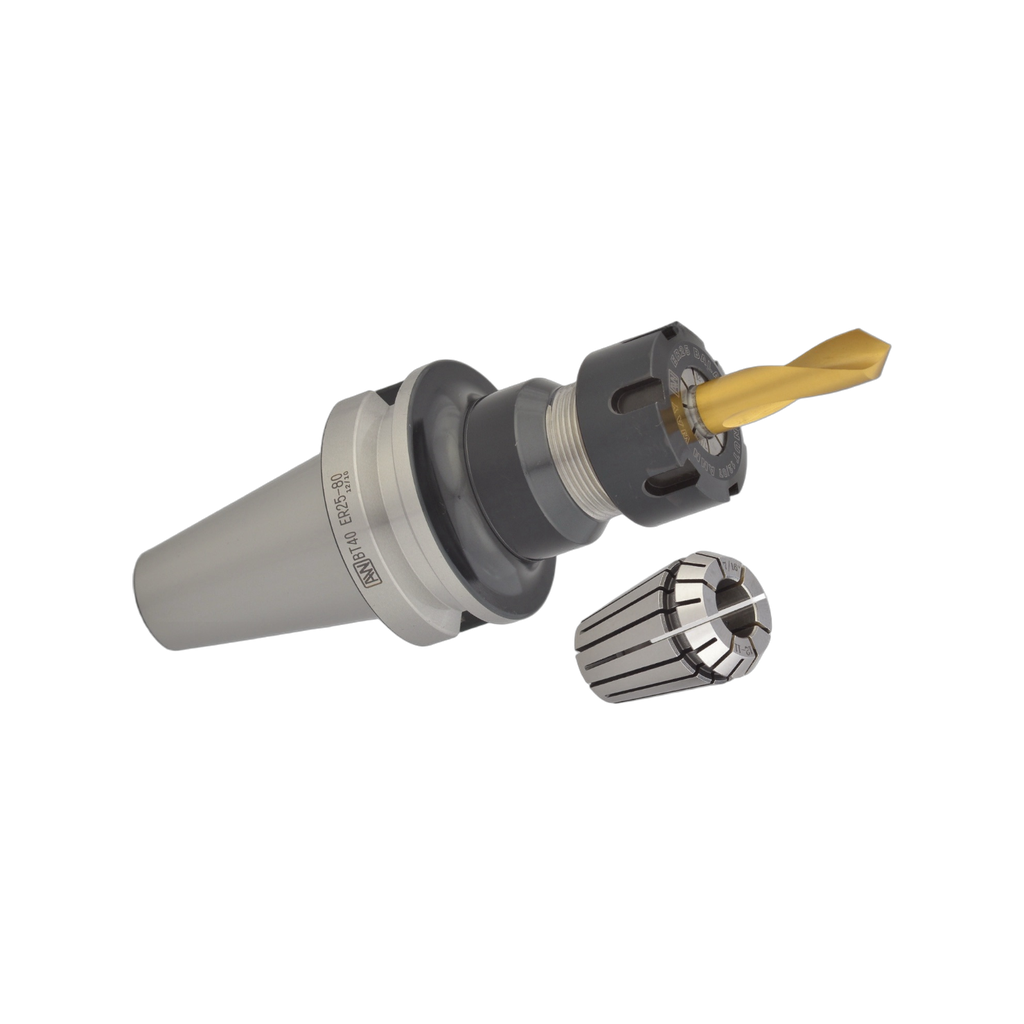
Anatomy of an ER Collet Chuck System
An ER collet chuck system consists of the spindle taper interface, chuck body, ER collet, and clamping nut. Each component maintains holding force and rotational accuracy.
The Spindle Taper Interface
This interface connects the holder to the machine. Common types include BT, HSK, and SK standards. It determines whether the holder can deliver stable contact and repeatable positioning during heavy cutting.
The Chuck Body
The chuck body provides the main structure. Its inherent rigidity and grinding precision influence vibration resistance. This becomes noticeable when spindle speed increases or tool overhang becomes longer.
The ER Collet and Clamping Nut
The collet clamps the tool shank, while the nut applies the clamping force. These parts work together to support concentricity and accessibility near the cutting area.
Choosing the Right Spindle Taper Interface
The first step in tool holder selection is matching the spindle interface exactly to the machine. A holder cannot perform well if the taper type is incorrect, even if the collet size is perfectly suited for the application.
Before choosing a holder, it is essential to compare the common spindle interface types used in CNC machining. The table below outlines the primary advantages and typical selection reasons for each standard.
| Spindle Interface | Main Advantage | Typical Selection Reason |
|---|---|---|
| BT (MAS-403) | Strong structure and widely adopted | Stable general machining and broad machine compatibility |
| HSK (DIN 69893) | Excellent high-speed contact and dual-face mating | High-speed machining and precision-focused operations |
| SK (DIN 69871) | Reliable taper-based connection | Solid stability in standard machining environments |
| CAT (ANSI B5.50) | Common in established production setups | Versatile use across regional machine platforms |
| DAT and Specialized | Dedicated machine fit | Required for specific spindle systems |
The correct interface must be selected based on the actual machine spindle, operating RPM range, and required machining accuracy. For high-speed machining, interface stability becomes extremely important because a small instability at the spindle connection quickly affects finish quality. HSK interfaces, for example, offer face and taper contact, preventing the holder from being pulled into the spindle at extreme speeds.
The Critical Role of ER Nut Styles in Clearance and Performance
ER nut selection is often overlooked, but it has a direct impact on accessibility and holder usability. The nut profile determines whether the tool holder can reach the cutting area without interference.
Hex Nuts
Hex nuts are common and practical for general machining. They are easy to tighten, but their larger outside profile may create clearance limitations near steep walls, deep pockets, or complex fixtures.
Mini Nuts
Mini nuts provide a much slimmer outside diameter. This makes them highly useful when working in tighter spaces where nose clearance is critical. The reduced mass also contributes slightly to better balance at high speeds.
Spanner Nuts
Spanner nuts offer a low-profile, cylindrical option for setups where outer profiles need to be controlled carefully. They provide a smooth outer surface that reduces windage and coolant deflection.
The correct nut style should be selected according to the available machining space. In close-clearance operations, the wrong nut limits reach or increases collision risk even when the holder itself is otherwise perfectly suitable.
Evaluating Runout Accuracy and Holder Rigidity
A high-precision holder must control runout accurately. Excessive runout causes uneven cutting engagement, meaning one flute of the end mill takes a heavier chip load than the others. This leads to faster wear, reduced dimensional consistency, and a poorer surface finish. This is especially critical when using smaller cutting diameters or when finish quality is an absolute priority.
Rigidity is equally important because it determines how well the holder resists deflection under radial load. A rigid holder supports stable cutting and helps reduce vibration during both roughing and finishing. If rigidity is insufficient, a precisely ground holder will bend under cutting pressure, losing performance in actual machining conditions. Therefore, ER collet chuck selection should not focus only on clamping range; concentricity and structural rigidity are core technical criteria.
Why Dynamic Balancing Matters in High-RPM Applications
As spindle speeds rise, dynamic balance becomes a critical factor. Centrifugal forces multiply exponentially as RPM increases, meaning even a small mass imbalance generates severe vibration. This vibration affects the spindle bearings, the holder, and the cutting tool. Strict balance grades, such as G2.5, are required in high-speed machining.
A dynamically balanced holder maintains smoother rotation, better cutting stability, and consistent surface quality. It reduces unnecessary stress on expensive spindle components and supports a longer service life. Dynamic balancing is not only a premium performance feature; it is a strict requirement whenever stable high-RPM operation is expected to prevent catastrophic tool failure.
A Practical Selection Checklist for ER Collet Chucks
To keep the selection process focused and reduce ordering errors, use a systematic approach before choosing an ER collet chuck.
The table below summarizes the main technical points that should be reviewed before finalizing a holder specification.
| Selection Point | What to Check and Verify |
|---|---|
| Spindle Interface | Exact compatibility with BT, HSK, SK, CAT, or DAT tapers |
| ER Size | Correct collet series and proper clamping range |
| Nut Type | Hex, Mini, or Spanner based on geometric clearance needs |
| Runout Accuracy | Suitable concentricity standards for the target tolerance |
| Holder Rigidity | Stable structural design for expected cutting load and tool overhang |
| Dynamic Balance | Appropriate balancing grade (e.g., G2.5) for the maximum spindle speed |
This logic keeps the focus on overall machining performance rather than only catalog specifications, ensuring all components work seamlessly together.
Elevating Machining Standards With Ann Way
At the product level, Ann Way offers an extensive lineup of premium ER Collet Chucks designed to meet the rigorous demands of modern manufacturing. Spanning across major spindle systems such as BT, HSK, DAT, and related formats, Ann Way demonstrates robust manufacturing capabilities tailored for high-precision CNC machining. Based on strictly controlled production processes and ISO-certified quality management, their tool holders deliver exceptional concentricity to maximize tool life and surface finish. Furthermore, the ER collet chuck range features advanced dynamic balancing, ensuring rock-solid stability even in high-RPM operations. Choosing highly engineered tool holders eliminates hidden errors and achieves superior cutting performance.
Final Considerations for High-Precision Machining
Mastering ER collet chuck selection means thoroughly understanding how each technical factor affects end results. Spindle compatibility determines whether the holder interfaces safely with the machine. The nut style dictates physical accessibility. Runout accuracy heavily influences precision and finish quality. Structural rigidity supports stable, chatter-free cutting, and dynamic balance protects the setup at higher speeds. When evaluated together as a unified system, the ER collet chuck becomes a performance-enhancing component rather than just an accessory. Selecting the right tool holder is ultimately the foundation of efficient, accurate, and highly stable CNC machining operations.