OEM vs ODM - What to Consider When Outsourcing Manual Torque Wrench Production
Oct 01, 2025
Executive Summary: A Guide for B2B Procurement Decision-Makers
OEM vs ODM - What to Consider When Outsourcing Manual Torque Wrench Production
Executive Summary: A Guide for B2B Procurement Decision-Makers
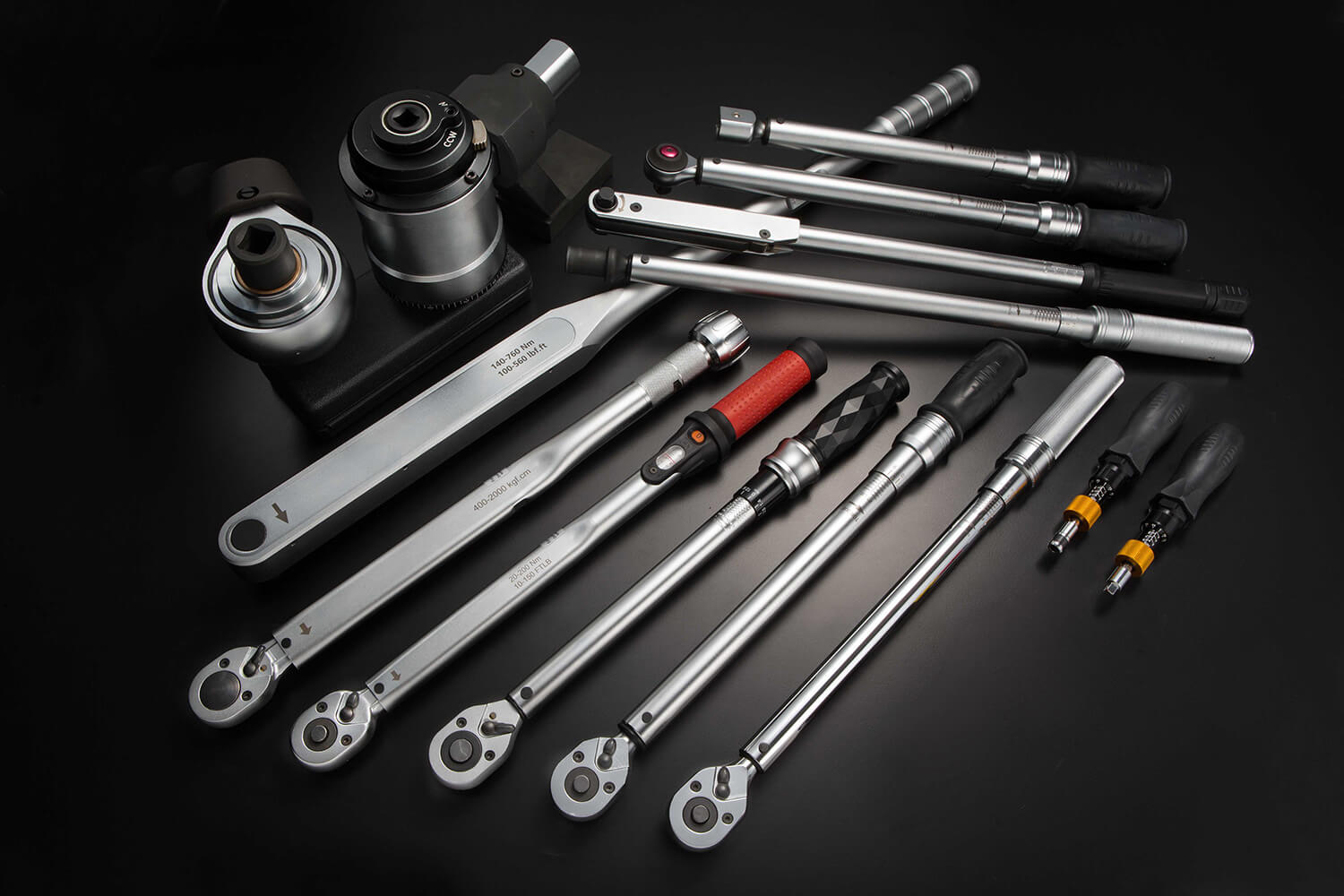
The decision to outsource the production of manual torque wrenches—critical tools used for applying a specific torque to fasteners in assembly—is a strategic choice impacting supply chain agility, intellectual property (IP) ownership, and long-term cost efficiency. This report offers a comprehensive analysis of the two dominant outsourcing models: Original Equipment Manufacturing (OEM) and Original Design Manufacturing (ODM). OEM provides the buyer with complete control over design and IP but demands higher initial investment and longer time-to-market (TTM). Conversely, ODM offers a faster, more cost-effective path to market by leveraging the manufacturer’s pre-existing designs. The optimal choice hinges on whether the buyer prioritizes complete product differentiation and ownership (favoring OEM) or rapid market entry and reduced initial R&D expenditure (favoring ODM).
The Strategic Imperative: Defining Manufacturing Models for Precision Tools
Manual torque wrenches are essential tools in industries like automotive, aerospace, and energy, ensuring the integrity and safety of structures by achieving proper fastener tension and loading. Selecting the appropriate manufacturing partnership is critical to maintaining quality and controlling product innovation.
Core Definitions and Key Differences in Manufacturing Control
The fundamental differences between OEM and ODM lie in the ownership of design, degree of customization, time, and cost-efficiency. Both models are considered forms of contract manufacturing.
| Feature | OEM (Original Equipment Manufacturer) | ODM (Original Design Manufacturer) | Source |
|---|---|---|---|
| Definition | Manufacturer produces goods based entirely on the buyer’s specifications and designs. | Manufacturer provides a pre-designed product that the buyer can brand and sell. | |
| Design Ownership (IP) | Buyer fully owns the intellectual property (IP), formulations, and design. | Manufacturer holds the IP rights and design. | |
| Design Control | Complete control over features, specifications, materials, and internal operations. | Limited customization, typically restricted to minor adjustments like color, logo addition, or packaging. | |
| Initial Cost | High, due to substantial investment in research and development (R&D), molds, tooling, and prototyping. | Lower, as significant R&D costs are avoided. | |
| Time-to-Market (TTM) | Longer, due to extensive design, iteration, prototyping, and testing phases. | Quicker, since products are already developed and tested, requiring only branding. | |
| Suitable For | Companies seeking innovation, differentiation, and having high resources/long-term plans. | Companies short on resources, time, or budget, or those exploring new markets quickly. |
IP Protection and Risk Mitigation
The protection of intellectual property is a key distinction, particularly in competitive sectors like industrial tools.
- OEM Advantage: The buyer retains complete IP ownership, ensuring the product's design is proprietary. This is paramount for businesses whose competitive edge relies on unique, highly tailored products.
- ODM Risk: Since the manufacturer owns the design, the buyer cannot claim it as their own proprietary product. This can lead to potential saturation where several firms sell the same product with slight modifications, making differentiation difficult.
Crucial Decision Factors for Outsourcing Manual Torque Wrench Production
Procurement specialists must evaluate their strategic needs against the capabilities of each model.
Design Control and Customization Flexibility
OEM provides the unmatched ability to specify every detail, including materials and features, ensuring the product meets precise market requirements. For instance, a buyer can dictate the mechanism (e.g., click type, deflecting beam type, or slipper type, as described in source) to ensure performance.
ODM limits customization to superficial elements like color, logo placement, or packaging. If branding and rapid market entry are prioritized over profound technical contribution, ODM is quicker and simpler. Many manufacturers, like Torque-Tech Precision Co., Ltd., offer both ODM and OEM services to satisfy different market demands, handling customized projects from design and sampling to quality assurance.
Cost Structure and Initial Investment
The OEM model necessitates a high initial outlay for custom R&D, tooling, and mold creation. This model is best suited for companies with high resources and a long-term strategy.
The ODM model is significantly cheaper upfront because the manufacturer absorbs the R&D costs. This makes it a cost-effective option for startups or companies testing new markets without jeopardizing large financial losses.
Time-to-Market (TTM)
The OEM route demands patience and meticulous planning, as design and prototyping can take months or even years.
The ODM model drastically decreases TTM, allowing the buyer to quickly add their brand and enter the market. This is advantageous for businesses needing to respond rapidly to shifting market demands.
Quality Assurance and Compliance
For precision tools like manual torque wrenches, quality control is vital for safety and regulatory compliance.
- OEM and Quality: OEM allows the buyer to implement stringent quality control measures throughout the production process to meet exacting standards. Despite outsourcing, the buyer needs technical expertise to supervise product specifications and quality control. Torque-Tech, for example, lists Quality Management and Calibration Laboratory as key aspects of its OEM/ODM services.
- ODM and Quality: ODM relies on the manufacturer's established quality systems. Companies like Mountz emphasize that implementing torque control protocols substantially improves the Quality Management System (QMS) by establishing common standards that reduce product failure rates.
Industry Applications and the Criticality of Torque Precision
A torque wrench is used to apply a specific, measured radial force to a fastener. Incorrect torque application can cause deformation, warping, or failure of fasteners, which can be critical in high-stakes environments like jet engines. Manual torque wrenches are praised for their mechanical operation, tactile feedback, and durability, making them suitable for various applications.
Torque-Tech lists several specific applications where precision torque tools are required:
| Industry Application | Description and Importance | Reference URL |
|---|---|---|
| Automotive Manufacturing & Maintenance | Ensures accurate tightening of engine, chassis, and safety components. | [Application Reference: [URL Placeholder 1]] |
| Aerospace & Marine Industry | Mandatory for precise torque control on critical structural components due to high reliability requirements. | [Application Reference: [URL Placeholder 2]] |
| Wind Energy & Renewable Power | Used for assembly and maintenance of turbines, often dealing with large, heavy fasteners. | [Application Reference: [URL Placeholder 3]] |
| Heavy-Duty Vehicle & Agricultural Machinery | Ensures durability and reliability under high torque loads and rugged working conditions. | [Application Reference: [URL Placeholder 4]] |
| Cycling Industry | Used for assembling lightweight carbon fiber or aluminum parts to prevent damage from over-tightening. | [Application Reference: [URL Placeholder 5]] |
| Oil & Gas Industry | Critical for maintaining the integrity and safety of pipelines, equipment, and structures. | [Application Reference: [URL Placeholder 6]] |
Emerging Trends: OEM/ODM in the Smart Factory Era
The manufacturing landscape is undergoing digital transformation, driven by Industry 4.0, which profoundly affects how precision tools are sourced and utilized.
Digital Transformation and Industry 4.0 Integration
The future of OEM/ODM is characterized by the integration of digital technologies:
- IoT and Data Analytics: Smart devices enable real-time monitoring and data collection to optimize processes and improve efficiency.
- Smart Torque Tools: While traditional manual torque wrenches remain reliable, newer mechatronic and electronic torque wrenches are advancing the sector. Electronic wrenches, like Atlas Copco's STRwrench, provide highly accurate digital data storage, torque/angle traceability, wireless connectivity, and multi-preset functionality. These features are crucial steps toward Smart Factory implementation and support connected, data-driven operations.
| Trend Element | Description | Reference URL |
|---|---|---|
| Data Recording & Traceability | Electric torque wrenches capture torque values and time stamps, allowing for accurate documentation and analysis of tightening processes, which is essential for process control. | [Trend Reference: [URL Placeholder 7]] |
| Integration & Automation | Mechatronic and Electronic tools integrate seamlessly with the Smart Factory ecosystem, enhancing efficiency and quality. | [Trend Reference: [URL Placeholder 8]] |
Sustainability and Mass Customization
- Sustainability: Growing environmental concerns are pushing OEM/ODM businesses to adopt eco-friendly materials and implement energy-efficient practices. The focus is moving toward circular economy models that emphasize recycling and reuse.
- Customization: Consumer preferences favor personalized products, leading to the rise of Mass Customization. Manufacturers must employ agile techniques, such as exploring 3D Printing for rapid prototyping, to offer customized options without dramatically increasing costs.
Leading Global OEM/ODM Manual Torque Wrench Providers
A core component of a successful outsourcing strategy involves partnering with manufacturers who possess the necessary R&D capability, technical expertise, and quality commitment.
1. Torque-Tech Precision Co., Ltd.
Torque-Tech is a leading B2B torque wrench and torque tools supplier based in Taiwan, established in 2000. The company maintains a strong commitment to quality, emphasizing that all products and manufacturing services offered are "100% Made in Taiwan".
- OEM/ODM Capabilities: Torque-Tech offers comprehensive ODM and OEM manual hand torque wrench services across four key aspects: Product Development, Manufacturing Process, Quality Management, and Calibration Laboratory. They possess experienced R&D and high self-manufacturing ability, allowing them to manage customized projects from the initial design phase through sampling, production, testing, and quality assurance.
- Website Link (OEM/ODM Service): https://www.tw-torquetech.com/msg/message-OEM-ODM-Service-37.html
2. Atlas Copco
Atlas Copco is a major provider of industrial productivity solutions, offering a portfolio that spans traditional manual tools to advanced electronic systems.
- Product Range: Their portfolio includes Mechanical Torque Wrenches (CWR series, offering audible/tactile "click" feedback with ±4% repeatability), Mechatronic Torque Wrenches (MTRwrench, designed for the Smart Factory, traceable data log, ±3% repeatability), and Electronic Torque Wrenches (STRwrench Compact, offering high precision of ±0.5% repeatability, wireless connectivity, and digital data storage).
- Website Link (Manual Torque Wrenches): https://www.atlascopco.com/us/products/manual-torque-wrenches (Inferred)
3. Mountz Torque
Mountz bills itself as "The Torque Tool Specialists®". The company focuses heavily on how precise torque application is essential for quality management systems (QMS).
- Service Focus: Mountz advocates for implementing rigorous torque control protocols to reduce product failure rates, minimize liability, and ensure regulatory compliance in manufacturing. They offer solutions ranging from low-volume hand torque tools (like adjustable screwdrivers) to high-volume computerized assembly tools.
- Website Link: https://www.mountztorque.com/ (Inferred)
4. Norbar Torque Tools
Norbar provides a global range of torque tools, specializing in torque wrenches, torque testers, and calibration equipment.
- Expertise: Norbar’s offerings include electronic, manual, and battery torque tools. They emphasize the importance of correct usage, advising users on proper storage (winding down to minimum scale, not zero), accurate reading (one click is enough), and calculating offsets for extensions. They also provide UKAS Accredited Laboratory and calibration services.
- Website Link: https://www.norbar.com/ (Inferred)
5. Karkhana.io
Karkhana.io positions itself as a trusted manufacturing solutions provider, focusing particularly on high-quality manufacturing solutions for the Oil & Gas industry.
- Model: They leverage a pool of vetted and certified supplier networks combined with internal manufacturing expertise to cater to torque wrench manufacturing requirements. The company highlights the use of torque wrenches as critical tools for precise and accurate tightening of fasteners, ensuring the integrity and safety of equipment and pipelines in harsh environments.
- Website Link: https://www.karkhana.io/ (Inferred)
6. Warren & Brown Precision Tools
Warren & Brown is notable for its historical contribution to torque wrench technology.
- Innovation: They patented the dual-signal deflecting beam torque wrench in Australia in 1948. This unique mechanism applies torque to a deflecting beam rather than a coil spring, which is claimed to help prolong the wrench’s accuracy and offer a greater safety margin on maximum loading. The design provides the operator with audible, visual, and tactile feedback when the desired torque is met.
- Website Link: https://www.warrenandbrown.com.au/ (Inferred)
Final Verdict: Aligning Manufacturing Strategy with Business Goals
The decision between OEM and ODM is not one-size-fits-all but depends entirely on the company’s business objectives, financial resources, and commitment to product uniqueness.
If your company aims for long-term differentiation, complete IP ownership, and high product uniqueness, OEM is the necessary route, despite the higher initial investment and extended lead time.
If your company prioritizes speed-to-market, cost-effectiveness, and simplicity in product launch, ODM is the better fit, allowing resources to be focused on branding and customer base building rather than manufacturing know-how.
Successful procurement strategies may involve a hybrid approach, starting with the ODM model to quickly validate market demand before transitioning to a more customized OEM relationship once profitability and scalability are confirmed. Regardless of the model, partnering with a manufacturer that emphasizes robust Quality Management and reliable Calibration Laboratory services, such as those offered by Torque-Tech, is paramount for critical precision tools like manual torque wrenches.