Aug 10, 2026
Preventing Rubber Seal Failure: A Comprehensive Guide to Compression Set and Environmental Degradation
Rubber seals often fail long before they visibly break. In many demanding applications, the problem begins with a gradual loss of sealing force, unseen surface deterioration, or subtle dimensional changes that eventually cause fluid contamination and unplanned operational downtime. For systems that depend on long-term sealing stability, understanding how compression set and environmental degradation interact is essential. Overlooking these mechanisms during initial development causes seals to lose performance prematurely.
Why Compression Set Is a Primary Cause of Rubber Seal Failure
Compression set is recognized as one of the most critical indicators of seal durability. It refers to the percentage of permanent deformation remaining after a rubber seal has been continuously compressed. When the elastomer cannot recover to its original uncompressed shape, contact pressure between mating surfaces drops significantly. Once this pressure falls below the system pressure, the seal can no longer maintain a leak-free barrier.
This structural issue becomes severe under continuous heavy mechanical loads, elevated temperatures, or poorly controlled gland designs. A seal may appear completely intact, yet its reduced elastic recovery can already create microscopic leakage paths. In static applications, excessive compression set is almost always the earliest hidden failure cause.
How to Reduce Compression Set Risk
Preventing compression set starts with precisely matching the rubber compound to the thermal and mechanical demands of the application. It also requires careful mathematical control of the squeeze ratio and groove dimensions so the seal is not chronically over-compressed. Evaluating the void-volume ratio ensures the rubber has adequate space to expand without permanently crushing polymer chains.
The following table outlines how common failure causes directly affect seal behavior and highlights priority technical evaluations. Before applying corrective actions, it is crucial to identify whether the loss of sealing force comes from the compound itself, the operating temperature, or excessive deformation from seal geometry.
| Failure Cause | Typical Effect on the Seal | Early Warning Sign | Prevention Focus |
|---|---|---|---|
| High Compression Set | Permanent loss of elastic recovery | Flattened or squared sealing profile | Optimize compound curing and squeeze ratio |
| Ozone Exposure | Surface cracking under tensile strain | Fine cracks on exposed exterior areas | Use inherently ozone-resistant elastomers |
| Chemical Attack | Volume swelling, hardening, or shrinkage | Severe dimensional change or softening | Verify specific media compatibility charts |
| Improper Installation | Twisting, localized cuts, or sheer stress | Nicks, surface distortion, uneven contact | Improve assembly protocols and lubrication |
A highly stable seal design depends on both intrinsic material resilience and strictly controlled physical deformation. If either factor is weak, sealing performance declines.
How Ozone Cracking Accelerates Environmental Degradation
Ozone attack is a remarkably common environmental failure mode, especially when seals are continuously exposed to outdoor air or electrically active surroundings. It typically manifests as small, sharp cracks on areas held under constant physical tension. Although microscopic at first, cracking can quickly propagate deep into the elastomer, weakening the structure and drastically reducing its resistance to further mechanical stress.
Material selection must account for the localized exposure environment, not just general hardness specifications. A sealing component used outdoors or positioned near ozone-generating equipment requires a completely different elastomeric foundation than one safely used within a protected, enclosed hydraulic system.
Design Strategies for Better Ozone Resistance
To systematically reduce ozone-related failure, seals should be conceptualized to minimize unnecessary surface strain in service. Since ozone only attacks stretched rubber, optimizing the cross-section to lower tensile stress is crucial. Storage conditions also matter heavily; keeping components away from ultraviolet light and electric motors in dark, cool spaces prevents degradation before the assembly phase even begins.
How Chemical Attack Changes Seal Geometry and Performance
Chemical exposure forcefully affects rubber seals depending on the fluid chemistry, surrounding temperature, and duration of contact. Some compounds swell and soften dramatically, while others harden and lose flexibility. In all cases, the physical geometry irreversibly changes, which immediately disrupts sealing pressure and dimensional stability.
A chemically incompatible seal can fail even with flawless installation. Since chemical reaction rates generally double with every ten-degree Celsius increase in temperature, hot fluids degrade seals exceptionally fast. Rigorous fluid resistance testing is an absolute baseline requirement. When dimensions heavily alter after prolonged immersion, it ruins fit, squeeze, and operational reliability.
Why Improper Installation Creates Early Failure Points
Installation-related damage is frequently mistaken for premature material failure because symptoms appear quickly after system assembly. Common issues include twisted profiles, sharp edge cuts, and particulate contamination trapped in the groove. These unforced defects create massive, localized stress concentrations that rapidly accelerate compression-related structural deformation and subsequent environmental attack.
Preventing this failure requires strict attention to lead-in chamfer design, rigorous groove cleanliness, and standardized handling consistency. Even the most advanced rubber compound cannot compensate for a seal that is aggressively nicked or unevenly compressed. Appropriate lubrication and proper tooling are absolutely non-negotiable.
How Material and Geometry Design Improve Seal Durability
The most effective way to prevent seal failure is continuously evaluating material behavior and spatial geometry together. A premium compound with strong compression set resistance may still rapidly fail if the metal groove causes excessive physical squeeze. Long-term reliability requires intensive laboratory validation through advanced compression set testing, specialized ozone resistance evaluation, accelerated heat aging, rigorous fluid resistance analysis, and precise dimensional inspection under highly realistic simulation conditions.
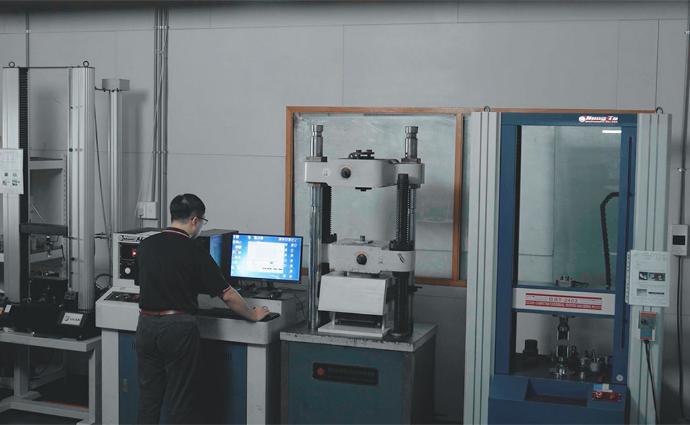
At this crucial verification stage, Zong Yih Rubber offers industry-leading support through its integrated development and comprehensive quality control capabilities. Featuring an advanced in-house testing laboratory, Zong Yih seamlessly executes critical evaluations for compression set, ozone resistance, severe heat aging, and chemical fluid resistance. Supported by fully automated optical inspection systems and governed by ISO 9001:2015 and IATF 16949:2016 quality frameworks, these stringent manufacturing controls ensure long-term physical durability and successfully maintain zero-defect shipment standards.
Key Design Priorities for Long-Term Seal Reliability
Rubber seal failure is rarely caused by a single isolated issue. In almost all operational cases, it results from the combined effect of heavy compression set, harsh environmental exposure, chemical incompatibility, and localized installation stress. The most reliable way to permanently prevent these problems is to control them systematically through accurate compound selection, optimized geometry design, and relentless verification testing.