Aug 01, 2026
Service and Maintenance Contract Models for Commercial Water Filtration OEM Partners
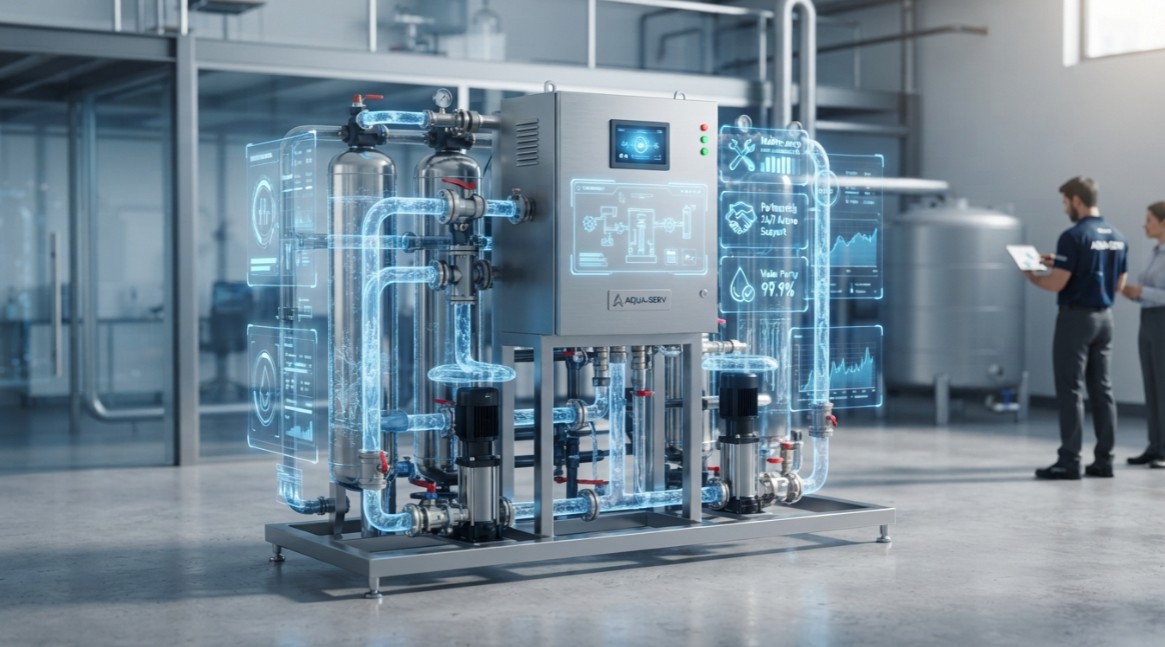
A commercial reverse osmosis system rarely fails because the core membrane wore out. It fails, or performs poorly, because a pre-filter went unchanged for too long, a membrane fouled from neglected sanitizing, or nobody scheduled the visit that would have caught a worn seal before it became a leak. For brands that private-label or OEM commercial water filtration equipment, this creates a question that matters as much as hardware selection: what does the maintenance relationship actually look like after the unit ships, and who is responsible for keeping it running. The answer varies widely by OEM partner, and the terms of that arrangement affect both the brand's warranty exposure and its customers' long-term satisfaction with the equipment.
Why Maintenance Structure Matters More for RO Systems Than Most Equipment
Reverse osmosis systems are unusual among commercial equipment in that their performance degrades gradually and often invisibly before it fails outright. A pre-filter that should be changed every three months but runs six months does not stop the system; it simply lets more sediment reach the carbon stage and, eventually, the membrane, shortening the membrane's working life without any single dramatic failure point. Because RO systems rely on a sequence of filtration stages working together, the polypropylene sediment stage, the carbon stage that also protects the membrane from chlorine damage, the membrane itself, and post-treatment polishing, a maintenance lapse anywhere in that sequence compounds downstream. This is the reason component replacement intervals and inspection schedules matter more here than in equipment with a single point of failure, and why the structure of a maintenance contract, not just the hardware warranty, is a real differentiator between OEM partners.
Common Contract Structures in the Market
Annual maintenance contracts, sometimes referred to as AMC agreements in the water treatment industry, generally follow one of a few structures. The most common builds in a fixed schedule of preventive visits, typically quarterly or semi-annual, where a technician inspects the system for leaks and wear, replaces pre-filters on a set cycle, and cleans or tests the membrane. Component replacement is usually bundled into this arrangement, with filters, membranes, and any UV or polishing stages counted as consumables with a finite service life that the contract covers rather than billing separately for each replacement. A second, lighter-weight model covers only scheduled component replacement without the inspection visits, which lowers cost but shifts responsibility for noticing early warning signs, reduced flow, off taste, unusual noise, back onto the end customer or the brand's own service team. A third model, more common in OEM/ODM relationships specifically, has the equipment manufacturer supply the core RO unit and membrane technology while leaving pre-filtration selection, installation, and field service to the brand or a regional service partner, which gives the brand more control over the customer relationship but requires it to build or contract for its own service capability.
What Should Be Written Into an OEM Service Agreement
Buyers evaluating an OEM partner for commercial water filtration equipment should look past the headline warranty period and confirm several specifics in the maintenance agreement itself. The replacement interval for each filtration stage should be stated in writing rather than left as a general recommendation, since actual intervals depend on feed water quality and usage volume, not a single number that applies everywhere. Membrane life expectations should be tied to stated feed water conditions, since a membrane rated for roughly two years under moderate total dissolved solids will foul faster under harder or higher-TDS source water, and an OEM that will not specify this relationship is not giving the brand enough information to set realistic customer expectations. It also matters whether replacement parts, membranes in particular, are standardized components the brand can source from multiple suppliers or proprietary parts tied to one manufacturer, since the latter creates long-term dependency that outlasts the initial equipment contract.
| Contract element | Why it matters to the brand |
|---|---|
| Filter and membrane replacement interval | Determines total cost of ownership and how often field visits are needed |
| Feed water quality assumptions | Real-world intervals shift with TDS, chlorine level, and usage volume |
| Component sourcing (proprietary vs. standard) | Affects long-term dependency on a single OEM for parts |
| Scope of inspection visits | Determines whether leaks and early wear are caught before failure |
| Response time for service calls | Affects customer downtime and brand reputation on installed units |
| Certification of replacement components | NSF, WQA, or equivalent certification should carry through to replacement parts, not just the original unit |
Structuring the Relationship for Long-Term Reliability
Brands entering an OEM relationship for commercial filtration equipment should treat the maintenance contract as part of the product specification, not an afterthought negotiated after the hardware deal is settled. A system that is well engineered but poorly serviced in the field will generate warranty claims and customer complaints that reflect on the brand, not just the OEM manufacturing the hardware. Conversely, a maintenance structure that is over-specified, with more frequent visits or component changes than the feed water conditions actually require, adds cost without adding reliability. The practical approach is to request the OEM's recommended service schedule alongside water quality data for the markets the brand intends to serve, and to confirm in writing whether extending a filter change interval voids the equipment warranty, since that clause determines how much flexibility the brand has to adjust service intervals for individual customer sites without losing coverage.
Frequently Asked Questions
How often does a commercial RO membrane actually need to be replaced? There is no single universal number; membrane life depends heavily on feed water quality, usage volume, and how consistently upstream pre-filters are changed. A commonly cited baseline under moderate feed water conditions is roughly two years, but this shortens meaningfully with higher total dissolved solids or unchlorinated feed water that lets bacterial fouling progress faster.
Can a brand handle field service itself instead of relying on the OEM's service network? Yes, and many brands do, particularly once they reach enough installed units to justify their own technician network. The key requirement is that the OEM provides clear, written specifications for replacement intervals, torque and seal specifications, and sanitizing procedures, so the brand's own technicians can service the equipment without voiding the manufacturer's warranty on the core components.
Conclusion
The equipment itself is only half of what a brand is buying in a commercial water filtration OEM relationship; the other half is the maintenance structure that determines whether that equipment keeps performing for years rather than degrading quietly until it fails. Brands should evaluate replacement intervals against real feed water conditions, confirm whether critical components are proprietary or standardized, and get the OEM's service commitments in writing rather than relying on general assurances. A cheaper unit backed by a vague maintenance arrangement often costs more over its service life than a slightly more expensive system with a clearly specified, feed-water-appropriate maintenance schedule.
Puricom has supplied OEM and ODM water filtration equipment for more than three decades and publishes stage-by-stage filter replacement guidance for its RO systems, along with a quick-change filter cartridge design intended to simplify the field maintenance work brands and their service partners carry out after installation.