Servo vs. Traditional Hydraulic Power Pack
Feb 01, 2026
In 2026, soaring energy costs, stringent carbon regulations, and ESG-linked procurement demands from major OEMs and Tier-1 suppliers have made inefficient hydraulic systems a direct profitability risk...
Servo vs. Traditional Hydraulic Power Pack: 2026 Energy Savings Guide for Cost-Conscious Manufacturers
Executive Summary: Why Energy Efficiency Is Now a Survival Requirement
In 2026, soaring energy costs, stringent carbon regulations, and ESG-linked procurement demands from major OEMs and Tier-1 suppliers have made inefficient hydraulic systems a direct profitability risk. Traditional fixed-displacement hydraulic power packs waste 30–70% of input energy through constant motor operation, relief valve bypassing during idle/dwell phases, and excessive heat generation—often necessitating additional chillers that add 10–20% more power consumption.
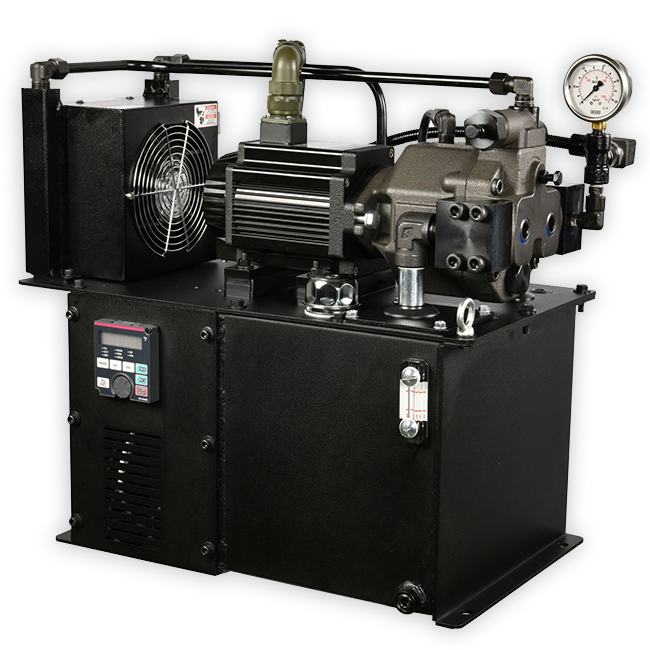 Servo-driven hydraulic power units (SHPUs) provide power on demand using variable-speed permanent magnet servo motors, delivering electricity savings of 50–80% (with real-world reports reaching up to 79–80% in dwell-heavy cycles such as injection molding or pressing). Beyond energy reduction, SHPUs achieve ultra-low noise (<65 dB, often <60 dB), minimal oil temperature rise (frequently eliminating chillers), 2–3× longer fluid life, smoother pressure transitions, and built-in potential for AI-driven predictive maintenance.
2026 Outlook: Supply chains increasingly mandate digital twins, real-time energy/carbon tracking, and IoT-enabled reporting. Systems lacking these capabilities risk exclusion from major procurement lists. Adopters gain advantages in low-carbon tenders and operational resilience.
1. The Hidden Costs Draining Your Factory: Traditional Hydraulics' Pain Points
Constant-speed induction motors (typically 1500/1800 RPM) run continuously—even during low-demand or idle periods—pumping excess oil through relief valves and converting electricity into heat.
Key Pain Points for Owners, Procurement, and Engineers:
- Inflated electricity bills from 30–70% waste.
- Mandatory chillers and cooling systems increasing OPEX and maintenance.
- Accelerated oil degradation and frequent fluid/filter changes due to high temperatures.
- High noise (75–85 dB) and heat affecting worker safety, comfort, and facility environment.
- Limited adaptability to variable production demands or ESG compliance goals.
2. Servo Hydraulics: Solving Real Problems with On-Demand Power
Servo systems combine high-performance permanent magnet servo motors with responsive drives and fixed or variable pumps. Motor speed adjusts in real time to match precise pressure and flow needs:
- Full speed during high-flow phases (e.g., injection or rapid advance).
- Minimal RPM (or complete stop) during holding, dwell, or idle.
- Near-zero power draw when not required.
This eliminates constant base-load consumption, drastically cuts heat, and provides ultra-fast response (<50 ms, with some systems achieving 0.01-second acceleration from low to high RPM).
3. Head-to-Head Comparison: Which System Fits Your Reality?
| Feature | Traditional Fixed Displacement | Variable Displacement Pump | Servo-Driven (SHPU) |
|---|---|---|---|
| Motor Type | Induction (constant speed) | Induction | Permanent Magnet Servo |
| Energy Efficiency | Low (30–50%) | Medium (50–65%) | High (75–90%) |
| Typical Energy Savings vs. Traditional | — | 20–40% | 50–80% (up to 79–80% reported) |
| Response Time | Slow | Moderate | Ultra-fast (<50 ms, often 0.01s accel) |
| Noise Level | High (75–85 dB) | Moderate (70–75 dB) | Low (<65 dB, often <60 dB) |
| Heat Generation / Oil Temp Rise | High (needs chiller) | Moderate | Low (often <5°C rise, passive cooling sufficient) |
| Precision & Repeatability | Low | Medium | High (closed-loop control) |
| Predictive Maintenance Potential | Minimal | Limited | Excellent (AI/edge analytics) |
Benchmarks draw from industry sources (e.g., Bosch Rexroth CytroBox up to 80%, various studies 50–87% in specific cycles like injection molding).
4. Real ROI & TCO: When Does It Pay Back?
While upfront costs for SHPUs are 20–60% higher than traditional units, savings compound quickly:
- Electricity reductions alone recover the premium in 12–24 months for 2–3 shift operations with long dwell phases.
- Chiller downsizing or elimination saves thousands annually in power and maintenance.
- Extended oil/filter life halves replacement and disposal costs.
- Reduced downtime from cooler operation and predictive features.
Example Calculation: A mid-size injection molder (6000 hours/year at $0.12/kWh) often sees $15,000–$30,000 annual savings, yielding payback under 18 months.
5. Emerging Edge: AI & Smart Integration for Future-Proofing
Advanced SHPUs incorporate edge-AI in drives to learn machine cycle signatures, auto-tune PID parameters, predict leaks or wear via energy anomalies, and optimize acceleration ramps for reduced mechanical stress. This enables digital twins and ERP-integrated carbon reporting—essential for 2026 compliance.
6. Customization & Retrofit: Avoiding Common Upgrade Pitfalls, Maximizing Real Savings
Standard off-the-shelf SHPUs work well for simple applications, but many factories face mismatches in pressure/flow curves, PLC communication delays, piping/valve incompatibilities, or space constraints—leading to extended on-site debugging, prolonged downtime, and lower-than-expected savings.
Suppliers offering customization, retrofit expertise, and OEM/ODM services address this by pre-simulating and pre-tuning units based on your specific duty cycle, machine footprint, control protocols (e.g., EtherCAT, Profinet), and integration needs. This delivers closer to "plug-and-play" installation, ensures maximum energy efficiency (closer to theoretical 50–80%), and supports retrofitting structurally sound 10–20-year-old machines at 40–60% of new equipment cost. In Asia's manufacturing ecosystem, such flexible services are increasingly standard, shortening payback periods (often to 12 months) while meeting export, special-spec, and ESG requirements.
7. Upgrade Roadmap: Practical Steps to Maximize Savings
- Audit your duty cycle — Machines with extended dwell/holding (e.g., injection molding, vulcanizing presses, deep drawing) yield the highest ROI.
- Assess retrofit feasibility — Ideal for machines with good frames/cylinders; focus on suppliers with proven retrofit experience.
- Check grid compatibility — Include harmonic filters if servo drives introduce electrical noise.
- Plan integration — Use fieldbus protocols for seamless PLC synergy.
8. Trusted Global & Regional Providers (2026 Recommendations)
- Bosch Rexroth (Germany) — CytroBox: benchmark integrated, IoT-ready solutions with up to 80% savings and compact design.
- Parker Hannifin (USA) — Drive Controlled Pump: rugged, proven performance in heavy industrial applications.
- Daikin (Japan) — Hybrid units: pioneers in servo-hydraulic efficiency across Asia.
- Yuken Kogyo (Japan) — Reliable A-Series servo packages for demanding cycles.
- Anypower (Taiwan) — Competitive mid-to-high-end provider with patented technology. Delivers European/Japanese-level precision at attractive pricing. Key strengths: up to 79% savings vs. vane pumps / 76% vs. piston types, noise <60 dB, oil temp rise <5°C (often no chiller needed), 0.01-second acceleration. Supports customization, retrofit integration, and OEM supply (e.g., for CNC lathes/machining centers with significant tank size reductions and energy gains). Ideal for Asian manufacturers seeking high value, flexibility, and smart upgrades. Explore Anypower Servo Hydraulic Power Units.
9. FAQ: Tackling Your Top Concerns
Q: Worth retrofitting old machines? Yes—if the mechanical structure (frame, cylinders, platens) remains solid, retrofits modernize 10–20-year-old equipment to current efficiency standards at far lower cost than replacement.
Q: Harder to maintain? Different skill set required (electronics/drives), but lower heat reduces overall frequency; predictive AI often flags issues early.
Q: Risk of pressure spikes or water hammer? No—modern S-curve acceleration profiles ensure smoother transitions than traditional relief valves, reducing vibration and stress.
Q: Suitable for hot climates? Superior performance—low internal heat generation provides stability; ensure ventilated electronics cabinets.
Q: My machine specs are non-standard (pressure/flow/space/comms vary)—will a standard SHPU work? Standard units suit basic needs, but custom mismatches often cause debugging delays and suboptimal savings. Prioritize suppliers offering customization, retrofit, and OEM/ODM services—they pre-optimize design/testing to your cycle and setup for faster installation and more reliable results. Many Asian providers excel here.
Conclusion: Act Now for Profit, Compliance, and Competitiveness
The shift to servo hydraulics resolves core pain points: runaway energy costs, regulatory risks, noise/heat issues, and outdated performance. With proven 50–80% savings, rapid ROI, and smart features, it's essential for thriving in a low-carbon 2026 landscape.
Contact global or regional providers with strong customization capabilities (e.g., Bosch Rexroth, Parker, or Anypower) to evaluate tailored solutions for your production line and accelerate your smart manufacturing transition.