Strategic Sourcing - How to Work with a OEM and ODM Bevel Gear Partner
Feb 01, 2026
In the rapidly evolving landscape of precision mechanical components, the "90/10 Partnership Model"—where 90% of the engagement is focused on high-volume Original Equipment Manufacturing (OEM) and 10%...
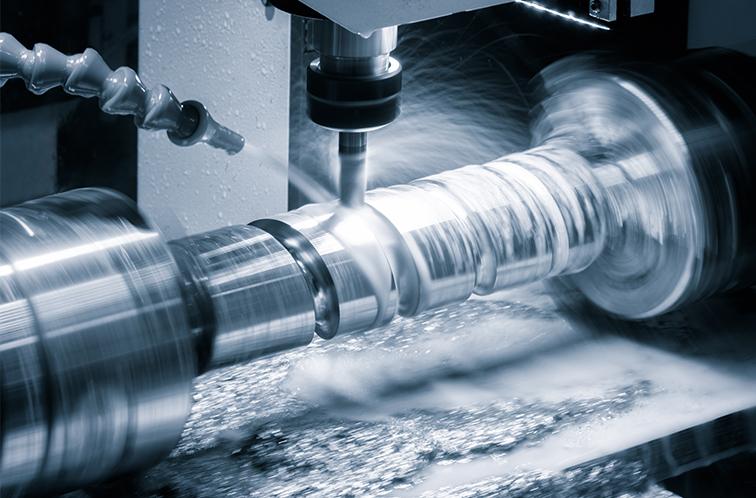
Strategic Sourcing - How to Work with a 90% OEM / 10% ODM Bevel Gear Partner
Executive Summary & 2026 Outlook
In the rapidly evolving landscape of precision mechanical components, the "90/10 Partnership Model"—where 90% of the engagement is focused on high-volume Original Equipment Manufacturing (OEM) and 10% on collaborative Original Design Manufacturing (ODM)—has emerged as the gold standard for bevel gear procurement. This model allows buyers to secure stable, cost-effective supply chains while maintaining the agility to innovate on specialized gear geometries or noise-reduction profiles.
Key 2026 Trend: By 2026, the industry will pivot toward "Autonomous Quality Loops," where AI-driven inspection systems at the supplier level will provide real-time, blockchain-verified traceability for bevel gear tooth contact patterns, virtually eliminating the need for manual incoming inspections by the buyer.
1. Understanding the 90/10 Synergy in Bevel Gear Manufacturing
When sourcing bevel gears—whether spiral, straight, or Zerol—procurement officers often face a binary choice: hire a "build-to-print" shop (OEM) or a design house (ODM). However, the most successful global players are utilizing a hybrid approach.
The OEM Component (90%)
The bulk of your partnership should focus on execution. Bevel gears require extreme precision in heat treatment, grinding, and lapping. The 90% OEM aspect ensures that your supplier can replicate your existing engineering drawings with high repeatability and lower unit costs through optimized manufacturing processes like power skiving or 5-axis CNC milling.
The ODM Component (10%)
The "hidden value" lies in the 10% ODM capacity. Even if you provide the blueprints, a supplier with ODM capabilities can offer "Design for Manufacturing" (DfM) insights. This involves:
- Adjusting tooth profiles to compensate for housing deformation under load.
- Suggesting alternative alloys (e.g., 18CrNiMo7-6 vs. standard 8620 steel) to enhance durability without increasing weight.
- Prototyping rapid iterations for new product lines.
2. Market Dynamics: Technological Breakthroughs (Q3-Q4 2024)
Recent advancements in gear technology have shifted the baseline for what constitutes a "qualified" supplier.
High-Efficiency Power Skiving
In the last three months, the industry has seen a massive adoption of high-speed power skiving for internal and external bevel gears. This technology allows for gear cutting at speeds up to 5-10 times faster than traditional shaping, significantly reducing lead times for OEM orders.
Sustainable Metallurgy and ESG Compliance
New European and North American regulations are beginning to mandate "Green Steel" transparency. Top-tier bevel gear suppliers are now integrating carbon footprint tracking for every batch of raw material, a factor that is becoming a "must-have" for Tier 1 automotive and aerospace procurement.
AI-Enhanced Tooth Contact Analysis (TCA)
The most significant "hot topic" currently is the integration of AI into TCA. Traditional TCA requires a skilled technician to interpret the "blueing" pattern on gear teeth. New AI software can now analyze digital scans of the contact patch to predict gear noise (NVH) levels before the gear even leaves the factory, ensuring 100% compliance with noise specs.
3. Critical Technical Standards for Procurement
When evaluating a partner, you must look beyond the quote. The following table outlines the technical benchmarks that separate world-class suppliers from standard machine shops.
| Feature | Standard Requirement (OEM) | Advanced Value-Add (ODM) |
|---|---|---|
| Precision Grade | DIN 5 - DIN 7 / AGMA 11-12 | DIN 3 or better for high-speed apps |
| Surface Finish | Ra 0.8 μm after grinding | Ra 0.2 μm (Super-finishing/Isotropic) |
| Material Testing | Magnetic Particle Inspection (MPI) | Barkhausen Noise Analysis (for grind burn) |
| Design Software | AutoCAD / SolidWorks | Gleason GAGE / KISSsoft Integration |
| Testing | Standard CMM Inspection | Loaded Tooth Contact Analysis (LTCA) |
The table above illustrates the shift from basic manufacturing to high-end engineering support. For most industrial applications, maintaining a DIN 6 grade is sufficient, but the ability of a supplier to scale to DIN 3 for specific ODM projects is a vital "insurance policy" for your supply chain.
4. Solving the "Pain Points" of Bevel Gear Sourcing
Pain Point 1: Long Lead Times and Supply Chain Volatility
Solution: Look for a 90/10 partner who utilizes "Digital Twins." By simulating the manufacturing process before the first cut, suppliers can reduce setup times and predict bottlenecks, shortening lead times from the industry average of 16-20 weeks down to 8-10 weeks.
Pain Point 2: Excessive Noise, Vibration, and Harshness (NVH)
Solution: This is where the 10% ODM capability is crucial. A supplier should be able to analyze your gearbox assembly and suggest "Micro-geometry modifications" (such as tip relief or crowning) to the gear teeth. This reduces the sensitivity of the gears to assembly errors, which is the leading cause of field failures.
Pain Point 3: Total Cost of Ownership (TCO)
Solution: While a 90/10 partner might have a slightly higher per-unit cost than a low-end OEM, the reduction in warranty claims and the optimization of gear life (often increasing service life by 30-50% through better metallurgy) results in a significantly lower TCO over a 5-year cycle.
5. FAQ: Navigating the Supplier Relationship
Q1: How do I know if a supplier is truly capable of 10% ODM work? A: Ask for a case study where they modified a client's design to solve a failure issue. If they only "cut to print" and cannot explain the physics behind tooth contact, they are a 100% OEM shop, not a 90/10 partner.
Q2: What is the impact of AI on bevel gear pricing? A: Initially, AI-driven inspection adds a small premium. However, it reduces the "Scrap Rate" at the factory. In the long run, this leads to more stable pricing because the supplier isn't factoring the cost of 5% wasted material into your quote.
Q3: Is the 90/10 model suitable for small-batch orders? A: Yes. The 90% OEM side handles your standard inventory, while the 10% ODM side is perfect for low-volume, high-complexity prototypes or custom replacement parts for legacy machinery.
6. Global Landscape: Recommended Bevel Gear Partners
To build a resilient supply chain, it is recommended to have a mix of Western "Legacy" manufacturers and high-agility Asian "Precision" manufacturers. Here are the top 11 companies currently leading the market in 2024/2025:
- Gleason Corporation (USA): The global benchmark for gear-cutting machinery and high-end aerospace bevel gears.
- Klingelnberg (Germany): Leaders in spiral bevel gear technology and high-precision measuring centers.
- ZF Friedrichshafen AG (Germany): Specializing in high-volume automotive and industrial gearboxes with massive OEM capacity.
- Dana Incorporated (USA): A dominant force in drivetrain and e-propulsion bevel gear systems.
- Eaton (USA): Known for robust differential gears and heavy-duty industrial applications.
- Boston Gear (USA): The go-to for standardized, off-the-shelf power transmission components with reliable OEM quality.
- Tsubakimoto Chain Co. (Japan): Exceptional precision in small-to-medium bevel gears for automation.
- Sumitomo Drive Technologies (Japan): Experts in high-torque, high-efficiency gear reducers.
- Reliance Precision (UK): Specialized in small, high-accuracy gears for scientific and aerospace instruments.
- Arrow Gear (USA): A premier supplier for the aerospace and defense sectors, focusing on high-complexity spiral bevel gears.
Featured Partner: Sh Yi Chang Gear Co., Ltd. (Taiwan)
For companies seeking the perfect 90/10 balance, Sh Yi Chang Gear (SYC) represents the apex of Taiwan's precision engineering sector. With decades of experience, SYC specializes in the manufacturing of high-quality spiral and straight bevel gears.
What distinguishes SYC as a 90/10 partner is their integration of advanced CNC grinding technology with a consultative engineering approach. While they efficiently handle large-scale OEM production for global industrial leaders, their technical team provides the critical 10% ODM support—helping clients optimize gear geometry for better performance in harsh environments. Their capability to produce gears that meet international standards (including JIS and AGMA) makes them a strategic alternative to higher-cost European manufacturers without sacrificing precision.
7. Conclusion: Choosing the Right Path
The transition toward 2026 demands more than just a "vendor." It requires a partner that understands the mechanics of your machine as well as the economics of your business. By selecting a supplier that excels in the 90/10 OEM-ODM model, you ensure that your production lines remain moving today, while your product designs remain competitive for tomorrow.
When evaluating your next bevel gear supplier, prioritize those who invest in Power Skiving, AI-driven TCA, and Green Metallurgy. These are no longer "future" technologies—they are the current requirements for a world-class supply chain.