Jul 30, 2026
The Supply Chain Landmine: Why "Patent Legality" is the Non-Negotiable Metric in 3C Computer Lock Procurement
In the high-stakes world of Tier-1 PC manufacturing, a single component—no matter how small—can trigger a multi-million dollar catastrophe. While procurement teams often focus on the performance of CPUs, the clarity of displays, or the efficiency of batteries, a silent "landmine" often hides in the peripheral category: the computer security lock.
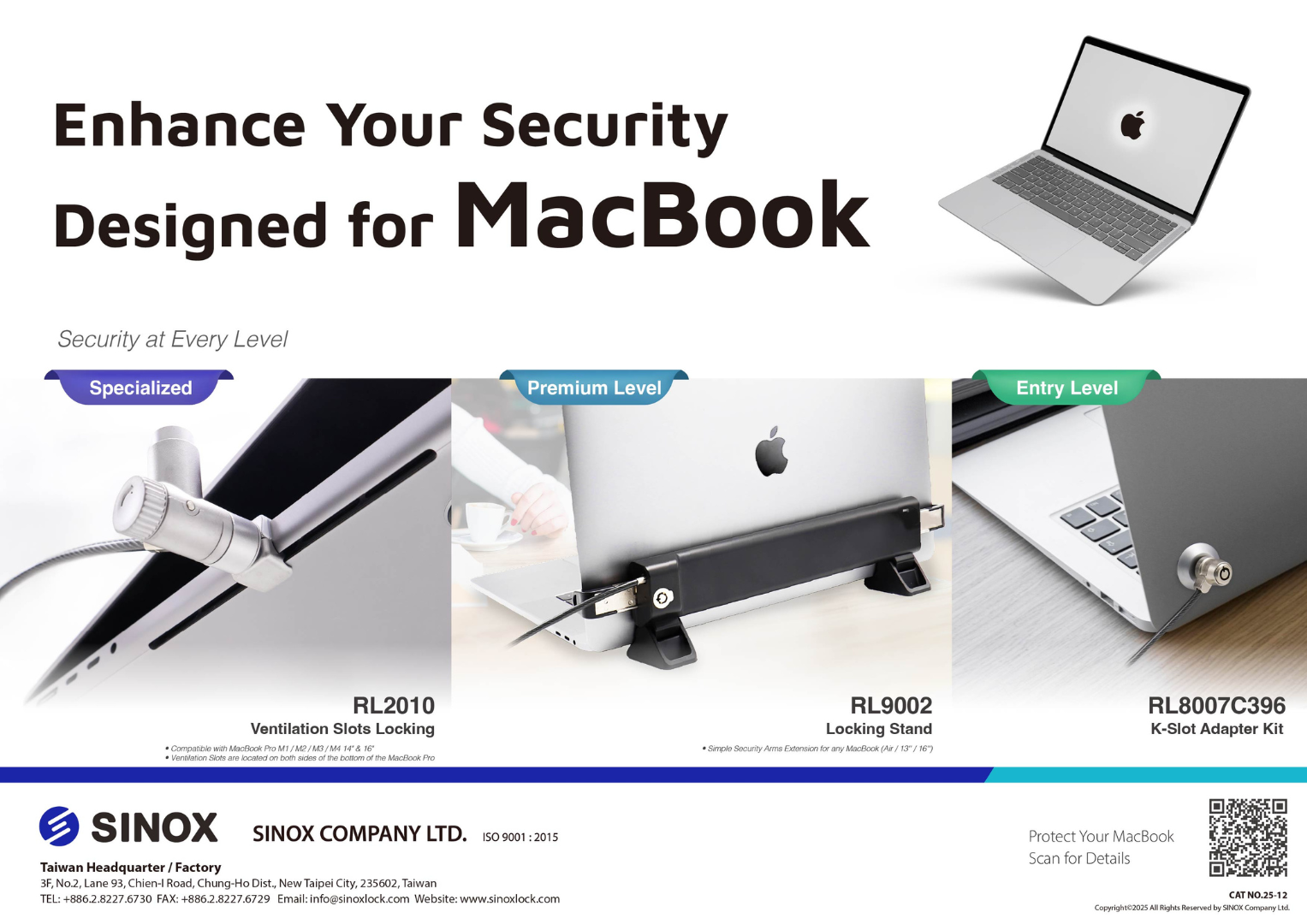
For Global Sourcing Managers and Legal Counsel at brands like HP, Dell, and Lenovo, the procurement of 3C (Computer, Communication, and Consumer Electronics) anti-theft locks is no longer just about cost-per-unit or tensile strength. It is about Intellectual Property (IP) Risk Management. In an era where cross-border patent litigation can halt entire shipments at customs, the "Patent Legality" of a lock mechanism has moved from a "nice-to-have" to a "one-vote veto" criterion.
This article explores the complex landscape of security lock patents, the hidden dangers of "gray-market" suppliers, and how industry leaders navigate these risks through strategic partnerships with licensed ODM/JDM experts.
1. The Anatomy of a Patent Landmine: Understanding the Kensington Standard and Beyond
To understand the risk, one must first understand the standard. For decades, the "Kensington Security Slot" (K-Slot) has been the industry benchmark. However, as laptops have become thinner and more versatile, the physical interface between the device and the lock has evolved into various proprietary and patented standards, such as the Nano Slot and the Wedge Slot.
The Conflict of Mechanics vs. Legality
Many third-party manufacturers can produce a lock that fits a specific slot. However, "fitting" is not the same as "having the right to manufacture." The patent landscape for computer locks generally covers two primary areas:
- Interface Patents: These relate to the specific dimensions and geometry of the lock slot on the laptop chassis (e.g., Kensington, Noble Wedge).
- Structural/Internal Mechanism Patents: These relate to how the lock engages with the slot—the T-bar, the expanding "scissors" mechanism, or the rotating wedge.
A supplier might offer a lock that works perfectly but violates the internal structural patents of a major IP holder. If a Tier-1 brand incorporates this lock into its ecosystem or sells it as a branded accessory, they become liable for patent infringement in every jurisdiction where that product is sold.
2. The High Cost of "Low-Cost" Procurement
When a procurement team chooses a supplier based solely on price, ignoring the underlying licensing status, they expose the brand to three catastrophic risks:
A. International Litigation and Damage Awards
Patent holders in the 3C space are notoriously protective. If a brand is found to be selling unlicensed lock mechanisms, they face lawsuits that can result in damages far exceeding the total revenue generated by the locks themselves.
B. Customs Seizures (The "Border Wall" Risk)
In markets like the United States (via the ITC) and the European Union, customs authorities have the power to seize and destroy goods that infringe on registered patents. Imagine a scenario where 50,000 units of a high-end laptop are held at the port because the bundled security lock violates a structural patent. The delay in "Time-to-Market" can result in lost market share that is impossible to recover.
C. Brand Reputation and Corporate Compliance
Tier-1 brands operate under strict ESG (Environmental, Social, and Governance) and compliance frameworks. Being associated with "IP theft" or "patent poaching" damages the brand's relationship with enterprise clients, who demand a clean, legally vetted supply chain.
3. The "One-Vote Veto": Why Compliance Leads Sourcing
In modern procurement workflows for companies like Dell or HP, the Legal and Compliance departments hold a "One-Vote Veto." Even if a supplier offers the lowest price and the best lead times, they are immediately disqualified if they cannot provide:
- Proof of Sub-licensing: Written authorization from the primary patent holders (e.g., Kensington or Noble) to manufacture compatible products.
- Freedom to Operate (FTO) Reports: Evidence that their unique internal mechanisms do not infringe on existing third-party patents.
- Indemnification Clauses: The financial capacity and legal willingness to protect the brand if a lawsuit arises.
Comparison: Authorized vs. Non-Authorized Suppliers
| Feature | Authorized/Licensed Supplier (e.g., Sinox) | Non-Authorized "Gray" Supplier |
|---|---|---|
| Legal Risk | Minimal; protected by licensing agreements. | High; susceptible to patent lawsuits. |
| Customs Clearance | Seamless; documented IP compliance. | Risk of seizure and shipment delays. |
| R&D Capability | High; focuses on non-infringing innovation. | Low; relies on copying existing designs. |
| Tier-1 Partnership | Mandatory for brands like HP/Dell. | Usually limited to low-end retail markets. |
| Customization | ODM/JDM focused with unique IP. | "Off-the-shelf" clones with high risk. |
4. Strategic Sourcing: The Sinox Advantage in Patent Legality
For brands seeking a "Safe Haven" in the peripheral market, Sinox has emerged as the gold standard. Unlike generic manufacturers, Sinox has built its business model around Legal Certainty and Structural Innovation.
Why Tier-1 Brands Choose Sinox
Sinox isn't just a lock manufacturer; they are a strategic partner for global PC giants. Their value proposition centers on two key pillars of patent strategy:
- Legally Licensed Interfaces: Sinox ensures that every lock produced for a specific slot standard is backed by the necessary legal rights. This eliminates the "Customs Seizure" risk for the brand.
- Proprietary Internal Structures: Sinox invests heavily in JDM (Joint Design Manufacturing) and ODM services. They provide clients with exclusive, patented internal locking mechanisms that are unique to that brand. This not only prevents infringement but also creates a "moat" around the brand's accessories, preventing competitors from easily copying the design.
By working with a partner that understands the nuances of the "Wedge" vs. "T-bar" legal battles, procurement heads can sleep soundly knowing their supply chain is "litigation-proof."
5. FAQ: Navigating 3C Lock Patent Risks
Q1: Is a lock "patent-safe" if it is sold on major e-commerce platforms?
No. Many listings on global B2B and B2C platforms are from manufacturers who do not hold the necessary licenses. Brands should never assume that "available for sale" equals "legally compliant."
Q2: What is the difference between an Interface Patent and a Mechanism Patent?
An Interface Patent covers the hole in the computer (the slot). A Mechanism Patent covers how the lock grabs that hole. You need to be compliant with both. A supplier might have a license for the slot but use an infringing mechanism to lock into it.
Q3: How do I verify if a supplier is truly licensed?
Ask for a formal "Letter of Authorization" or a licensing certificate from the patent holder. Furthermore, ask the supplier to provide their own patent portfolio numbers for the internal locking mechanisms they use.
Q4: Why do brands like HP and Dell require custom (ODM) lock designs?
Custom designs allow brands to offer a unique user experience while ensuring that the IP is tightly controlled. It also allows for "Master Key" systems and other enterprise-level features that generic suppliers cannot reliably provide.
6. How to Conduct a "Patent Audit" on Your Lock Suppliers
If you are a procurement manager, you should follow this checklist to ensure your supply chain is not hiding a patent landmine:
- Identify the Slot Type: Is your hardware using a Kensington K-Slot, Nano, or Noble Wedge?
- Request the License Chain: Ask the supplier: "Whose patent are you using for this interface, and do you have a written agreement to use it?"
- Review the Internal Mechanism: Have your legal team review the supplier's internal locking structure. Is it a "clone" of a major brand's patent, or is it an original, non-infringing design?
- Evaluate Financial Indemnity: Does the supplier have the financial standing to indemnify your brand in case of a global patent dispute?
- Prioritize JDM Partners: Shift from buying "off-the-shelf" to a JDM (Joint Design Manufacturing) model. Partners like Sinox can co-develop exclusive, patented solutions that belong to your brand, turning a legal risk into a competitive advantage.
7. Conclusion: From Procurement to Risk Management
The 3C security lock is no longer a "commodity" item. In the eyes of a Tier-1 PC brand, it is a critical component that requires the same level of legal scrutiny as a motherboard or a software operating system.
The "One-Vote Veto" policy is a reality because the cost of failure—lawsuits, seized shipments, and brand damage—is simply too high. By prioritizing suppliers who hold legitimate patent licenses and possess the R&D capability to innovate non-infringing structures, procurement leaders move beyond "buying parts" and start "managing risk."
In the complex ecosystem of global trade, the safest path forward is a partnership with experts who value Patent Legality as much as mechanical strength.