Jun 26, 2026
The Ultimate Guide to Custom Kneeling Pads - How Hardness, Thickness, and Texture Impact Comfort and Durability
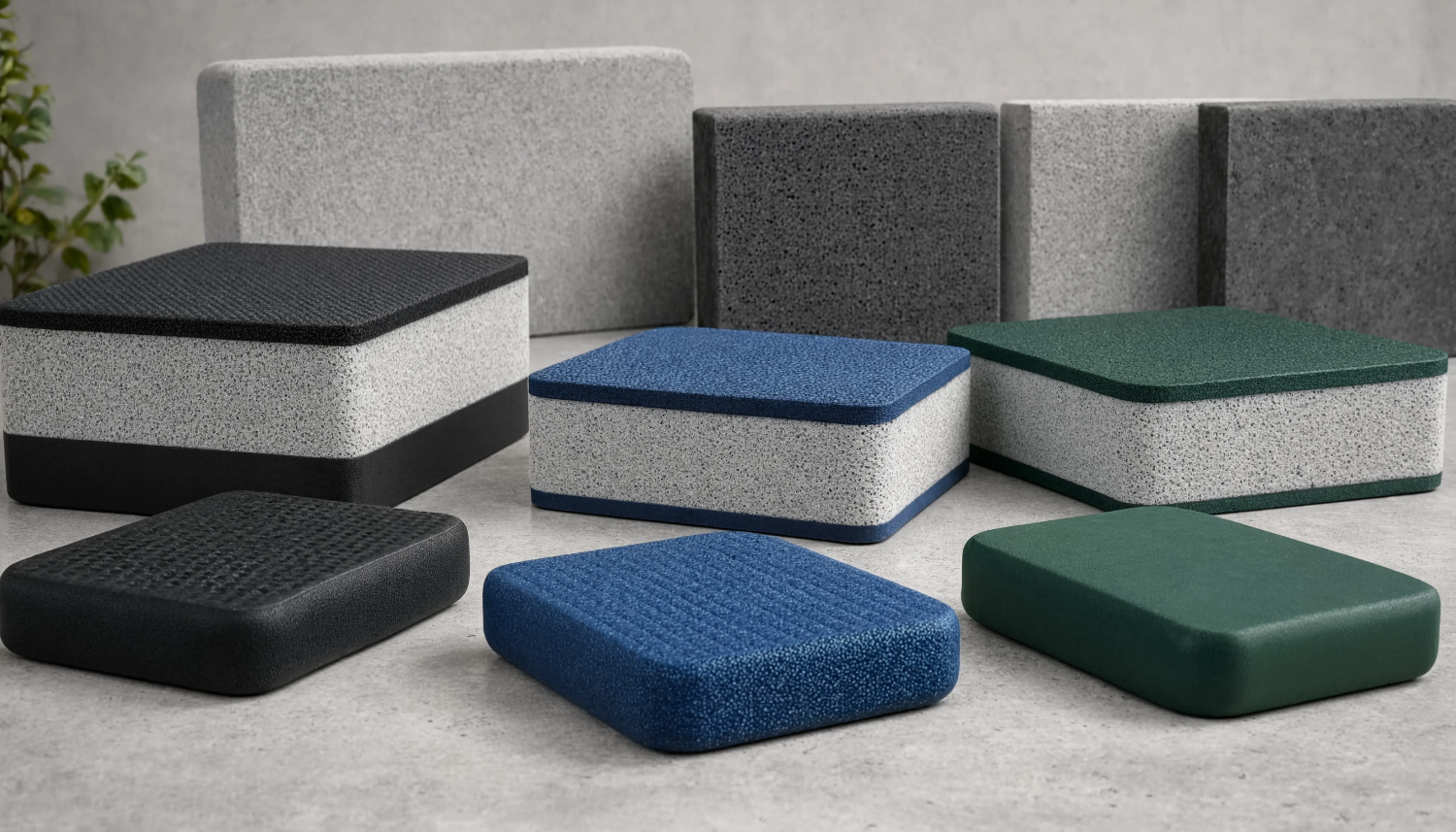
In many industries—from professional landscaping and automotive repair to construction and DIY home improvement—the knee is the most frequently stressed joint. Occupational knee injuries account for a significant portion of workplace compensation claims, often resulting from prolonged pressure on hard surfaces. For procurement managers, brand owners, and safety officers, selecting the right protective equipment isn't just about comfort; it is about long-term health, productivity, and brand reputation.
This guide delves into the technical specifications of custom kneeling pads, focusing on the three pillars of performance: Hardness, Thickness, and Texture. By the end of this article, you will understand how to specify the perfect product for your specific application, ensuring maximum ROI and user satisfaction.
1. The Ergonomics of Kneeling: Why Specification Matters
Before diving into the "how," we must understand the "why." When a person kneels, the entire weight of the upper body is concentrated on the patella (kneecap) and the tibial tuberosity. Without proper cushioning, this pressure can lead to Prepatellar Bursitis (commonly known as "Housemaid's Knee") or chronic joint inflammation.
A "one-size-fits-all" approach to kneeling pads often fails because different environments require different levels of support. A mechanic working on a concrete garage floor needs a different density than a gardener working on soft soil. Customization allows businesses to bridge this gap, providing targeted solutions that reduce fatigue and increase the longevity of the pad itself.
2. Deciphering Hardness: The Shore C Scale
Hardness is perhaps the most misunderstood aspect of foam products. In the world of EVA (Ethylene Vinyl Acetate) and NBR (Nitrile Butadiene Rubber) kneeling pads, hardness is measured using the Shore C durometer.
Understanding the Shore C Range
The Shore C scale measures the resistance of a material to indentation. For kneeling pads, the typical range falls between 15° and 45°.
- Soft (15° - 25° Shore C): These pads provide an immediate "cloud-like" feel. They are excellent for short-term use or for users who require significant pressure relief. However, they may "bottom out" (compress completely) under heavy weight.
- Medium (25° - 35° Shore C): This is the "Goldilocks" zone for most industrial applications. It provides enough give to be comfortable but enough resistance to support a technician for hours.
- Hard/High-Density (35° - 45°+ Shore C): These are designed for heavy-duty environments. They are extremely durable and resistant to permanent indentation, making them ideal for heavy users or rough surfaces like gravel.
Why Hardness Impacts Longevity
A pad that is too soft for its environment will suffer from "compression set." This means the foam cells collapse over time and do not return to their original shape. For high-volume procurement, choosing a slightly higher density often leads to a longer product lifecycle.
3. Thickness: Balancing Protection and Portability
Thickness is the primary variable that determines the "suspension" of the kneeling pad. While it might seem that "thicker is better," there are practical trade-offs involving weight, storage, and stability.
Common Thickness Standards and Their Uses
| Thickness | Best For... | Key Advantage |
|---|---|---|
| 20mm (approx. 3/4") | Occasional DIY, Gardening, Portable kits | Lightweight and easy to store in a tool bag. |
| 30mm - 40mm (1.2" - 1.5") | Professional Automotive, Plumbing, HVAC | The industry standard for full-day professional use. |
| 50mm+ (2" and above) | Heavy Industrial, Static Workstations | Maximum protection for high-impact or jagged surfaces. |
The "Bottom-Out" Effect
The goal of thickness is to ensure the user never feels the floor. If a 200lb worker uses a 20mm soft pad, their knees will likely penetrate the foam and hit the hard ground. Therefore, thickness must be balanced with hardness. A thinner pad can be effective if the density is high, whereas a thick pad might be necessary if the material is soft.
4. Texture and Surface Patterns: More Than Just Aesthetics
The texture of a kneeling pad serves three critical functions: Traction, Drainage, and Durability. When designing a custom pad, the surface pattern should be selected based on the environment where it will be used.
Popular Texture Types
- Diamond Plate Texture: Mimics industrial flooring. It provides excellent multi-directional grip and is highly resistant to scuffing.
- Ribbed/Grooved Texture: Excellent for environments where liquids (oil, water) are present. The grooves allow fluids to channel away from the point of contact, preventing hydroplaning and slips.
- Smooth/Fine Grain: Best for "clean" environments like indoor flooring installation or exercise. These are easier to wipe clean but offer less grip in wet conditions.
- Pebbled/Grainy Texture: Provides a premium look and feel, often used in retail-focused gardening pads.
Non-Slip Properties
For safety-conscious industries, a "Non-Slip" bottom is mandatory. Custom manufacturers can apply different textures to the top and bottom of the pad to ensure the user stays comfortable on the top while the pad stays firmly planted on the floor.
5. Material Science: EVA vs. NBR vs. PU
The chemical composition of the foam determines its resistance to chemicals, sunlight, and wear.
- EVA Foam (Closed-Cell): The most popular choice for custom pads. It is waterproof, easy to clean, and can be produced in any color. It is highly customizable in terms of hardness and thickness.
- NBR (Nitrile Rubber): Extremely resistant to oils and chemicals. If your target audience is automotive mechanics or factory workers, NBR is the superior choice because it won't degrade when exposed to grease.
- PU (Polyurethane): Often used for "self-skinning" pads. It offers a very high-end feel and excellent memory, but it is generally more expensive and heavier than EVA.
6. How to Select the Right Combination
Choosing the right specifications requires a deep dive into the user's daily reality. Use the following decision matrix to guide your custom order.
Specification Selection Matrix
The following table provides a general guideline for combining variables based on industry needs:
| Industry | Recommended Hardness | Recommended Thickness | Recommended Texture |
|---|---|---|---|
| Landscaping / Gardening | 25° - 30° Shore C | 25mm - 35mm | Pebbled or Ribbed (for mud) |
| Automotive Repair | 35° - 40° Shore C | 30mm - 40mm | Diamond Plate (Oil resistant) |
| Home DIY / Retail | 20° - 25° Shore C | 20mm - 30mm | Smooth or Fine Grain |
| Construction (Gravel/Stone) | 40°+ Shore C | 45mm - 50mm | Heavy Industrial Ribbed |
Note: For brands looking to stand out in the retail market, aesthetics such as multi-layer colors (e.g., a black core with a bright green surface) can be combined with these technical specs to create a "premium" feel.
7. Industry Spotlight: Successful Mat (Successful Chemical Co., Ltd)
When sourcing custom kneeling pads at scale, the manufacturer’s technical capability is as important as the product specs. Successful Mat, a brand under the umbrella of Successful Chemical Co., Ltd, has established itself as a premier global supplier in this niche.
Why They Stand Out in the Custom Market:
- Decades of Material Expertise: With roots in chemical manufacturing, they possess a deep understanding of foam polymers. This allows them to achieve precise Shore C hardness levels that cheaper alternatives cannot maintain consistently.
- Advanced Customization: Unlike many suppliers who offer "off-the-shelf" molds, Successful Mat provides extensive OEM/ODM kneeling pad services. This includes custom CNC cutting for unique shapes, laser engraving, and multi-color lamination.
- Safety & Compliance: Their products often meet rigorous international standards (such as REACH or RoHS), which is a critical pain point for European and North American procurement officers who must ensure non-toxic materials for consumer use.
- Durability-First Engineering: Their kneeling pads are specifically engineered with a closed-cell structure, making them 100% waterproof and resistant to the bacterial growth often found in outdoor or humid environments.
For businesses looking to launch a private label line or equip a large workforce, leveraging a manufacturer that understands the intersection of chemical science and ergonomic design is a significant competitive advantage.
8. Customization Options for Brand Owners
Beyond the technical specs, custom kneeling pads serve as a powerful marketing tool. If you are a brand owner, consider the following:
- Integrated Handles: Die-cut handles make the pads portable and provide a "retail-ready" look.
- Logo Application: Choose between silk-screen printing (vibrant colors), heat embossing (subtle, permanent), or laser marking (high precision).
- Layered Construction: Using different colored layers (e.g., a red middle layer between two black layers) can indicate wear and tear; once the middle color is visible, the pad may need replacement.
- Shape Customization: Moving beyond the rectangle. Ergonomic "contoured" shapes that follow the natural curve of the legs can provide a unique selling proposition (USP).
9. Maintenance and Longevity: Maximizing the Investment
Even the highest quality kneeling pad requires proper care to reach its full lifespan. For industrial users, this means:
- Regular Cleaning: Closed-cell EVA pads can be washed with mild soap and water. This prevents the buildup of abrasive grit that can wear down the texture.
- Storage: Store pads flat. Storing them under heavy equipment can lead to permanent deformation (compression set).
- Temperature Control: While EVA is resilient, extreme heat (like being left in a direct summer sun inside a van) can eventually cause slight shrinkage or warping.
FAQ: Frequently Asked Questions by Professional Buyers
Q1: What is the most common reason for kneeling pad failure?
The most common reason is "bottoming out." This happens when a pad is too soft (low Shore C) or too thin for the user's weight, causing the foam to compress completely and lose its protective qualities.
Q2: Can EVA kneeling pads be used in oily environments?
Standard EVA has moderate resistance to oils. However, for constant exposure to petroleum products, we recommend NBR-blended foams or specific coatings, as these materials won't swell or degrade when in contact with oil and grease.
Q3: What is the typical lead time for a custom-branded order?
For a professional manufacturer like Successful Mat, lead times usually range from 3 to 6 weeks, depending on the complexity of the mold and the volume of the order. Sample prototyping typically takes 7–10 days.
Q4: Is there a "minimum thickness" recommended for safety compliance?
While there isn't a universal legal minimum, most workplace safety consultants recommend at least 25mm (1 inch) of high-density foam for workers who spend more than 2 hours a day on their knees.
Q5: How do I know which Shore C hardness I need?
If you are unsure, request a "sample kit" with three different densities (e.g., 20°, 30°, and 40°). Real-world testing by your end-users is the most reliable way to determine the preferred hardness.
Q6: Are these pads eco-friendly?
Many modern manufacturers now offer "Eco-EVA" or recycled content options. It is important to look for certifications like REACH or RoHS to ensure the pads are free from harmful formamides and phthalates.
Conclusion
Choosing the right custom kneeling pad is a strategic decision that impacts worker health and brand perception. By focusing on the synergy between Hardness (Shore C), Thickness, and Texture, you can create a product that doesn't just sit on a shelf but provides genuine, long-lasting value to the end-user.
Whether you are designing a premium gardening accessory or a rugged industrial tool, remember that the "best" pad is one tailored to the specific environment. Partnering with experienced manufacturers like Successful Mat ensures that the technical specifications meet the highest industry standards, providing peace of mind for both the buyer and the user.