Why Recycled Polyester Fabric Is the Smart Choice for Sustainable Textile Projects
Nov 01, 2025
Recycled polyester fabric has become a smart choice for sustainable textile projects. By transforming post-consumer PET bottles into high-quality fibers, this material combines environmental responsib...
Why Recycled Polyester Fabric Is the Smart Choice for Sustainable Textile Projects
Recycled polyester fabric has become a smart choice for sustainable textile projects. By transforming post-consumer PET bottles into high-quality fibers, this material combines environmental responsibility with consistent performance. It supports high-volume production while reducing plastic waste and lowering the overall environmental footprint, making it ideal for large-scale manufacturing and eco-conscious textile lines.
What Is Recycled Polyester Fabric?
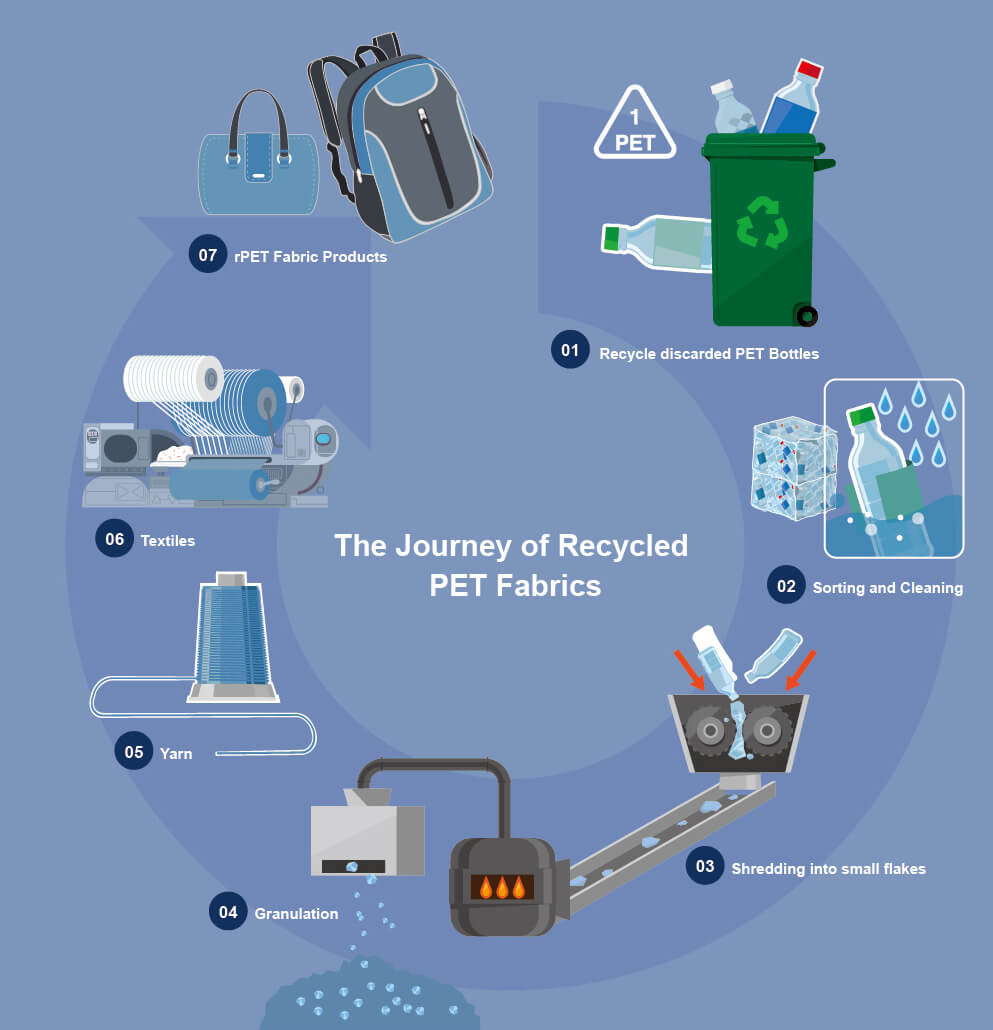
Recycled polyester fabric is produced by reprocessing post-consumer PET materials, such as discarded plastic bottles, into polyester fibers suitable for textile production. The process involves cleaning, shredding, melting, and spinning the PET bottles into yarn, which can then be woven or knitted into fabric.
Using recycled PET minimizes environmental impact and provides a reliable material for producing sustainable textiles in apparel, accessories, home products, and industrial applications.
How Recycled PET Bottle Fabric Is Produced
Understanding the production process is essential for ensuring consistent quality and performance:
- Collection and Sorting: PET bottles are collected, sorted, and thoroughly cleaned to remove impurities.
- Shredding and Flaking: Bottles are cut into small flakes to prepare for melting.
- Melting and Extrusion: The flakes are melted and extruded into continuous polyester filaments.
- Spinning and Texturizing: Filaments are spun into yarn, often texturized to achieve the desired handfeel and fabric properties.
- Weaving or Knitting: The yarn is converted into fabric suitable for garments, bags, or industrial applications.
This process produces durable, uniform, and high-performance recycled polyester fabric, addressing common concerns about quality and consistency.
Key Benefits of Recycled Polyester Fabric
Incorporating recycled polyester fabric in textile production offers multiple advantages:
- Environmental Responsibility: Reduces plastic waste and conserves petroleum resources.
- Cost-Effective Solution: Competitive pricing compared to virgin polyester.
- High Performance: Retains tensile strength, colorfastness, and durability.
- Versatile Applications: Suitable for sportswear, outerwear, bags, home textiles, and industrial use.
The combination of eco-friendliness and reliable performance makes recycled polyester fabric ideal for high-volume production and large-scale projects.
Applications of Recycled PET Bottle Fabric
Below is a table summarizing common uses of recycled PET bottle fabric and their advantages in production:
| Application | Fabric Type | Advantages |
|---|---|---|
| Sportswear & Activewear | Lightweight, breathable knit | Easy to sew, moisture-wicking, consistent quality |
| Outerwear & Jackets | Woven or laminated fabric | Durable, windproof, suitable for custom finishes |
| Bags & Accessories | Canvas or coated textiles | Strong, long-lasting, customizable prints |
| Home Textiles | Bedding, curtains, upholstery | Soft handfeel, color retention, eco-friendly |
This overview demonstrates how recycled polyester can be used across a wide range of products while maintaining both sustainability and high-quality standards.
Considerations for Selecting Recycled Polyester Fabric
When evaluating fabrics for large-scale production or textile processing, it is important to consider:
- Fiber Consistency: Uniform thickness and minimal contamination ensure smooth production.
- Texture and Handfeel: Proper texturizing delivers fabrics comparable to virgin polyester.
- Color Performance: Fabrics should maintain color after multiple washes and finishing processes.
- Certifications: Look for GRS, OEKO-TEX®, or other verified standards.
- Supplier Reliability: Consistent supply, production capacity, and technical support are crucial for maintaining smooth operations.
Addressing these considerations helps prevent production delays, fabric defects, and quality issues in high-volume manufacturing.
Comparing Recycled Polyester vs Virgin Polyester
| Feature | Recycled Polyester | Virgin Polyester |
|---|---|---|
| Environmental Impact | Lower carbon footprint, reduces plastic waste | Higher carbon footprint, petroleum-based |
| Cost | Competitive | Slightly higher depending on market |
| Durability | Comparable tensile strength and abrasion resistance | Established high performance |
| Production Flexibility | Compatible with various finishes and coatings | Established standards, widely used |
This comparison demonstrates why recycled PET bottle fabric is an increasingly preferred choice for sustainable textile production without compromising performance.
Working with a Reliable Recycled Polyester Fabric Supplier
Partnering with an experienced recycled polyester fabric supplier ensures consistent quality, scalable production, and compliance with sustainability standards. Yi Chun Textile specializes in producing high-quality recycled fabrics for large-scale textile projects. Key capabilities include:
- Advanced recycling and spinning processes for uniform fiber quality
- Custom yarn and fabric options to meet project specifications
- Compliance with GRS, OEKO-TEX®, and other international sustainability standards
- Large-scale production capacity with stringent quality control
- Technical support for material testing, prototyping, and product development
Collaborating with a trusted supplier helps ensure smooth production and high-quality outcomes.
Maximizing Sustainability with Recycled PET Fabric
Recycled polyester fabric offers a sustainable and high-performance option for modern textile projects. Understanding its production process, key benefits, common applications, and material considerations is essential for achieving consistent quality and minimizing environmental impact. Incorporating recycled PET bottle fabric allows production teams to create durable, versatile, and eco-friendly products that meet both functional and sustainability goals.