Aug 13, 2026
Meeting Euro 7 and EPA Standards: The Role of Advanced Valve Stem Seals in Emission Controls
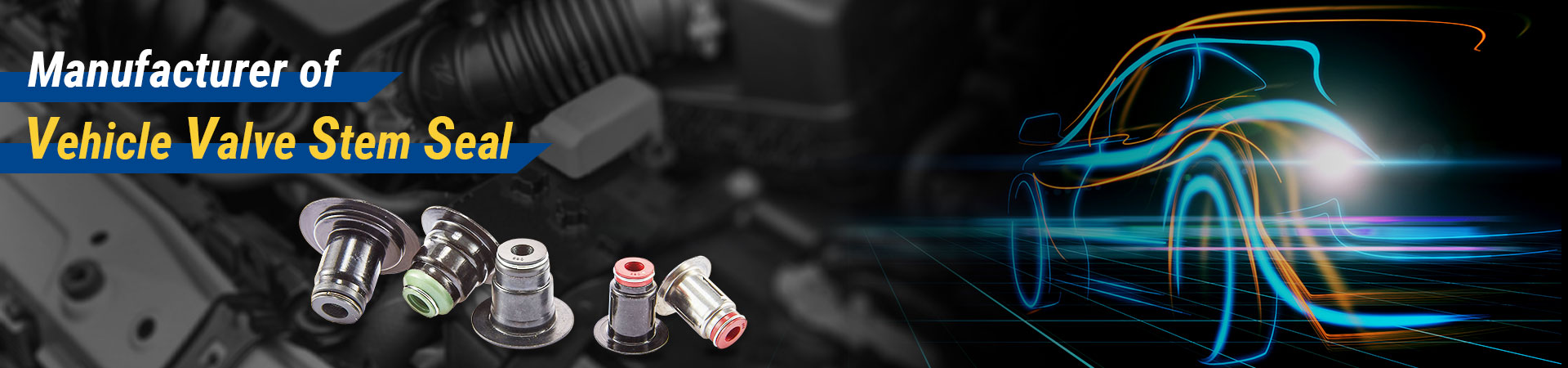
As global emission standards continue to tighten, controlling combustion-related pollutants is no longer limited to fuel systems and aftertreatment technologies. Under frameworks such as Euro 7 and EPA regulations, reducing hydrocarbon emissions, particulate matter (PM), and oil consumption requires closer attention to every source of contamination inside the engine. One often overlooked yet critical factor is oil leakage through the valve guide area, where valve stem seals play a fundamental role in maintaining clean and efficient combustion. Aligning with global regulatory shifts toward tighter emission controls and environmental compliance requires a holistic approach to engine design, down to the smallest sealing components.
Why Valve Stem Seals Matter in Low-Emission Engine Systems
Valve stem seals regulate the amount of oil that passes between the valve stem and the valve guide. Their primary job is not to block oil completely, but to meter it precisely. A consistently controlled oil film is necessary to maintain lubrication, minimize friction, and prevent premature wear on the rapidly moving valve stems. However, when too much oil slips past the seal and enters the combustion chamber, it can burn and generate unwanted emissions that stress downstream filtration systems.
This delicate balance becomes especially important as modern engines operate under higher thermal loads, stricter efficiency targets, and increasingly tighter emission limits. In these harsh conditions, even microscopic variations in oil control can affect emission stability over the entire lifespan of the vehicle.
How Valve Guide Oil Leakage Increases PM and Hydrocarbon Emissions
To fully grasp the environmental impact, it is essential to analyze how unmetered oil leakage through the valve guide directly contributes to particulate matter and hydrocarbon emissions. When excess oil escapes past the valve stem seal and reaches the combustion chamber, it is exposed to extreme temperatures and high-pressure combustion events, resulting in several distinct pollution pathways:
- Incomplete Hydrocarbon Combustion: Engine oil that enters the flame front burns incompletely, directly escalating unburned hydrocarbon (HC) output in the raw exhaust stream.
- Ash and Particulate Matter Formation: Metal additives and heavy hydrocarbons present in engine oil burn to form ash deposits and ultrafine particulates, directly elevating total PM levels.
- Downstream System Degradation: Persistent oil combustion leaves hard carbon crusts on valves and catalytic substrates, lowering catalytic converter conversion efficiency and rapidly clogging particulate filters.
The relationship between oil leakage and emissions is direct and quantifiable, as outlined in the analysis below:
| Valve Guide Oil Control Condition | Immediate Engine Effect | Long-Term Emission Impact |
|---|---|---|
| Excess oil enters combustion chamber | Increased overall oil consumption | Higher hydrocarbon (HC) emissions |
| Oil burns under high cylinder temperature | Formation of internal carbon deposits | More particulate matter (PM) and ash output |
| Inconsistent oil metering over time | Uneven valve stem lubrication | Reduced long-term emission compliance |
As demonstrated in the table, poor oil control at the valve guide initiates a chain reaction that ultimately compromises exhaust cleanliness. For this reason, valve stem seals must be treated as critical emission-relevant components rather than simple hardware. Better oil control at this junction helps reduce internal sources of PM and hydrocarbon formation long before those emissions reach downstream aftertreatment systems.
The Mechanics of Precision Oil Metering for Emission Reduction
The concept of precise oil metering involves managing the dynamic interaction between the moving valve stem and the stationary seal. As the valve opens and closes thousands of times per minute, the seal must scrape excess oil off the stem while leaving a microscopic film behind. If the sealing force is too weak, oil migration increases, leading to the emission issues discussed above. If the sealing force is too strong, the lack of lubrication causes severe friction, heat generation, and eventual failure of the valve guide.
Achieving this exact metering rate requires sophisticated design parameters. The radial force exerted by the seal onto the valve stem must remain constant regardless of engine speed, temperature fluctuations, or internal pressure variations.
How Advanced Valve Stem Seals Improve Emission Control
To support modern emission targets, these components must deliver flawless oil metering under the most demanding operating conditions. This functional reliability depends largely on two primary factors: precision lip design and advanced material stability.
Precision Lip Design for Controlled Oil Metering
The sealing lip geometry determines how effectively the component manages fluid flow along the moving metal surface. Advanced designs incorporate highly specific contact angles, controlled interference fits, and optimized spring tensions to maintain consistent radial pressure. Precision-engineered valve stem seals with optimal lip design minimize oil consumption without compromising lubrication through several targeted mechanisms:
- Optimized Contact Angles: Carefully calibrated lip geometry ensures proper scraping action during high-velocity valve strokes while retaining a micro-thin oil film.
- Dynamic Radial Force Control: Integrated garter springs and engineered elastomeric profiles preserve uniform pressure despite shaft runout and dynamic thermal expansion.
- Reduced Friction Coefficient: Advanced surface texturing lowers parasitic friction losses, preventing local overheating and thermal degradation of the sealing edge.
By fine-tuning the microscopic contact area between the rubber lip and the metal shaft, manufacturers ensure only the exact amount of oil required for lubrication passes. This optimized lip design maintains the perfect balance between fluid restriction and lubrication retention. This supports cleaner combustion, lower oil consumption, and highly stable performance across varying temperatures and engine speeds.
Material Stability Under Thermal and Chemical Stress
Advanced valve stem seals must also maintain their physical properties under prolonged exposure to extreme heat, aggressive oil additives, oxidation, and relentless mechanical motion. Conventional elastomers can harden, swell, or crack when exposed to modern synthetic oils and high exhaust temperatures, which weakens sealing consistency and leads to increased oil migration over time.
Utilizing premium elastomer compounds helps preserve sealing force and dimensional stability. This chemical and thermal resilience is essential for maintaining low-emission performance throughout the extended service life required by modern environmental regulations.
Aligning with Global Regulatory Shifts Toward Environmental Compliance
Euro 7 and EPA requirements reflect the same broader automotive industry direction: lower absolute emissions, vastly improved component durability, and better environmental performance across real-world operating conditions. In that context, reducing oil-derived pollutants directly inside the combustion chamber becomes increasingly important.
The following table summarizes how specific design elements support these overarching regulatory goals:
| Seal Design Focus | Direct Functional Value | Relevance to Emission Compliance |
|---|---|---|
| Optimized lip geometry | Precise oil metering and control | Helps reduce internal HC and PM formation |
| Durable sealing performance | Stable long-term fluid management | Supports real-world emission consistency |
| Heat-resistant material selection | Superior resistance to thermal aging | Lowers risk of leakage over extended service life |
| Application-specific engineering | Improved fit with distinct operating demands | Strengthens overall compliance reliability |
By focusing on these design principles, the automotive sector can ensure that vehicles remain compliant not just when they roll off the assembly line, but after hundreds of thousands of miles of operation. The valve stem seal serves as a primary line of defense against internal engine emissions.
How AOK Supports Low-Emission Valve Stem Seal Development
For automotive brands and aftermarket suppliers facing stricter environmental requirements, component performance depends on robust manufacturing precision and extensive development capability. Founded in 1995, AOK specializes in premium oil seals and showcases the engineering capability to design low-emission, high-efficiency valve stem seals that help OEMs and aftermarket brands comply with strict environmental regulations. By leveraging comprehensive in-house tooling, product design, and precise manufacturing processes such as CNC machining and vulcanizing molding, AOK delivers consistent quality. Backed by rigorous testing equipment and environmental management systems, AOK produces rubber and metal bonded sealing solutions that meet exact application specifications. This expertise ensures modern valvetrains achieve the oil control necessary for today’s demanding performance, durability, and regulatory expectations.
Supporting Cleaner Combustion Through Better Oil Control
As emission regulations continue to evolve globally, effective fluid management inside the valvetrain becomes increasingly vital to overall engine cleanliness. Oil leakage through the valve guide contributes directly to hydrocarbon emissions, particulate matter generation, and harmful deposit formation. Advanced valve stem seals, equipped with precision-engineered lip designs and thermally stable materials, help minimize these exact risks while preserving essential lubrication. For manufacturers and automotive brands responding to rigorous Euro 7 and EPA demands, improving the fundamental performance of valve stem seals represents a highly practical, effective step toward cleaner, more reliable emission control.