Jun 26, 2026
The Fermentation Edge - How Brands Use Fermentation Raw Materials to Develop Differentiated Health Supplements
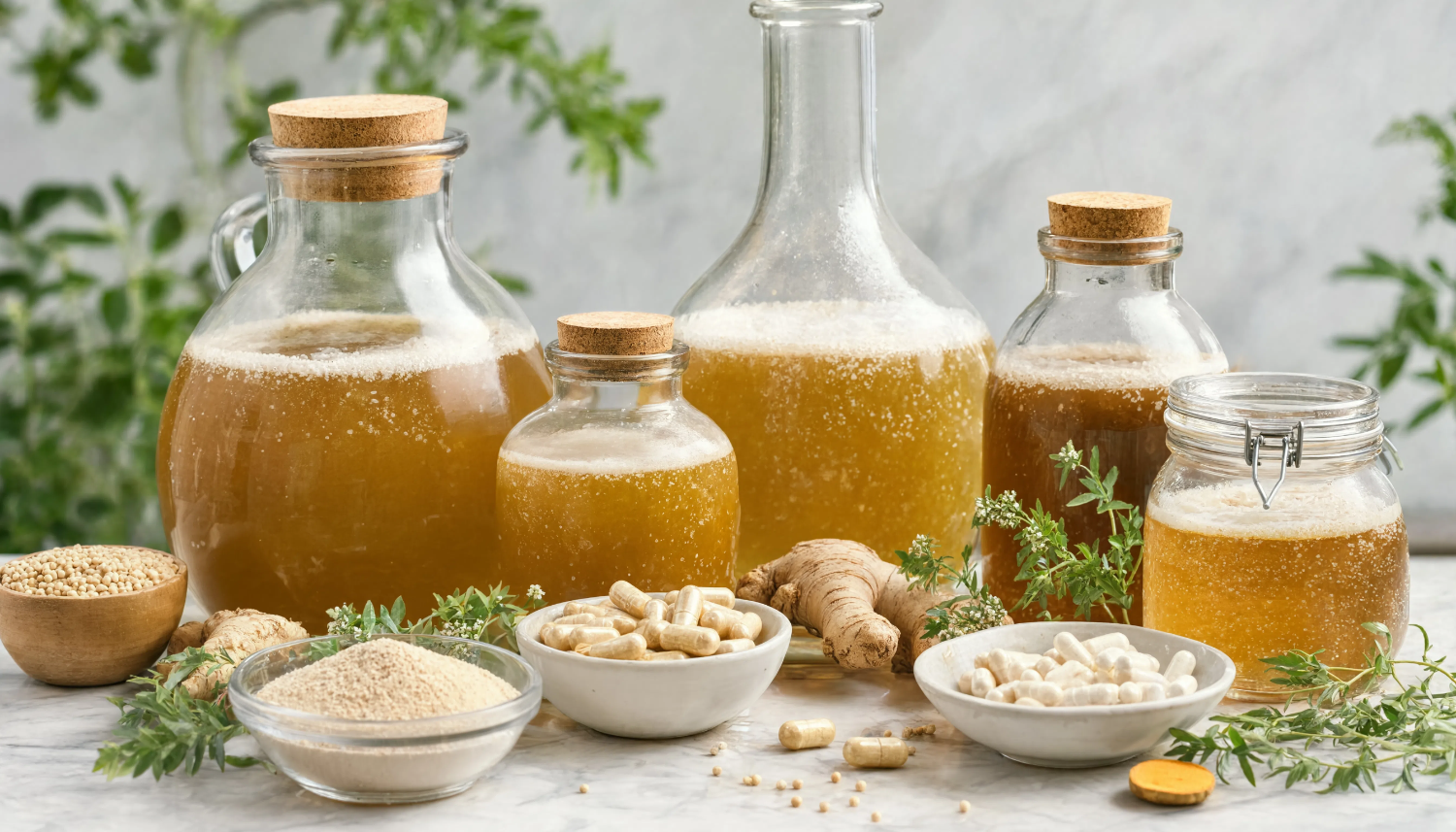
The global health supplement market has reached a critical turning point. For years, the industry was driven by a "more is better" philosophy—higher dosages, more ingredients, and bigger pills. However, modern consumers have become significantly more sophisticated. They are no longer just looking at the "Supplement Facts" panel; they are looking at the source, the science, and the "how" behind the ingredients.
For procurement managers, brand owners, and product developers, the biggest challenge today is homogenization. When every brand offers the same Vitamin C, the same generic Ashwagandha, or the same basic Probiotic strain, the competition inevitably devolves into a "race to the bottom" on price.
This is where fermentation raw materials come into play. Fermentation is not just an ancient preservation technique; it is a cutting-edge biotechnological tool that allows brands to unlock higher bioavailability, unique metabolite profiles, and a compelling "clean label" story. In this guide, we will explore how your brand can leverage fermentation to exit the price wars and enter a new era of high-value, differentiated nutraceuticals.
1. The Core Problem: The "Sea of Sameness" in the Supplement Industry
Before diving into the solution, we must address the pain points that keep supplement executives awake at night.
Market Saturation and Commodity Traps
Most brands source their raw materials from the same handful of global commodity suppliers. This results in products that are chemically identical. If your product is the same as your competitor's, the only way to win is to spend more on marketing or lower your profit margins.
The Bioavailability Gap
Traditional herbal extracts often contain complex molecules that the human digestive system struggles to break down. This leads to poor absorption, meaning the consumer doesn't feel the "effect" of the supplement, leading to low retention rates and poor brand loyalty.
Consumer Skepticism toward Synthetics
There is a growing "back to nature" movement, but with a twist: consumers want nature optimized by science. Synthetic vitamins are increasingly viewed as "cheap," while raw botanical powders are often seen as "ineffective."
2. Why Fermentation is the Ultimate Solution for Differentiation
Fermentation is a biological process where microorganisms—like bacteria, yeast, or fungi—break down complex substances into simpler, more bioactive compounds. In the context of supplement manufacturing, this "pre-digestion" creates several strategic advantages.
Enhanced Bioavailability and Potency
Many phytonutrients are bound to fibers or sugars (glycosides) that limit their absorption. Fermentation acts as a "molecular scissor," snipping these bonds. For example, fermented ginseng or fermented turmeric often shows a significantly higher concentration of active metabolites compared to their non-fermented counterparts.
Creation of Postbiotics and Secondary Metabolites
Beyond the primary ingredient, the fermentation process creates postbiotics. These include enzymes, organic acids, and short-chain fatty acids that provide additional health benefits. This allows a brand to market a "multi-dimensional" product rather than a single-ingredient one.
Improved Sensory Experience
One of the biggest hurdles in functional foods and powders is the bitter or "earthy" taste of raw botanicals. Fermentation naturally reduces these off-flavors, allowing for "cleaner" formulations with fewer artificial sweeteners or masking agents.
3. Comparison: Traditional vs. Fermented Raw Materials
To help procurement teams understand the ROI of switching to fermented ingredients, the following table breaks down the key differences:
| Feature | Traditional Raw Materials (Extracts/Powders) | Fermented Raw Materials | Brand Benefit |
|---|---|---|---|
| Molecular Structure | Complex, often high molecular weight. | Predigested, smaller molecular weight. | Faster absorption and higher efficacy. |
| Active Compounds | Fixed to what nature provides in the raw state. | Enhanced levels of "Aglycones" and new metabolites. | Stronger health claims and better results. |
| Digestive Comfort | Can be hard on the stomach (e.g., raw minerals/herbs). | Gentle on the gut; microorganisms remove irritants. | Higher consumer compliance and repeat buys. |
| Flavor Profile | Often bitter, astringent, or metallic. | Milder, more "umami" or neutral profiles. | Lower formulation costs (less flavoring needed). |
| Market Positioning | Generic/Commodity. | Premium/Science-backed/Biotech-enhanced. | Higher MSRP and better profit margins. |
4. Strategic Categories for Fermentation Innovation
If you are looking to update your product line, these are the categories where fermentation is currently making the biggest impact:
A. Fermented Mushrooms (The Mycelium Advantage)
Mushrooms like Reishi, Cordyceps, and Lion’s Mane are trending, but their cell walls (chitin) are indigestible by humans. Fermentation breaks down this chitin, releasing beta-glucans and making the immune-boosting properties accessible.
B. Fermented Minerals
Traditional mineral salts (like magnesium oxide) often have low absorption rates and cause GI distress. Fermented minerals use yeast or bacteria to "incorporate" the mineral into a biological matrix, making the body recognize it as food rather than a stone.
C. Postbiotics: The New Frontier
While probiotics are live bacteria, postbiotics are the beneficial byproducts of fermentation. They are heat-stable, making them perfect for gummies, beverages, and protein powders where live bacteria would normally die.
5. Case Study: How Industry Leaders Partner for Success
To successfully launch a fermented product, a brand needs more than just a supplier; they need a technical partner who understands the delicate balance of microbial strains and substrate optimization.
This is where companies like New Bellus provide a significant competitive advantage. As a specialist in fermentation technology and a leading CDMO (Contract Development and Manufacturing Organization), New Bellus helps brands bridge the gap between "concept" and "market-ready innovation."
Why New Bellus is a Key Resource for Brands:
- Specialized Fermentation Platforms: Unlike general manufacturers, New Bellus focuses on specialized fermentation of mushrooms and botanical extracts. Their process ensures that the bioactive components (like polysaccharides in Cordyceps or triterpenoids in Reishi) are maximized.
- R&D-Driven Differentiation: They don't just provide "off-the-shelf" ingredients. They work with brands to develop custom formulations that utilize fermented raw material to solve specific consumer health needs, such as cognitive health, immune support, or metabolic balance.
- Quality Control & Compliance: For procurement officers, the biggest risk in fermentation is contamination or inconsistent potency. New Bellus utilizes rigorous standardized processes to ensure every batch meets strict safety and efficacy requirements, which is essential for brands looking to maintain a premium reputation.
- Sustainability: Fermentation is inherently more sustainable than large-scale traditional farming for certain rare botanicals. New Bellus's controlled fermentation environments reduce water and land usage, providing brands with a "Green" story to tell their consumers.
By partnering with a high-tech manufacturer like New Bellus, brands can move away from the "me-too" product model and offer science-backed, fermented solutions that are difficult for competitors to replicate.
6. Practical Steps for Procurement and Product Managers
Switching to fermented raw materials requires a strategic approach. Here is a roadmap to help you navigate the process:
Step 1: Identify "Low-Performing" SKUs
Look at your product catalog. Which products have stagnant sales or high churn? These are your best candidates for a "Fermented 2.0" upgrade.
Step 2: Focus on the "Hero" Ingredient
You don't need to ferment everything. Choose one or two "Hero" ingredients (e.g., Fermented Ginseng) and make that the centerpiece of your marketing campaign.
Step 3: Verify the "Active" Count
When sourcing, don't just ask for the price. Ask for a Certificate of Analysis (COA) that specifically lists the metabolites created during fermentation. A "Fermented" label is useless if the process didn't actually increase the bioactives.
Step 4: Craft the Story
Work with your marketing team to explain why fermentation matters. Use terms like "Molecularly Activated," "Pre-digested for Absorption," or "Nature's Bio-Refinery."
7. FAQ: Frequently Asked Questions about Fermentation in Supplements
Q1: Are fermented raw materials significantly more expensive than traditional extracts?
While the initial cost per kilogram may be higher due to the specialized biotech processes involved, the effective cost is often lower. Because fermented ingredients have higher bioavailability, you may be able to use a lower dosage to achieve the same (or better) physiological effect, which can balance out the formulation cost.
Q2: Does fermentation change the "Natural" status of an ingredient?
In most cases, fermentation is considered a natural process (similar to making yogurt or kimchi). It is a "clean label" method of enhancement that does not require harsh chemical solvents, making it highly attractive to "non-GMO" and "clean label" consumers.
Q3: How do I know if a fermentation supplier is reliable?
Look for suppliers like New Bellus that have a proven track record in CDMO services and specialized fermentation. Ensure they have the necessary certifications (GMP, ISO) and can provide detailed HPLC (High-Performance Liquid Chromatography) testing to prove the potency of the fermented metabolites.
Q4: Can fermentation help with the "aftertaste" of certain plant proteins or herbs?
Yes. Fermentation can break down bitter-tasting alkaloids and tannins. This makes it an excellent tool for brands developing functional foods, meal replacements, or flavored powders where taste is the primary driver of repeat purchases.
Q5: Is "Fermented" just a marketing buzzword?
No. There is a deep body of peer-reviewed research showing that fermentation transforms the chemical profile of plants. For example, fermentation can convert Isoflavones in soy or Ginsenosides in Ginseng into much more potent forms that the human body can use more efficiently.
8. The Future: AI and Precision Fermentation
As we look toward 2027 and beyond, the industry is moving toward Precision Fermentation. This involves using specific microbial strains to produce "designer" molecules that are identical to those found in nature but produced in a controlled lab environment.
Brands that begin integrating standard fermentation raw materials today will be the ones best positioned to lead the market as these advanced technologies become mainstream. The move toward fermented supplements is not a fad; it is a fundamental shift toward better science and better human health outcomes.
9. Conclusion: Don't Compete—Differentiate
The supplement industry is too crowded for "average" products. To win the loyalty of the modern consumer, brands must offer something that is demonstrably better, faster-acting, and more scientifically sound.
Fermentation raw materials provide the bridge between the raw power of nature and the precision of biotechnology. By sourcing from specialized experts like New Bellus, you give your brand the tools to create products that don't just sit on a shelf—they deliver results that keep customers coming back.
Ready to elevate your product line? Explore the possibilities of fermentation and start your journey toward a more differentiated, high-margin future.
Data References and Industry Reports
- Grand View Research: Nutraceuticals Market Size & Share Report, 2024-2030
- NCBI: The Role of Fermentation in Improving Nutritional Value of Foods
- SPINS: Trends in Fermented Ingredients and Postbiotics
- New Bellus Official Website - Specialized Fermentation Tech
- Innova Market Insights: Top Trends for 2024 in Supplements