Jun 15, 2026
Why One-Stop Outsourcing Matters In Medical Device Manufacturing
Medical device development becomes harder to control when cable assemblies, connectors, plastic parts, metal terminals, and PCB-related components are sourced through separate channels without strong integration. A product may look manageable on paper, yet still run into repeated revisions, assembly mismatch, unstable lead times, and unclear quality accountability once development moves forward. In medical device component manufacturing, one-stop outsourcing matters because it reduces those gaps between parts, processes, and production decisions.
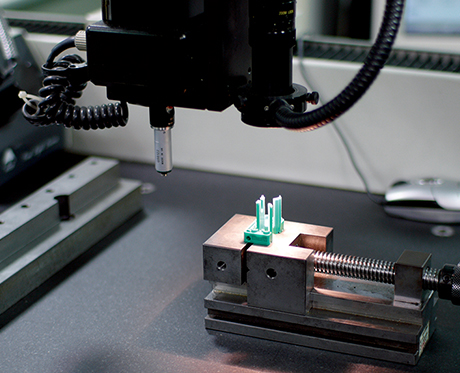
Why Fragmented Sourcing Creates Hidden Manufacturing Risk
Fragmented sourcing often appears efficient at the beginning. Specialized suppliers can quote individual parts quickly, and each component may seem optimized within its own category. The problem usually appears later, when those parts have to function together in one medical device.
A connector can meet its dimensional target but create retention or fit issues once paired with a molded housing. A cable assembly can pass electrical testing but still introduce routing stress, strain concentration, or handling problems after final assembly. A stamped terminal can match the drawing while still affecting insertion consistency when combined with plastic variation. A PCB can be correct electrically but difficult to integrate once enclosure space, wire path, and connector orientation are considered together.
These are not isolated part failures. They are integration failures, and they are one of the most common reasons development becomes slower, more expensive, and less predictable.
Common Problems When Multiple Suppliers Handle Interdependent Parts
When medical cables, connectors, molded parts, terminals, and circuit-related components are managed separately, even small design changes can spread across the project in ways that are difficult to control. That often leads to repeated coordination rather than steady progress.
Typical problems include:
- drawing revisions reaching suppliers at different times
- tolerance mismatch between plastic, metal, and connector interfaces
- separate sample cycles that delay validation
- unclear ownership when assembly problems appear
- duplicated communication across tooling, assembly, and quality teams
- longer lead times caused by repeated confirmation between vendors
- uneven documentation control across multiple sourced parts
In medical applications, these issues carry greater weight because product performance depends on repeatability, fit stability, material consistency, and dependable long-term use. A device may contain many acceptable parts and still create unacceptable manufacturing results if those parts were not planned as one coordinated system.
Why One-Stop Outsourcing Improves More Than Purchasing Efficiency
One-stop outsourcing is sometimes understood as a way to simplify supplier management. In practice, its greater value is manufacturing alignment. The benefit is not only fewer vendor contacts. It is better coordination between components that must be designed, validated, and assembled together.
That coordination improves several parts of the development cycle:
Faster Design Alignment
When interdependent components are reviewed in a more centralized way, design updates are easier to synchronize. This reduces the risk of one part being revised while another part still follows an older drawing or interface condition.
Better Assembly Compatibility
Many medical component issues begin at the interface level rather than the standalone part level. Integrating cable, connector, molded part, and terminal planning makes it easier to reduce assembly mismatch before pilot production starts.
Shorter Response Time To Problems
When a fit issue or quality deviation appears, problem-solving moves faster if responsibility is not split across multiple disconnected suppliers. Root-cause analysis becomes more direct because the interaction between parts can be reviewed under a more unified process.
Fragmented Sourcing Vs. Integrated Outsourcing
The difference between separate sourcing and one-stop outsourcing is often easiest to see in execution, not theory. The table below highlights how these two models usually affect development and production flow.
Before choosing a sourcing structure, it is useful to compare where delays and rework typically come from.
| Area | Fragmented Sourcing | One-Stop Outsourcing |
|---|---|---|
| Design Revisions | Often distributed unevenly across suppliers | More centralized revision control |
| Component Interfaces | Higher risk of mismatch between related parts | Better compatibility planning |
| Sample Scheduling | Separate validation cycles by component type | More coordinated sample timing |
| Issue Resolution | Responsibility may be unclear | Faster cross-part troubleshooting |
| Lead Time Visibility | Dependent on multiple handoffs | Better schedule consistency |
| Production Transition | More risk during final integration | Smoother prototype-to-production flow |
A one-stop model does not remove all complexity, but it often removes unnecessary complexity created by fragmented communication and disconnected execution.
Integration Should Start Before Pilot Production
The strongest outsourcing results usually come from early integration rather than late consolidation. Waiting until assembly begins is often too late, especially when molded parts, metal interfaces, cable routing, and connector structure all influence one another.
This is where design for manufacturability becomes important. Instead of treating each sourced component as a separate task, the manufacturing plan should evaluate how components perform together under real production conditions. That includes dimensional interaction, assembly sequence, handling stability, tooling impact, and long-term reliability.
Early integration helps reduce three common risks:
Tolerance Stacking Across Related Parts
Minor variation across several components can combine into larger assembly problems. Reviewing plastic, metal, and connector interfaces together makes those risks easier to identify before tooling and validation move too far forward.
Rework During Pilot Runs
Pilot builds often expose issues that were missed when each part was approved independently. A more integrated outsourcing structure increases the chance of catching those issues earlier.
Late Tooling Or Interface Changes
Changes made after sampling or pilot production are expensive and disruptive. Better coordination across related parts lowers the likelihood of repeated tooling or fit corrections.
Why Medical Device Components Benefit From A More Unified Supply Structure
Medical components are expected to perform under tighter quality and reliability conditions than many general-purpose products. Signal integrity, repeated handling, cleaning exposure, compact device architecture, and consistent assembly performance all place pressure on component interfaces. Under these conditions, sourcing decisions directly affect manufacturability.
This is why integrated outsourcing has become increasingly relevant in medical device manufacturing. It supports better control over how different parts come together, not just how they are purchased. That distinction matters because reliability is often shaped by the relationship between components, not only by the quality of each individual part.
Manufacturers with experience across multiple component categories are often better positioned to support this model. Cambus has capabilities that span custom medical cable assemblies, medical connectors, plastic injection components, molding tools, and one-stop outsourcing solutions. That range is valuable because it aligns with the real structure of many medical devices, where mechanical, electrical, and assembly considerations are closely linked.
A More Stable Path From Prototype To Production
Medical device programs move more smoothly when component sourcing reflects final integration needs from the start. One-stop outsourcing helps reduce communication gaps, improve interface control, shorten response time during revisions, and support more stable production planning. It also creates a clearer path from prototype to production by reducing the number of avoidable issues that appear only after separately sourced parts are brought together.
In medical device component manufacturing, the value of one-stop outsourcing is not simply operational convenience. It is a practical way to reduce preventable delays, improve cross-part compatibility, and build a more reliable manufacturing process around the device as a whole.