May 18, 2026
Concentrated Syrup OEM Guide: How Beverage Brands Can Improve Logistics and Operational Efficiency
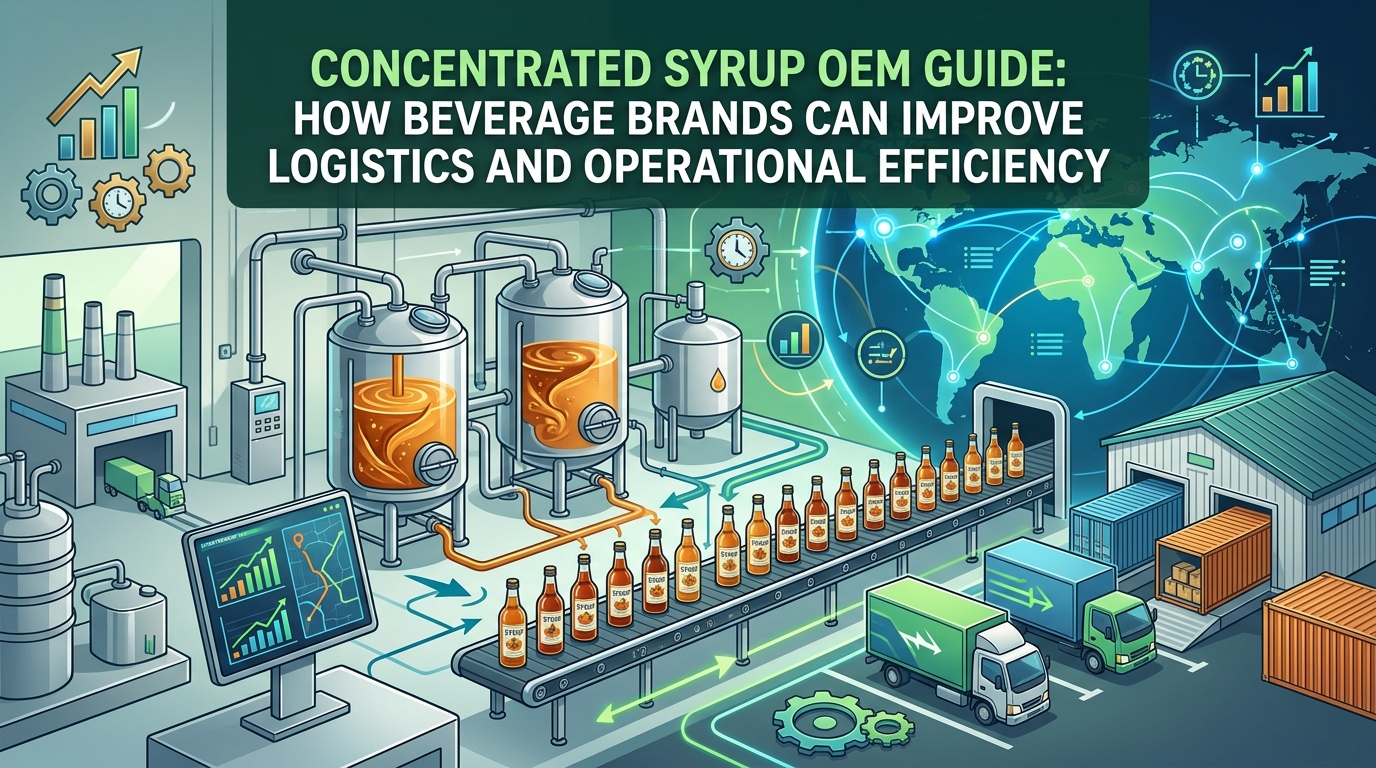
Global beverage sourcing has become more complex as freight costs, labor pressure, and operational efficiency continue to shape purchasing decisions. For beverage brands, cafes, restaurants, and private label buyers, ingredient format now plays a more important role in total cost than ever before. In this environment, concentrated syrup has become a practical option for businesses seeking better shipping efficiency, simpler beverage preparation, and more consistent product execution.
In OEM and ODM projects, concentrated tea syrup and mocktail syrup offer value beyond flavor alone. They can support more efficient container usage, reduce preparation steps at the store level, and help businesses build beverage programs that are easier to scale across different channels.
Why Concentrated Syrup Matters in Modern Beverage Procurement
Ingredient procurement is often evaluated by unit price, but this approach does not always reflect the real cost of delivering a finished drink. A more complete view includes freight cost, storage requirements, labor input, preparation time, and the number of servings generated from each shipment.
Products with lower transport density can increase total landed cost. Loose tea leaves may take up considerable container space relative to output. Lower concentration beverage ingredients can also create inefficiencies because more shipping volume is used to move material that contributes less value per serving. In some cases, refrigerated transport may further increase logistics cost.
Concentrated syrup offers a different cost structure. Because the product is designed for dilution, a smaller shipping volume can support a larger number of finished beverages. This creates a stronger output to freight ratio, which can improve cost per cup and make international procurement more manageable.
The Logistics Advantage of High Yield Beverage Ingredients
One of the main commercial advantages of concentrated syrup is yield. A high yield ingredient can reduce freight burden by spreading transport cost across a greater number of servings. This is especially important for importers, distributors, and multi market brands that monitor landed cost closely.
For many beverage programs, the logistics question is not only how much an ingredient costs to buy. It is also how efficiently that ingredient moves through the supply chain. When an ingredient format supports dry container shipping, compact packaging, and a high number of servings, it can improve profitability across the procurement model.
This is one reason concentrated syrup has become increasingly relevant in OEM beverage development. Buyers are not only looking for flavor innovation. They are also looking for ingredients that make commercial execution easier.
Concentrated Tea Syrup as an OEM Beverage Solution
Concentrated tea syrup gives beverage brands an alternative to traditional in store tea brewing. Instead of relying on loose leaf preparation, operators can use a ready to dilute tea base that shortens preparation time and improves consistency.
This format can support several business goals:
- More uniform taste across locations
- Reduced dependence on highly trained beverage staff
- Less equipment required at the point of service
- Faster drink assembly during busy hours
- Easier rollout for chains, kiosks, and non specialist operators
Tea based beverage programs often face execution issues when product quality depends on manual brewing skill. Differences in steeping time, tea strength, cooling method, and batching can create inconsistency. Concentrated tea syrup helps reduce this variation by turning beverage preparation into a simpler and more repeatable process.
For OEM buyers, this makes the format attractive for product lines aimed at cafes, restaurants, dessert chains, and retail beverage concepts.
Mocktail Syrup and the Rise of Alcohol Free Beverage Programs
The demand for alcohol free beverage options has expanded across foodservice and hospitality channels. Restaurants, cafes, hotels, and event venues are increasingly offering non alcohol drinks that still deliver layered flavor and visual appeal. Mocktail syrup supports this trend by simplifying the creation of complex beverages.
A concentrated mocktail syrup can reduce the need to stock multiple separate ingredients such as juices, flavorings, herbs, and modifiers. This can improve inventory control and make service more efficient. It also helps businesses maintain more consistent drink quality when beverage preparation is handled by general service staff rather than trained bartenders.
For OEM and private label development, this creates an opportunity to build alcohol free beverage products suited to a wide range of markets, including family dining, halal friendly concepts, and premium cafe menus.
Operational Efficiency at Store Level
A strong beverage product is not defined by taste alone. It also needs to work within the daily realities of the business using it. Preparation speed, labor availability, training requirements, and storage conditions all influence whether a beverage line succeeds.
Concentrated syrup supports operational efficiency in several ways. It reduces the number of preparation steps needed for each drink. It shortens service time during peak hours. It lowers the likelihood of variation between staff members. It can also reduce the back of house burden associated with brewing, batching, and ingredient handling.
These benefits are particularly useful for businesses that want to expand beverage offerings without adding major operational complexity. This includes operators with limited kitchen space, limited beverage training, or high staff turnover.
Channel Applications for Concentrated Syrup
Concentrated syrup is relevant across more than one type of food and beverage business. Its application extends beyond dedicated bubble tea shops and specialty drink stores.
Common channel opportunities include:
- Cafes that want to add tea based beverages without new brewing equipment
- Restaurants that need faster preparation for alcohol free drinks
- Bakeries and dessert shops that use beverage syrups in cream, dough, or fillings
- Hotel and hospitality groups seeking more standardized beverage execution
- Distributors and importers looking for transport efficient beverage products
- Private label brands developing scalable drink solutions for multiple markets
This wide channel fit is valuable in OEM planning because it increases product versatility and broadens potential market reach.
Packaging Considerations in OEM and Private Label Development
Packaging should be evaluated as part of the product strategy, not only as a finishing step. In beverage OEM projects, packaging format influences transport efficiency, warehouse handling, storage stability, and ease of use for the buyer.
A syrup product intended for foodservice may require packaging that balances stackability, durability, and practical dispensing. For export projects, container efficiency and product protection during shipment are also important. Buyers should assess whether the packaging format supports the intended order volume, serving model, and target channel.
Important considerations include:
- Net weight and carton configuration
- Packaging material and transport durability
- Ease of storage and handling at the customer site
- Labeling requirements for destination markets
- Shelf life and product stability under expected conditions
- Suitability for dry container or other logistics models
When formula and packaging are planned together, the final product is better aligned with commercial reality.
Quality Consistency and Brand Control
Consistency remains one of the most important priorities in beverage manufacturing. Buyers want a product that can be reproduced accurately across batches, markets, and operating environments. This is particularly important in private label and contract manufacturing, where brand reputation depends on repeatable quality.
Concentrated syrup can support consistency because it reduces the number of variables at the point of preparation. A standardized syrup base gives operators a clearer foundation for drink assembly, which can improve flavor stability, appearance, and customer experience.
For OEM suppliers, this highlights the importance of extraction method, formulation control, quality assurance, and production repeatability. A strong manufacturing partner is expected to provide not only customization, but also dependable execution.
Questions to Ask Before Launching a Concentrated Syrup OEM Project
Before starting development, buyers should evaluate the strategic role of the product within the business.
Key questions include:
- Which channels will sell or use the product
- What preparation conditions exist at the point of service
- What dilution ratio best supports both flavor and margin
- Does the packaging fit the logistics model and customer workflow
- What compliance requirements apply in the destination market
- How will product consistency be maintained across production runs
- Can the formulation meet local taste expectations without increasing operational difficulty
These questions help define the project in commercial terms and improve the likelihood of a successful launch.
Conclusion
Concentrated tea syrup and mocktail syrup have become more relevant as beverage businesses look for ways to improve logistics, simplify operations, and build scalable drink programs. Their value extends beyond convenience. They can contribute to better freight efficiency, more consistent beverage preparation, and easier implementation across a variety of foodservice and retail channels.
For OEM and ODM buyers, concentrated syrup represents a product format that aligns commercial practicality with beverage innovation. As global sourcing conditions remain competitive, high yield and operationally efficient ingredients are likely to play a larger role in beverage product development.