Jun 24, 2026
Crossbow OEM Safety Compliance and Quality Standards: What Distributors Must Know
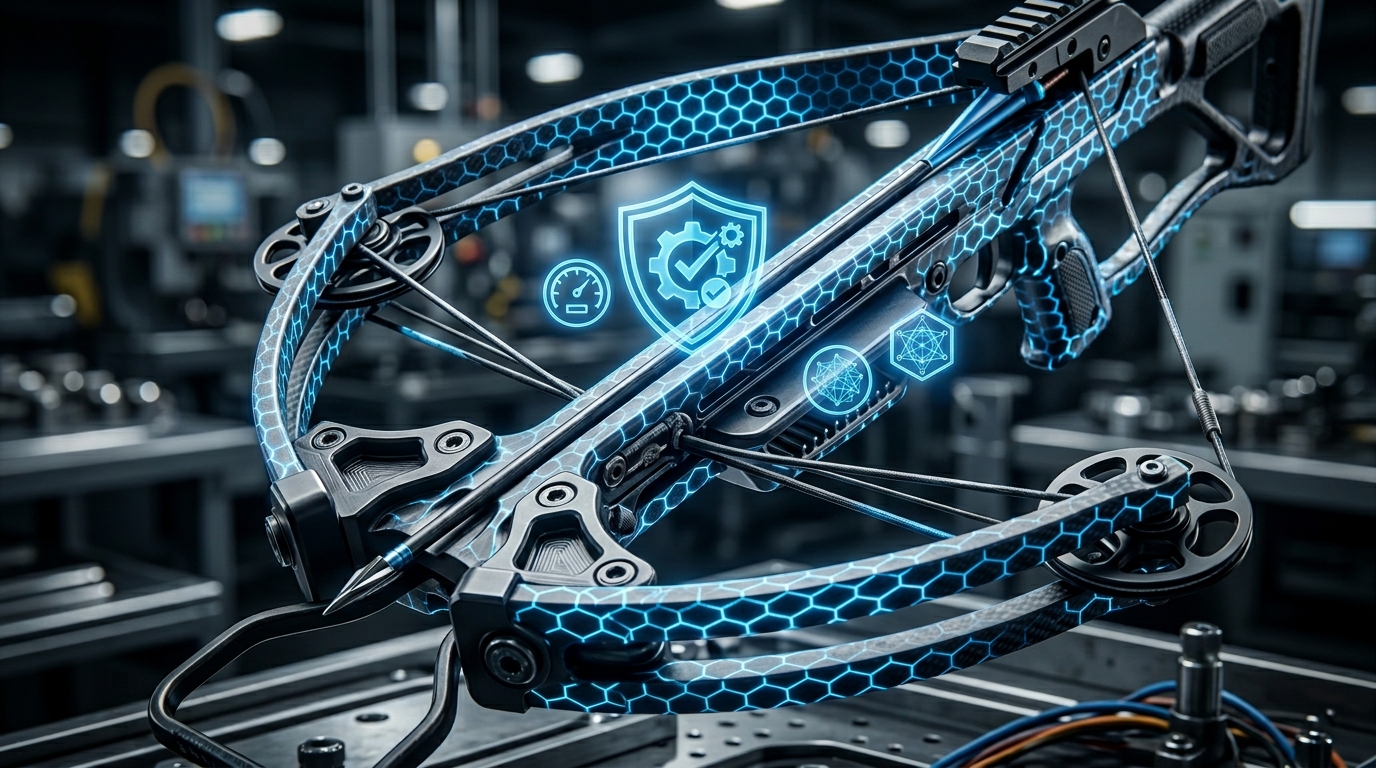
The global crossbow and archery equipment market has grown significantly over the past decade, driven by expanding hunting seasons in North America, recreational archery programs in Europe, and growing interest in precision sport shooting across Asia Pacific. But with market growth comes increased regulatory scrutiny — and for distributors sourcing hunting crossbows, compound bows, and slingshots from OEM manufacturers, safety compliance has become as important as price and delivery reliability.
This article examines the key safety standards, testing protocols, and OEM evaluation criteria that archery product distributors should prioritize in 2026.
Why Safety Compliance Has Become Non-Negotiable
Historically, the crossbow and archery accessories market operated with relatively informal safety norms. Products were evaluated primarily on performance specifications — draw weight, velocity (FPS), and construction materials — rather than formalized safety documentation.
That era is ending. Several converging forces are reshaping procurement expectations:
Retail shelf requirements: Major sporting goods retailers in the US and EU now require documented safety testing before accepting hunting crossbow products. Chains including Bass Pro Shops, Cabela's, and European hunting retail networks have formalized vendor qualification processes that include safety certification review.
Consumer awareness: Social media has amplified awareness of archery equipment injuries, particularly dry-fire incidents (triggering a crossbow without a bolt loaded, causing limb damage and potential injury). End users increasingly research safety features before purchasing.
Liability exposure: US product liability law and EU General Product Safety Regulation (GPSR) create significant financial exposure for distributors who import products without documented safety compliance. A single documented injury incident can trigger recall obligations that eliminate entire seasons of margin.
Velocity escalation: As standard compound crossbow velocities routinely exceed 400 FPS in 2026 models, the energy released during a dry-fire event has increased proportionally, raising the severity profile of incidents.
Core Safety Standards for Crossbow Products
Anti-Dry-Fire (ADF) Mechanisms
The Anti-Dry-Fire mechanism is the single most important safety feature in any modern hunting crossbow. It prevents the bow from firing unless a bolt is properly seated. Well-engineered ADF systems must:
- Detect bolt presence at the rail and nock point before the trigger mechanism can release
- Operate reliably after thousands of firing cycles without degradation
- Function correctly with the range of bolt types the product is designed to accept
- Not create false-positive lockouts that frustrate end users
ADF systems are now considered baseline for retail in North American and European markets. Distributors sourcing crossbows without functional ADF should expect difficulty obtaining retail placement and increased liability exposure.
Safety Trigger Mechanisms
Beyond ADF, trigger safety systems prevent discharge from handling impacts, vibration, and accidental contact. Industry-standard requirements include:
- Minimum trigger pull weight (typically 3–5 lbs depending on market and intended user)
- Anti-bump safety that prevents discharge from drops or transport impacts
- Finger guards that prevent digital intrusion into the trigger guard under normal operating positions
Structural and Durability Testing
Crossbow structural testing evaluates the limbs, riser, stock, and rail assembly under conditions exceeding normal operating stress. Testing protocols relevant to OEM qualification include:
Limb fatigue cycling: Subjecting limbs to thousands of full-draw and release cycles to identify material fatigue patterns before product launch. This simulation directly predicts field RMA (Return Merchandise Authorization) rates. Manufacturers using CNC-machined precision cam tolerances and validated composite-aluminum synergies in limb construction show measurably lower failure rates than those relying on traditional inspection alone.
Impact resistance: Drop testing to verify structural integrity under transport and handling conditions.
Environmental durability: Temperature cycling and UV exposure testing for products destined for outdoor hunting applications.
Regulatory Frameworks by Market
United States
The US has no single federal crossbow safety standard, but several frameworks are relevant:
- ASTM F2786: Standard consumer safety specification for archery equipment, covering general hazard reduction
- State hunting regulations: Several states have specific crossbow draw weight, bolt specification, and safety mechanism requirements for legal hunting use
- FCC and California Prop 65: Relevant for electronic components in smart/connected crossbow accessories
Distributors in the US market should request ASTM F2786 compliance documentation from OEM partners and confirm that any safety mechanism designs are compatible with specific state hunting regulations in their primary markets.
European Union
The EU's General Product Safety Regulation (GPSR, effective 2024) applies to crossbow and archery products sold to consumers. Key requirements include:
- CE marking for products entering EU markets
- Documented conformity assessment with relevant EN standards
- Technical file maintenance demonstrating ongoing compliance
- Responsible party designation within the EU for imported products
For archery-specific products, relevant standards include EN 13964 and manufacturer-defined internal test protocols where EU standards do not fully cover product-specific hazards.
Other Markets
Countries including Australia, Canada, and several Southeast Asian nations have import restrictions or state/provincial regulations on crossbow draw weights and safety features. OEM partners should be able to provide documentation supporting compliance in each target market.
Evaluating OEM Partners on Safety Capability
When qualifying a crossbow OEM manufacturer, distributors should request and review the following:
Test reports from accredited laboratories: Independent testing by SGS, TÜV, Intertek, or equivalent accredited bodies carries significantly more weight than manufacturer-issued testing documentation alone. Look for test reports dated within the past 24 months for current product models.
R&D investment in safety mechanism development: Manufacturers who proactively develop proprietary safety features — rather than incorporating off-the-shelf components — demonstrate deeper engineering capability and more defensible intellectual property. Ask about ADF mechanism design specifics and whether they are covered by utility patents.
RMA rate data: Experienced OEM manufacturers with mature quality management systems can provide historical RMA data by product line. This is one of the most direct indicators of field reliability and production consistency.
Manufacturing tenure: CNC machining precision and material processing expertise accumulate over decades. Manufacturers with 30+ years of compound bow and crossbow production experience have refined tolerances, material selection, and assembly processes that newer entrants cannot replicate quickly.
Production capacity and stability: In 2026, supply chain resilience is as important as product quality. Manufacturers based in Taiwan benefit from political stability, mature supplier ecosystems, and established logistics infrastructure to the US, UK, and EU — the three largest hunting and archery markets globally.
FAQ
Q: Is CE marking sufficient for UK market access post-Brexit? A: No. Following Brexit, the UK introduced the UKCA (UK Conformity Assessed) marking requirement for products sold in Great Britain. Products carrying CE marking may continue to be accepted in some categories under transitional provisions, but distributors should confirm current requirements with UK authorities as UKCA enforcement timelines have been updated multiple times. Northern Ireland remains under EU CE marking requirements.
Q: How does crossbow velocity (FPS) affect safety testing requirements? A: Higher FPS ratings increase the potential energy stored in the limbs at full draw, which directly affects the severity calculations used in structural and ADF testing. Products rated above 400 FPS should receive more conservative safety margins in limb fatigue testing than entry-level products. OEM manufacturers who test at 120% of rated specification velocity provide additional confidence in structural reliability.
Q: What documentation should I request from an OEM before placing a first order? A: At minimum: product safety test reports from an accredited laboratory, CE or ASTM compliance documentation as applicable to your target market, REACH/RoHS declaration of conformity for products containing metals or polymers, and manufacturing quality management certification (ISO 9001 or equivalent).
Conclusion
As the global hunting crossbow and archery OEM market matures, safety compliance has shifted from a differentiator to a baseline requirement. Distributors who fail to document supplier compliance face mounting regulatory, liability, and retail access risks. Those who proactively qualify their OEM partners on ADF mechanisms, structural durability, and market-specific certifications build more defensible product portfolios and stronger retail partnerships.
Taiwan-based manufacturers with established global archery OEM/ODM track records are positioned to support these requirements, combining decades of manufacturing precision with the supply chain stability that US, UK, and EU distributors prioritize in 2026. Man Kung Enterprise Co., Ltd. is a Taiwan-based OEM manufacturer with 38 years of crossbow and archery equipment manufacturing experience, offering compound crossbows, recurve crossbows, compound bows, slingshots, and a full range of accessories with CE documentation and proprietary anti-dry-fire mechanism development.