Jun 29, 2026
How Structural Packaging Design Elevates Protection, Premium Experience, and Global Supply Reliability
In premium markets, packaging is expected to do far more than look beautiful. It must protect the product across complex supply chains, deliver an intentional unboxing experience, and reflect the brand’s values through every structural detail. Structural packaging design sits at the center of this challenge, connecting engineering, materials, and aesthetics into one coherent solution.
For brands working with high-value cosmetics, spirits, electronics, and gift items, structure is no longer a hidden technical layer beneath the graphics. It is a strategic tool that determines how packaging performs, how customers experience the product, and how reliably a brand can serve global markets.
Structure as the Foundation of Perceived Quality
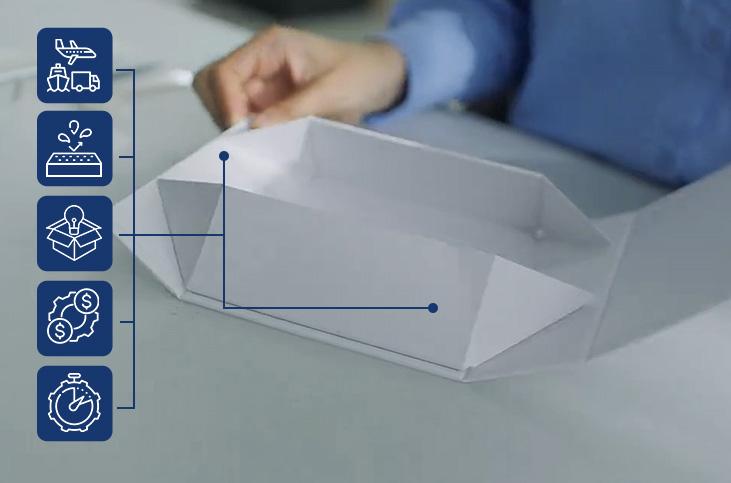 Structural packaging design refers to the way a package is built: the geometry of the box, the architecture of its folds and layers, the inserts and compartments, the opening mechanism, and the precision of the product fit. While these elements may appear purely functional, they strongly influence how customers interpret quality.
A well-designed structure creates order and balance. The product sits securely in place, the lid lifts with the right resistance, and each layer reveals itself in a deliberate sequence. Premium consumers often associate structural stability, clean proportions, and a smooth interaction with higher product value, even before they consciously notice print, color, or finishing.
In this sense, structure becomes the foundation upon which all other design elements stand. Foil stamping, embossing, and special papers gain meaning only when the form supporting them feels solid, intentional, and refined.
Protection Engineered for Real-World Conditions
One of the most immediate roles of structural design is to protect the product. High-end packaging frequently contains fragile glass bottles, intricate cosmetic sets, delicate finishes, or premium electronics—items that can be damaged by shock, compression, or careless handling long before they reach the customer.
Effective structural design improves protection in several ways:
- It reduces movement inside the package by shaping more precise cavities and contact points.
- It distributes pressure across supportive surfaces rather than allowing force to concentrate on vulnerable edges.
- It enables safer stacking and transport, especially across multi-leg global logistics routes.
- It helps shield branded surfaces from abrasion, corner crush, and impact damage.
In practice, this level of protection rarely comes from a generic box format. Different products demand different structural responses depending on weight, fragility, geometry, and transportation profile. For that reason, the most effective packaging structures are often developed around the specific needs of the product rather than adapted from a universal standard.
Leading premium packaging partners often combine structural engineering with prototyping and performance validation to improve real-world reliability. This allows brands to evaluate whether a packaging concept can perform consistently not only in design presentations, but also across production, shipping, retail handling, and final delivery.
Premium Presentation Begins with Form
Visual finishes are only one part of premium presentation. The physical form of the package—its proportions, volume, lid depth, and internal layout—has just as much influence on how luxurious a product feels.
For example, a rigid gift box for a limited-edition spirit can use a deep, weighty base and a well-fitted lid to signal substance and prestige before the bottle is even visible. A layered cosmetic set might rely on carefully stacked trays and cutouts to organize multiple items into a graceful, intuitive composition. A molded insert for a high-end electronic device can simultaneously present the product prominently and keep cables, accessories, and documentation discreetly ordered around it.
When structural design prioritizes both protection and presentation, the packaging feels cohesive. Every contour appears intentional, and the sequence of reveals feels choreographed rather than accidental. This refined sense of control is one of the clearest signals of premium quality in the eyes of the customer.
Structure Tailored to Product, Brand, and Channel
A common misconception is that a premium look can be achieved simply by applying sophisticated graphics and expensive finishes to a standard box. In reality, structural solutions are most effective when they are developed around specific product, brand, and channel needs.
A high-value skincare gift set, a prestige spirits box, and a boutique electronics package each require different structural logic. Their weight distribution, display expectations, opening sequence, insert system, and shipping routes vary widely. As a result, the ideal structure is rarely universal. It is most effective when tailored to align with:
- The product’s physical characteristics and fragility
- The brand’s desired narrative and sensory cues
- The retail environment or e-commerce channel where the packaging will appear
- The logistics path from production through regional hubs to final delivery
Leading premium packaging partners often build their development approach around this tailored model, combining structural thinking, material strategy, and manufacturing coordination to create solutions that feel precise, coherent, and differentiated in the market.
Structural Design and the Unboxing Experience
In the premium segment, unboxing is no longer a minor detail; it is a core part of the product experience and sometimes a key moment shared on social media and review platforms. Structural design plays a decisive role in shaping that moment.
A strong unboxing structure can create:
- A sense of anticipation through layered opening steps
- A controlled reveal that presents the hero product at the right time
- Stable support that keeps items aligned and prevents accidental spills or misalignment
- Clean presentation of accessories such as droppers, glasses, cables, or cards
- A clear visual hierarchy that guides the customer’s attention
Premium packaging becomes more effective when structure feels intuitive and ceremonial at the same time. Hinged lids, magnetic closures, telescoping boxes, drawer-style formats, and multi-layer inserts are all tools in the structural designer’s toolkit—each chosen to match the brand’s personality and the customer’s expectations.
Structure as an Expression of Brand Positioning
Different brands tell different stories, and structural packaging helps make those stories tangible. A minimal, modern electronics brand may prioritize precision fit and clean lines to convey technical excellence and simplicity. A heritage spirits brand might prefer robust, weighty boxes with layered inserts to communicate craftsmanship and gifting value. A wellness skincare line could emphasize gentle, balanced structures with organized compartments to express care and ritual.
Because positioning goals vary, structural packaging should be developed with those differences clearly in mind. The same structural choice that signals prestige for one brand might feel excessive for another. The most effective solutions align form, function, and brand expression, allowing packaging to communicate values such as efficiency, indulgence, innovation, craftsmanship, or sustainability.
Packaging partners that combine long-standing craftsmanship with contemporary design thinking are often better equipped to translate brand narratives into structural forms that feel both consistent and commercially practical.
Intelligent Structure and Material Efficiency
Structural design is not synonymous with adding layers, weight, or complexity. In many cases, the best structures improve protection and presentation while using materials more intelligently.
Smarter folding techniques, optimized dimensions, and carefully placed support points can reduce board usage without compromising performance. Well-designed inserts can eliminate the need for loose filler materials or plastic-based protective components, making the overall pack more compact, efficient, and aligned with environmental goals.
For brands seeking to balance a premium image with responsible packaging choices, structural innovation offers one of the most practical routes forward. By refining geometry rather than simply increasing material thickness, they can reduce waste, streamline pack-out, and improve shipping density—delivering both sustainability gains and business efficiency.
The Importance of Working with Integrated Packaging Partners
High-performing structural packaging rarely emerges in isolation. It requires close collaboration between brand teams, structural designers, graphic designers, engineers, and manufacturing sites. Concepts that look impressive on a screen must also be feasible to produce, repeatable in quality, and compatible with global logistics.
This is why more brands are turning to integrated packaging partners that can provide:
- Professional structural design and engineering support
- Prototyping and packaging validation during development
- Coordinated material, finishing, and production planning
- One-stop collaboration across design, development, sourcing, and manufacturing
- Greater supply flexibility to support multi-market delivery needs
For premium products that must arrive safely, look exceptional, and support resilient supply chains, integrated packaging partners are increasingly valued for their ability to connect protection, presentation, and production reliability within one coordinated development model.
For brands evaluating premium packaging partners, providers such as ChungBor reflect this market direction by emphasizing customized structural development, material understanding, finishing expertise, and coordinated manufacturing as part of a more complete packaging solution approach.