Jun 24, 2026
Pruning Tool Trends for B2B Buyers - Performance, Reliability, and Private Label Readiness
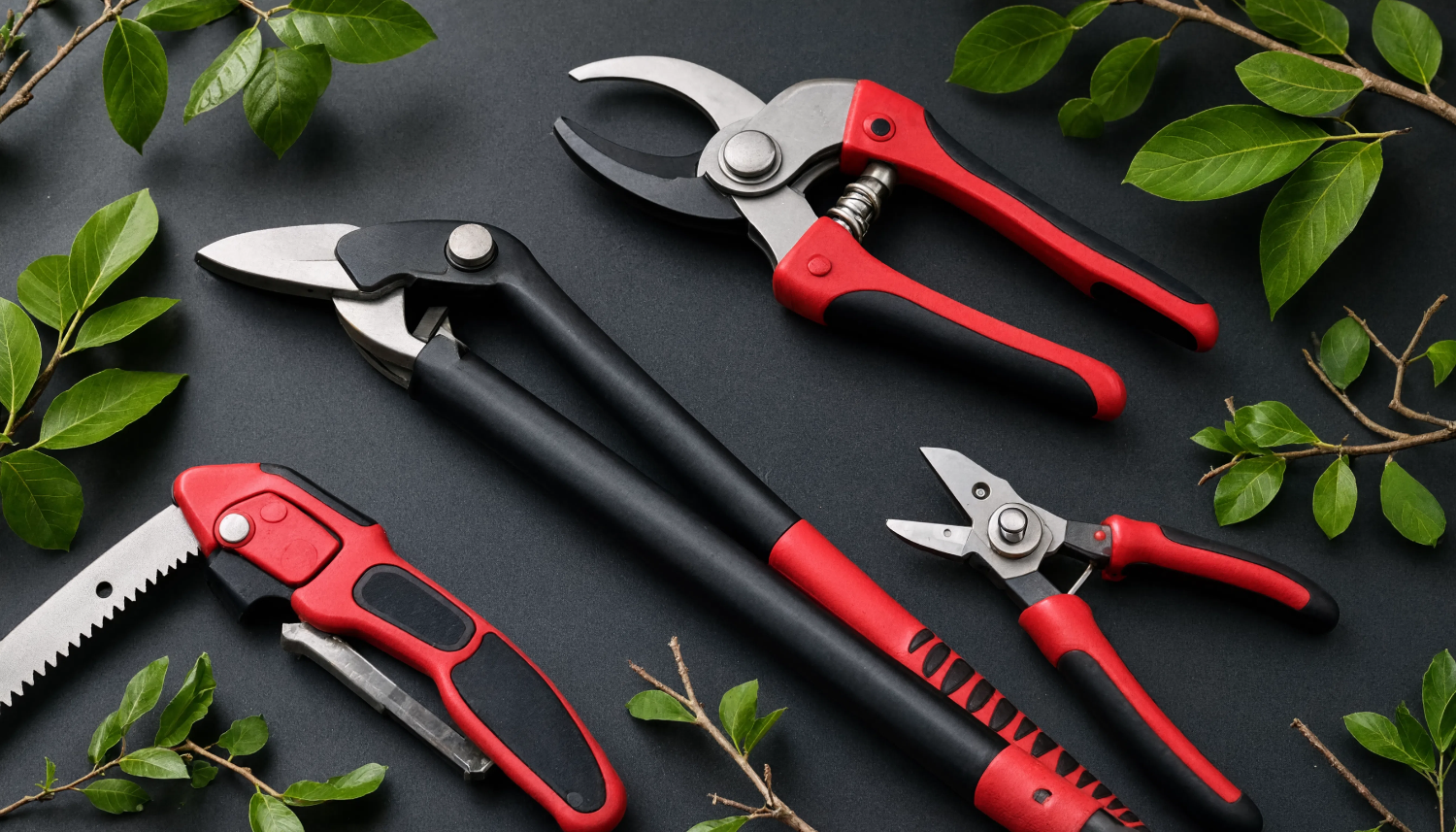
For B2B buyers, pruning tools may appear to be a mature category, but the market is changing in ways that matter. What was once treated as a functional, price-driven purchase is now becoming a more strategic sourcing decision. Buyers are no longer looking only for a tool that can cut. They are looking for products that can support long-term sales, reduce after-sales issues, and fit into a broader brand or category plan.
This is especially true for importers, distributors, garden supply channels, and OEM/ODM sourcing teams. When evaluating pruning shears, pruning secateurs, and related cutting tools, three questions now shape the discussion more than ever:
- Can the product deliver stable performance across real use conditions?
- Can the supplier reduce risk across quality, delivery, and long-term consistency?
- Is the supplier ready to support private label growth, not just one-time production?
These questions define the current direction of the pruning tool category. For buyers, the most attractive partners are no longer just manufacturers. They are suppliers that can help build a sellable, scalable, and dependable product program.
Why pruning tools are no longer just standard items
In the past, pruning tools were often treated as standard products with limited differentiation. Many sourcing decisions focused on price, general appearance, and basic cutting function. That approach is becoming less effective.
Users today are more sensitive to quality differences, and online comparison has made those differences easier to notice. When markets become more transparent, products that lack clear positioning, durability, or supporting information lose competitiveness quickly.
As a result, pruning tools are no longer just about whether a supplier can ship them. Buyers increasingly want to know:
- whether the product has a clear application role,
- whether quality can be defended in the market,
- whether the tool can support channel growth,
- and whether the range can be extended into a broader product line.
That is why more buyers now treat pruning tools as part of category strategy rather than as simple commodity items.
Trend 1: Performance now means more than initial sharpness
In this category, performance used to be simplified into one message: sharp blade, easy cut, good enough. That is no longer sufficient.
A pruning tool may feel sharp on the first day, but that does not guarantee stable performance after repeated use. For serious buyers, performance now includes a broader set of concerns:
- How smooth the cut feels
- How long the edge lasts
- Whether performance stays stable across different branch conditions
- How comfortable the tool remains during repeated use
- Whether moisture, sap, and outdoor exposure affect usability
- How easy it is to maintain over time
In other words, performance should not be judged only by first impression. It should be understood as the tool’s ability to continue doing the job well across repeated use, different environments, and different user habits.
How buyers can assess performance more realistically
To evaluate performance in a useful way, buyers should look beyond polished marketing language and focus on the product structure itself.
1. Blade material and blade treatment
Steel quality, grinding quality, and protective surface treatment all affect edge retention, corrosion resistance, and consistency.
2. Structural strength
If the handle, pivot, or blade assembly lacks stability, a tool that feels good at first may lose precision later.
3. Ergonomics
Professional users and frequent users care about grip comfort, opening angle, anti-slip handling, and how naturally force is transferred during cutting.
4. Application fit
A tool designed for live stems may disappoint if it is used on dry hardwood. That does not always mean the tool is poor. It may simply mean the product was mismatched to the job.
That is why mature sourcing decisions focus less on “the strongest performance” in general and more on “the right performance mix” for the intended market.
Trend 2: Reliability is becoming a deciding factor in channel success
In B2B trade, reliability often matters more than first-use performance. A product may cut well in a sample review, but if batch quality is inconsistent or failure rates rise after distribution, the risk moves directly to the buyer.
Pruning tools are not large industrial systems, but their after-sales impact should not be underestimated. They are often sold in higher volume and reach a wide range of users. If reliability is poor, problems scale quickly.
Common channel risks include:
- noticeable variation between production batches,
- shorter-than-expected blade life,
- grip material aging too quickly,
- loose pivots that affect cutting control,
- packaging weakness that causes transit damage,
- and negative user feedback that reduces repeat sales.
Because of this, many buyers are no longer asking only, “Does this shear cut well?” They are asking, “Will this product still perform consistently after volume shipment into the market?”
Practical reliability indicators buyers should review
The table below summarizes several useful reliability indicators that buyers can use when comparing pruning tools.
| Evaluation Area | Why It Matters | What Buyers Should Review |
|---|---|---|
| Blade material consistency | Affects edge life and cut stability | Whether material specifications are clear |
| Protective surface treatment | Affects corrosion resistance and cleaning | Whether coating or anti-corrosion treatment is explained |
| Handle construction | Influences durability and safety feel | Whether the structure is forged or reinforced |
| Tension and pivot system | Affects blade alignment and operating stability | Whether adjustment is possible and the assembly feels secure |
| Ergonomic grip quality | Affects repeated-use comfort | Whether the grip is non-slip and comfortable under load |
| Quality control capability | Reduces variation across batches | Whether manufacturing and QC discipline are visible |
| Packaging design | Influences transport protection and retail presentation | Whether the packaging supports both shipping and shelf display |
For buyers, the earlier these questions are addressed, the lower the long-term commercial risk tends to be.
Trend 3: The market wants sellable product lines, not isolated products
Many suppliers concentrate on showing a few key models. From a B2B perspective, however, the more important issue is whether those products can form a sellable product line.
Buyers do not serve only one type of user. They serve multiple channels with different expectations. For example:
- Home gardening markets want simple operation and reasonable price points
- Professional landscape users care more about durability and comfort
- Orchard and vineyard users value cutting efficiency and task fit
- Retail channels want product positioning that is easy to explain
- Private label buyers want room to expand into a broader family of tools
This means buyers do not always need the largest number of SKUs. What they need is a product structure that is easy to understand and easy to sell.
What a strong pruning tool range should include
A mature pruning tool range usually benefits from:
- clear application-based differentiation,
- a visible price and quality ladder,
- product naming or grouping that makes sense quickly,
- product descriptions that support channel selling,
- and a structure that can grow into a wider tool family over time.
If a supplier only offers disconnected items without helping buyers understand how they differ, even decent products may underperform in the market.
Trend 4: Private label readiness is a major dividing line among suppliers
More buyers today want to build their own brands, not only because it can improve margins, but also because branding supports longer-term competitiveness.
Pruning tools are especially attractive for private label development because the category is well suited to extension:
- products can be repurchased,
- entry, mid-range, and premium tiers are easy to create,
- the line can expand into other garden tools,
- packaging can build strong visual identity,
- and channels can use the category to create differentiation.
However, private label readiness is not the same as simply being willing to print a logo.
What real private label readiness looks like
A supplier that is truly ready to support private label programs should typically show more than basic OEM willingness.
Buyers should review whether the supplier can support:
1. Packaging and labeling adaptation
Can the supplier adjust card design, market labeling, brand identity, and product information according to channel needs?
2. Range expandability
Does the supplier offer only one product, or can it support the growth of a complete product family over time?
3. Commercial responsiveness
From sampling and quotations to specification confirmation and delivery planning, communication speed and clarity matter.
4. Manufacturing and quality consistency
Without stable output, even a promising private label plan will be difficult to scale.
5. Understanding of market positioning
A supplier that understands differences between markets can often support better product and brand planning.
Trend 5: Information quality is now part of product competitiveness
Today’s buyers often read articles, product pages, and comparison content before they contact a supplier. This means a product’s ability to sell does not depend only on its physical quality. It also depends on how quickly and clearly the market can understand it.
This is especially important in pruning tools because many products appear similar at first glance while their real use cases differ significantly. If a supplier can explain where each model fits, what structural advantages it offers, and how it should be used, buyers have a much easier path to channel development.
That is why more procurement teams now review not only the sample, but also:
- whether product descriptions are clear,
- whether naming is easy to understand,
- whether grouping is logical,
- whether the tool can be translated into sales language,
- and whether the end user can quickly understand the difference.
What should B2B buyers check before selecting a pruning tool supplier?
To reduce decision risk, buyers can start with the following evaluation framework.
| Evaluation Category | Questions Buyers Should Ask |
|---|---|
| Product positioning | Who is this product for, and is its use case clear? |
| Technical clarity | Are material, coating, structure, and cutting capacity explained transparently? |
| Range planning | Is there a clear structure across grades and use cases? |
| Quality management | Is there evidence of stable manufacturing and quality discipline? |
| Packaging and brand support | Can the supplier support private label or market-facing packaging needs? |
| Commercial communication | Are quotation, sampling, and specification discussions efficient and clear? |
| Long-term partnership potential | Can this supplier support growth from one product to a broader line? |
This type of evaluation usually reveals more about long-term business value than price comparison alone.
What makes RACO Expert relevant for B2B buyers?
Based on its published information, RACO Expert shows several qualities that are relevant to B2B buyers in the pruning tool category. The brand emphasizes:
- customized hand tool solutions
- R&D and design
- production and manufacturing
- quality management
- a diversified secateurs range
For buyers reviewing pruning tool suppliers, the following pages are particularly useful to explore:
The value of this is practical. Buyers are rarely looking only for a single model. They are often looking for a supply base that can support future extension, channel selling, and brand development. When a supplier offers broader range visibility, clearer structure, and a direct business contact path, that can make evaluation easier.
Why range depth matters in sourcing
When buyers first approach a supplier, they may start with only one or two models. But in longer-term cooperation, range depth often determines how easily the relationship can grow.
A broader product range can offer several advantages:
- easier planning across entry, mid-range, and premium price levels,
- better response to different channel needs,
- more flexibility for future line extension,
- reduced dependence on a single hero SKU,
- and stronger support for shelf presentation and brand recognition.
For distributors, importers, and private label buyers, these are not secondary issues. They are operating advantages.
Which product features deserve more attention going forward?
As the market matures, pruning tool competition is likely to become more focused on durable qualities that users can recognize quickly and buyers can defend commercially.
1. Corrosion resistance and weather durability
Garden tools face moisture, outdoor storage, and plant sap. Resistance to corrosion will continue to matter.
2. Ergonomics and user comfort
Once use frequency rises, comfort stops being a bonus feature and becomes a basic requirement.
3. Structural durability
Forged handles, stable pivots, and overall construction confidence all influence whether a tool can move into higher-value markets.
4. Ease of maintenance
Tools that are easier to clean, adjust, and maintain are more attractive in professional and semi-professional segments.
5. Clear product positioning
If a product quickly communicates what branches, what job, and what user it is intended for, it usually has a better chance of selling well.
FAQ
Is there still a market for low-cost pruning shears?
Yes, but only in the right segment. If a lower purchase price leads to high complaint or return rates, the total cost may become less attractive.
Is private label worth pursuing in pruning tools?
For many distributors and retailers, yes. It can support differentiation, margin control, and stronger brand recognition.
Should buyers start with one hero model or build a pruning secateurs range?
That depends on channel strategy. A hero model can be useful for market entry, but a structured range often supports stronger long-term growth.
What is the most common mistake buyers make in this category?
Many focus too heavily on whether the blade feels sharp and overlook grip comfort, tension stability, material consistency, and long-term maintainability.
How can buyers tell whether a supplier is truly private label ready?
Not by logo printing alone. Buyers should assess packaging flexibility, range expandability, consistency of output, and communication quality.
Why does information quality matter so much in pruning tools?
Because many models look similar at first glance but serve different purposes. If information is unclear, both channel partners and end users are more likely to misunderstand the product.
Final take: what are B2B buyers really buying now?
In today’s pruning tool market, B2B buyers are no longer buying only a single product. They are buying a foundation for sell-through, risk control, and future brand growth.
That is why the three most important things to confirm are:
- Performance: can the tool consistently do the intended job?
- Reliability: can the product and supply quality reduce long-term commercial risk?
- Private label readiness: can the supplier support brand development and product line growth?
Suppliers that can support all three are usually in a stronger position for long-term B2B cooperation.