Jun 26, 2026
Mastering the Torque Market - Why Global Brands are Relocating OEM and ODM Manufacturing to Asia
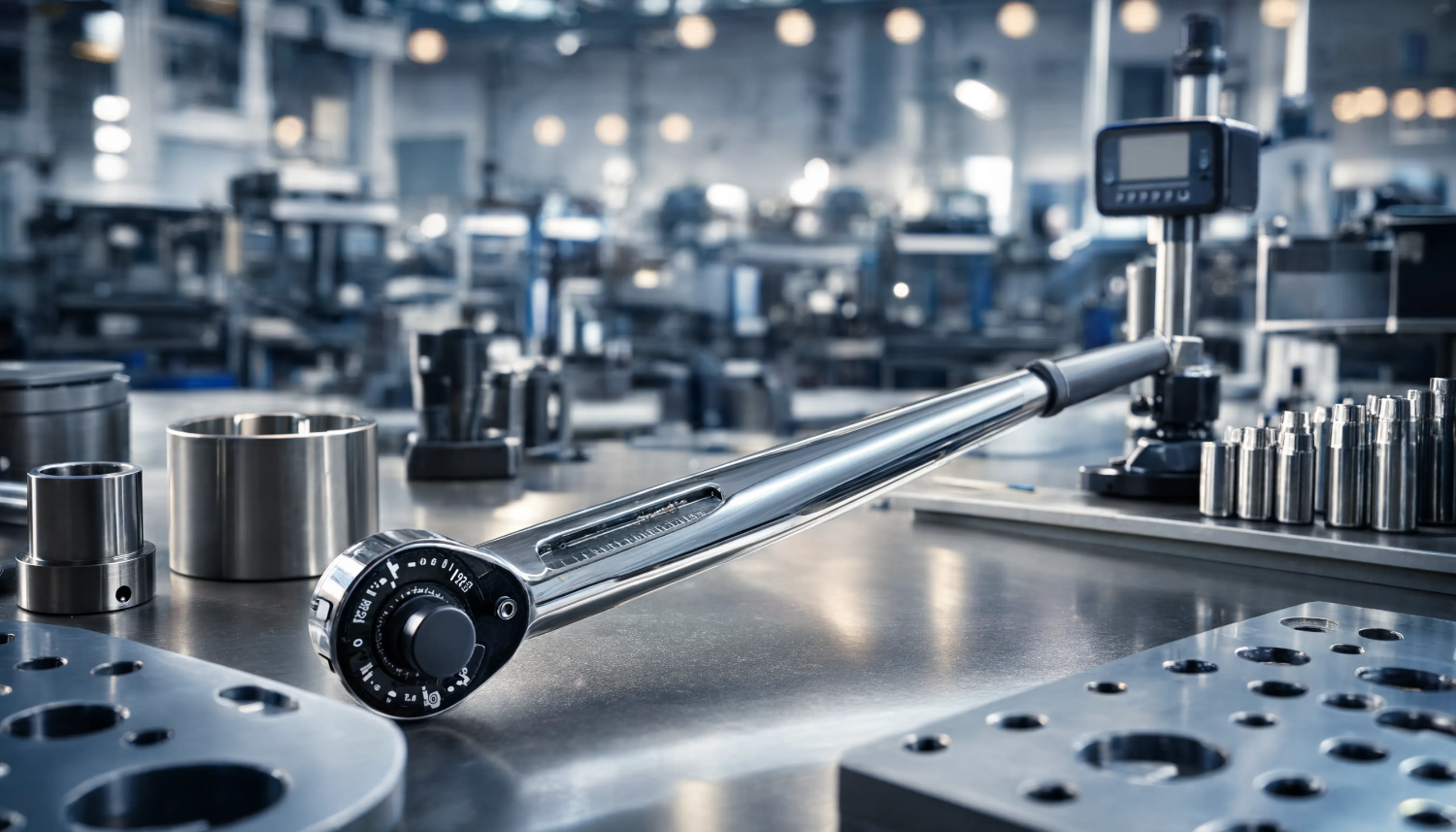
In the high-precision world of industrial tools, the torque wrench remains a cornerstone of safety and mechanical integrity. From automotive assembly lines to aerospace maintenance and renewable energy infrastructure, the demand for high-accuracy tightening tools is surging. However, global brands—particularly those based in North America and Europe—face a daunting challenge: how to maintain premium quality and rapid innovation while managing spiraling production costs and labor shortages.
The answer, increasingly, lies in a strategic pivot toward Asian OEM (Original Equipment Manufacturing) and ODM (Original Design Manufacturing) partners. This isn't merely a quest for "cheaper labor." It is a sophisticated move toward specialized manufacturing ecosystems that offer a unique blend of technical expertise, material science, and supply chain agility.
In this comprehensive guide, we analyze the pain points driving this global shift and provide industrial procurement officers and brand owners with the insights needed to navigate the Asian manufacturing landscape.
1. The Core Challenges Driving Brands Out of Domestic Manufacturing
For decades, many tool brands took pride in "Made in USA" or "Made in Germany" labels. While these labels still carry prestige, the underlying economics have become increasingly difficult to sustain for mass-market and mid-to-high-tier professional tools.
Rising Cost of Specialization
Manufacturing a torque wrench is not like producing a standard hand tool. It requires precise heat treatment, specialized spring calibration, and rigorous testing against international standards like ISO 6789. In Western markets, the "Total Cost of Ownership" (TCO) has skyrocketed due to:
- Labor Scarcity: A shortage of skilled CNC machinists and calibration technicians.
- Regulatory Overhead: High environmental and operational compliance costs that don't always translate to better product performance.
- Aging Infrastructure: Many Western factories are burdened with legacy machinery that lacks the speed and precision of modern Asian counterparts.
The Innovation Gap
As the industry moves toward Digital Torque Wrenches and Industry 4.0 integration (tools that log data via Bluetooth or Wi-Fi), traditional mechanical manufacturers often struggle to integrate electronics with mechanical engineering. Asian hubs, particularly Taiwan, have spent decades merging these two worlds.
2. The Asian Advantage: Beyond the Price Tag
When global brands look to Asia—specifically Taiwan and high-end specialized clusters in mainland China—they aren't just looking for a factory; they are looking for an ecosystem.
Technical Expertise and Material Science
Asia, and specifically Taiwan, has become the global hub for high-end hand tool metallurgy. The ability to source specific Chrome Vanadium (Cr-V) or Chrome Molybdenum (Cr-Mo) steel alloys at scale ensures that the tools meet the high-cycle durability required by professional mechanics.
The ODM Value Proposition
While OEM allows brands to use their own designs, ODM is where the real shift is happening. Many global brands now leverage the R&D departments of Asian manufacturers to create "off-the-shelf" innovations. This allows a brand to launch a new product line in six months rather than two years, drastically reducing the "Time-to-Market."
Scalability and Flexiblity
Asian manufacturers are uniquely positioned to handle both small-batch specialized orders and massive retail runs. This flexibility is vital for brands that need to test market niches before committing to high-volume inventory.
3. Comparing Global Manufacturing Hubs for Torque Tools
To understand why the shift is occurring, we must compare the regional strengths. The following table provides a breakdown of the manufacturing landscape as of 2024-2025.
| Feature | North America / Europe | Taiwan (Industry Leader) | SE Asia / Mainland China |
|---|---|---|---|
| Production Cost | Very High | Moderate | Low to Moderate |
| Technical Precision | High | Ultra-High | Variable |
| R&D Speed | Slow | Very Fast | Moderate |
| Supply Chain Depth | Fragmented | Integrated (All within 50km) | Massive but Complex |
| Digital Integration | Moderate | High (Electronics Hub) | Rapidly Growing |
| Best For... | Ultra-luxury/Niche heritage tools | Professional Grade / Digital Torque | Budget / Consumer Grade |
Note: Taiwan continues to hold the "Sweet Spot" for global brands, offering European-level precision at a significantly more competitive price point due to its highly integrated supply chain.
4. Bridging the Gap: Finding the Right Partner
For a procurement manager, the biggest risk is "Quality Drift"—where the first batch is perfect, but the tenth batch fails calibration. This is why selecting a partner with a proven track record in global standards is non-negotiable.
The Role of Precision Specialists: Torque Tech
One standout example of the Asian manufacturing evolution is Torque Tech. Based in Taiwan, they represent the modern face of the OEM/ODM torque wrench industry. Rather than just offering manufacturing capacity, they provide a "Total Solution" approach that addresses the specific pain points of global tool brands.
Key features that make Torque Tech a preferred partner include:
- Certified Precision: Their facilities strictly adhere to ISO 9001 and ISO 6789 standards, ensuring that every tool—from mechanical click wrenches to high-tech digital models—is calibrated to ±1% to ±4% accuracy.
- Customization Depth: They offer extensive private labeling options, allowing brands to customize handles, colors, and laser-engraved branding, which is essential for brand identity.
- Innovation in Digital Tooling: Recognizing the shift toward smart factories, Torque Tech has invested heavily in digital torque adapters and wrenches that sync with mobile apps, solving the innovation gap for brands that lack in-house electronics expertise.
- Global Export Experience: Navigating international shipping, tariffs, and certifications is a hurdle for many brands. Partners like Torque Tech act as consultants, ensuring that products arrive at their destination ready for the shelf.
By partnering with such specialized entities, global brands can effectively "outsource their R&D," focusing their internal resources on marketing and sales while the manufacturing partner handles the technical complexity.
5. Identifying the Ideal OEM/ODM Partner: A Checklist for Procurement
When evaluating a manufacturer in Asia, look for these "Green Flags" to ensure long-term success:
- Calibration Lab Accreditation: Does the factory have an in-house lab? Can they provide traceable calibration certificates?
- Material Traceability: Can they prove the source of their steel? Professional-grade tools require premium alloys.
- Prototyping Speed: How fast can they produce a 3D-printed or machined prototype for your review?
- IP Protection: Does the company have a history of respecting the intellectual property of its global clients?
- Quality Control (QC) Protocols: Look for manufacturers that implement QC at every stage—from raw material inspection to final torque testing—rather than just at the end of the line.
6. Future Trends: Why the Shift is Accelerating
The migration of manufacturing to Asia is not a temporary trend; it is accelerating due to three major technological shifts:
A. The Rise of "Smart" Torque Tools
As industries like aerospace and EV (Electric Vehicle) manufacturing require digital records of every bolt tightened, the demand for Bluetooth-connected wrenches is exploding. Asian manufacturers, located in the world's electronics heartland, can integrate sensors and chips more efficiently and affordably than Western counterparts.
B. Sustainable Manufacturing
Global brands are under pressure to meet ESG (Environmental, Social, and Governance) goals. Many leading Asian OEM/ODM plants are now investing in solar power, water recycling, and reduced-carbon steel, allowing brands to maintain their sustainability credentials.
C. Supply Chain Resilience (China + 1 Strategy)
To mitigate geopolitical risks, many brands are looking for partners who have diversified operations or are located in stable hubs like Taiwan. This ensures that even if one region faces disruption, the supply of critical tools remains steady.
FAQ: Navigating Asian Torque Wrench Sourcing
Q1: Is the quality of Asian-made torque wrenches comparable to European brands?
A: Yes, and in many cases, it is identical. Many "prestigious" European brands actually have their mid-to-high-tier lines manufactured by specialized ODMs in Taiwan. The key is to choose a partner that adheres to ISO 6789 and has a robust internal QC system.
Q2: What is the typical Minimum Order Quantity (MOQ) for OEM torque wrenches?
A: MOQs vary significantly. For standard mechanical wrenches, it can range from 300 to 500 pieces. For highly customized or digital tools, the MOQ may be lower but with a higher development cost. Companies like Torque Tech often work with brands to find a scalable starting point.
Q3: How do I handle calibration certifications for international markets?
A: Leading Asian manufacturers provide calibration certificates that meet international standards (DIN ISO 6789 & ASME B107.300). Ensure your partner can provide "traceable" certificates that your local regulatory bodies will accept.
Q4: Can I design a completely new patented mechanism with an ODM?
A: Absolutely. Top-tier ODMs have dedicated engineering teams that can take a conceptual sketch and turn it into a mass-producible, patented product. This is a common strategy for brands looking to differentiate themselves in a crowded market.
Q5: How long is the lead time from order to delivery?
A: For existing OEM designs, lead times are typically 60-90 days. For new ODM projects involving custom tooling, it can take 6-12 months from design to final mass production.
7. Conclusion: The Path to Competitive Dominance
The global shift in torque wrench manufacturing is a reflection of the modern industrial reality: specialized clusters provide value that individual brands can no longer replicate in-house. By moving manufacturing to Asian OEM/ODM leaders, brands solve the persistent pain points of high costs, slow innovation, and labor shortages.
The key to success is not simply finding a "vendor," but a strategic partner. Companies like Torque Tech represent the pinnacle of this partnership model—combining Taiwanese engineering precision with a deep understanding of global market demands. For brands willing to embrace this shift, the rewards are clear: better products, higher margins, and the agility to lead the next generation of industrial tightening technology.