May 18, 2026
Why Construction Screw Design Must Evolve with Modular and Light Steel Building Trends
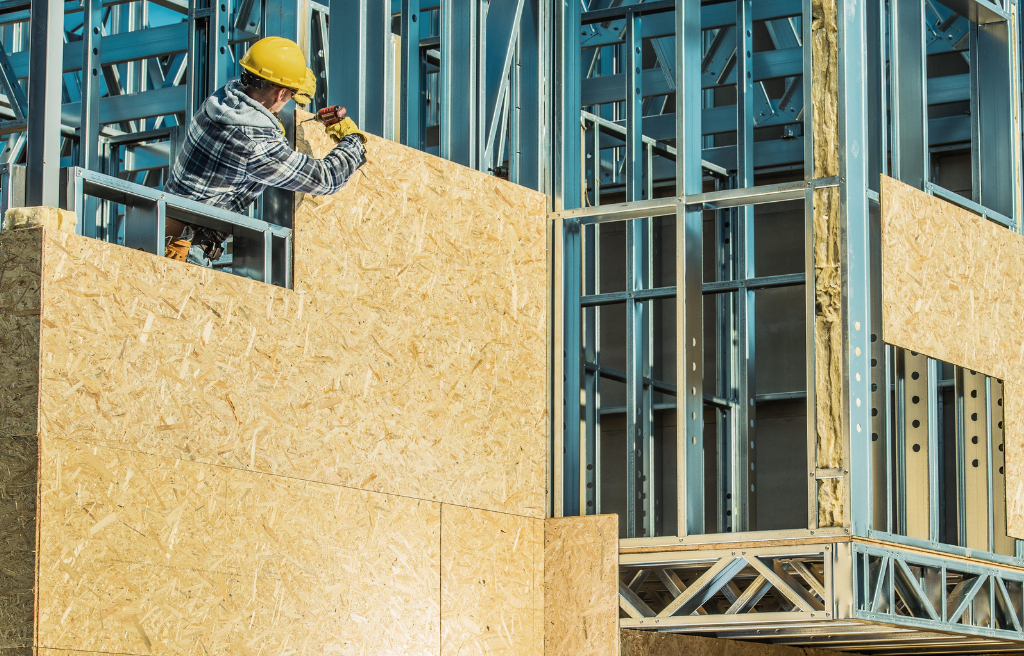
Faster building methods are changing what buyers should ask from fasteners
Construction teams today face growing pressure from all sides: shorter schedules, tighter budgets, labor shortages, and stricter quality expectations. As a result, more projects are moving toward modular construction, light gauge steel framing, and dry construction methods that reduce on-site work and improve installation efficiency.
This shift is also changing one component that is often underestimated: the screw. In many projects, fasteners are still treated as ordinary hardware. But when structures become lighter, assembly becomes faster, and tolerances become tighter, screw design can no longer be treated as a minor detail. For procurement teams, developers, and building owners, the real issue is not only unit price, but whether the fastening solution can reduce risk in schedule, structural performance, and long-term durability.
Why lighter and faster structures require more advanced screw design
Modular and dry construction improve speed, but increase demands on connection points
In modular and off-site construction, many building elements are produced in controlled environments and then assembled rapidly on site. This approach helps improve consistency and shorten timelines, but it also places greater pressure on every connection point.
When parts are prefabricated, transported, lifted, aligned, and fixed into place, fastening performance becomes critical. Buyers and engineers should pay attention to whether a construction screw can deliver:
- efficient drilling into steel substrates
- stable pull-out and shear performance
- consistent clamping force
- reliable corrosion resistance
- repeatable results in large-volume installation
In other words, lighter structures do not mean lower requirements. In many cases, they demand more engineering behind the fastener.
Why traditional welding is no longer always the preferred option
Welding still plays an important role in construction, but it can also create major bottlenecks in projects that depend on speed and flexibility. On-site welding often requires skilled labor, weather control, safety management, and post-process inspection. It is also less flexible when a project needs adjustment, maintenance, or future disassembly.
For many light steel and modular applications, mechanically fastened systems are increasingly attractive because they can offer:
- faster installation with common power tools
- reduced dependence on certified welders
- more standardized quality control
- easier maintenance, replacement, or rework
- lower hot-work risk on site
For procurement teams, this is not only a technical issue. It affects labor planning, project timing, and total execution risk.
Welding vs. engineered construction screw systems
Before selecting a joining method, it helps to compare the broader project impact instead of only purchase cost.
| Evaluation Item | Traditional Welding | Engineered Construction Screw System |
|---|---|---|
| Installation speed | Slower; requires preparation, hot work, cooling, inspection | Faster; direct driving and immediate fastening |
| Labor dependency | High; relies on skilled welders | Lower; trained installers can work efficiently |
| Weather sensitivity | High | Lower in many site conditions |
| Rework or adjustment | Difficult | Easier to remove, adjust, or replace |
| Quality consistency | Depends heavily on operator skill | Easier to standardize with defined specs |
| Fit for modular assembly | Less flexible | Better suited for modular and dry construction |
This comparison shows why fastening systems are increasingly being evaluated as part of project strategy rather than as a simple accessory purchase.
What buyers should evaluate in a modern construction screw
1. Verified mechanical performance
For roofing, cladding, panel fixing, framing, or modular assembly, buyers should not rely only on dimensions or appearance. They should ask for performance data related to tensile strength, shear strength, drilling capacity, thread design, and substrate compatibility.
2. Corrosion resistance suited to the application
A screw used indoors is very different from one used in humid, outdoor, or coastal environments. Coating technology, material selection, and treatment quality directly affect service life. If corrosion protection is poorly specified, the project may face hidden maintenance cost and premature failure risk.
3. OEM / ODM flexibility
Not every project can be served well by a fully standard item. Buyers working across different markets or specialized applications often need oem / odm construction screw support for changes in head type, point design, thread geometry, coating, packaging, or testing requirements.
A capable oem / odm construction screw manufacturer can help align the product with the actual use case rather than forcing a standard specification into a more demanding environment.
4. Installation efficiency at scale
On large projects, even small issues in drive stability, drilling speed, or bit fit can create major losses in labor time and consistency. A better-designed construction screw can reduce cam-out, waste, and installation errors across thousands of fastening points.
Industry trend: fastening is becoming an engineering decision, not just a buying decision
The construction sector is moving toward industrialized building, better traceability, and lower lifecycle risk. As modular construction expands and developers focus more on delivery speed, carbon reduction, and maintainability, fastening choices are becoming more strategic.
Market research indicates that the modular construction market is continuing to grow, while steel remains a leading material in this category. At the same time, long-term industry analysis shows that construction productivity has historically remained low, which is why more companies are pushing toward industrial methods, standardization, and better component performance.
This is the context in which fasteners are changing. For modern projects, screws are no longer only about holding materials together. They are part of how projects control labor, reduce delays, and improve consistency.
FAQ
What is the difference between a standard screw and an engineered construction screw?
A standard screw is usually selected for basic fixing needs. An engineered construction screw is designed with greater attention to load performance, installation behavior, substrate compatibility, and corrosion protection for more demanding applications.
Can construction screws replace welding?
Not in every case. The right solution depends on structural requirements, joint design, code compliance, and engineer approval. However, in many light steel, dry construction, and modular uses, screw fastening is becoming an efficient alternative.
Why is OEM / ODM capability important?
Because project conditions are not always standard. An oem / odm construction screw supplier can help adjust design, coating, packaging, and test requirements to better match real installation conditions and buyer expectations.
What should procurement teams ask suppliers before ordering?
Buyers should ask about application range, test data, corrosion protection, drilling capability, lead time stability, and whether the supplier can provide custom development support if project needs change.
A practical sourcing view for modern construction projects
For procurement teams and project owners, the better question is no longer simply, “Which screw costs less?” A more useful question is, “Which fastening solution can help the project move faster, reduce installation risk, and perform reliably over time?”
This is where supplier capability matters. For companies evaluating oem / odm construction screw solutions, manufacturers with in-house R&D, application knowledge, and customization experience are often better prepared to support project-specific needs.
Fong Prean Industrial Co., Ltd. is one example of a manufacturer that presents its R&D and product development capability for fastening applications, which may be useful for buyers comparing suppliers for custom or application-based programs.
Conclusion
As modular construction, light steel framing, and dry construction methods continue to expand, screw design must evolve with them. Better fastening decisions can help reduce labor pressure, improve installation speed, support structural reliability, and lower long-term risk.
If you are currently evaluating suppliers for oem / odm construction screw projects, it may be worthwhile to review application requirements directly with the manufacturer. For more information, readers can contact Fong Prean Industrial Co., Ltd. .
References
-
Modular Construction Market Size & Share Analysis - Growth Trends and Forecast (2026 - 2031)
Core reference used: global modular construction market size, 2026-2031 CAGR, steel as a leading material, and the role of labor shortage and faster project delivery in driving modular adoption. -
The next normal in construction: How disruption is reshaping the world’s largest ecosystem
Core reference used: construction representing about 13% of global GDP, low long-term productivity growth, and the broader industry shift toward industrial approaches, digitalization, and new construction methods.